Venezuela Names PDVSA Lawyer as Top Legal Officer
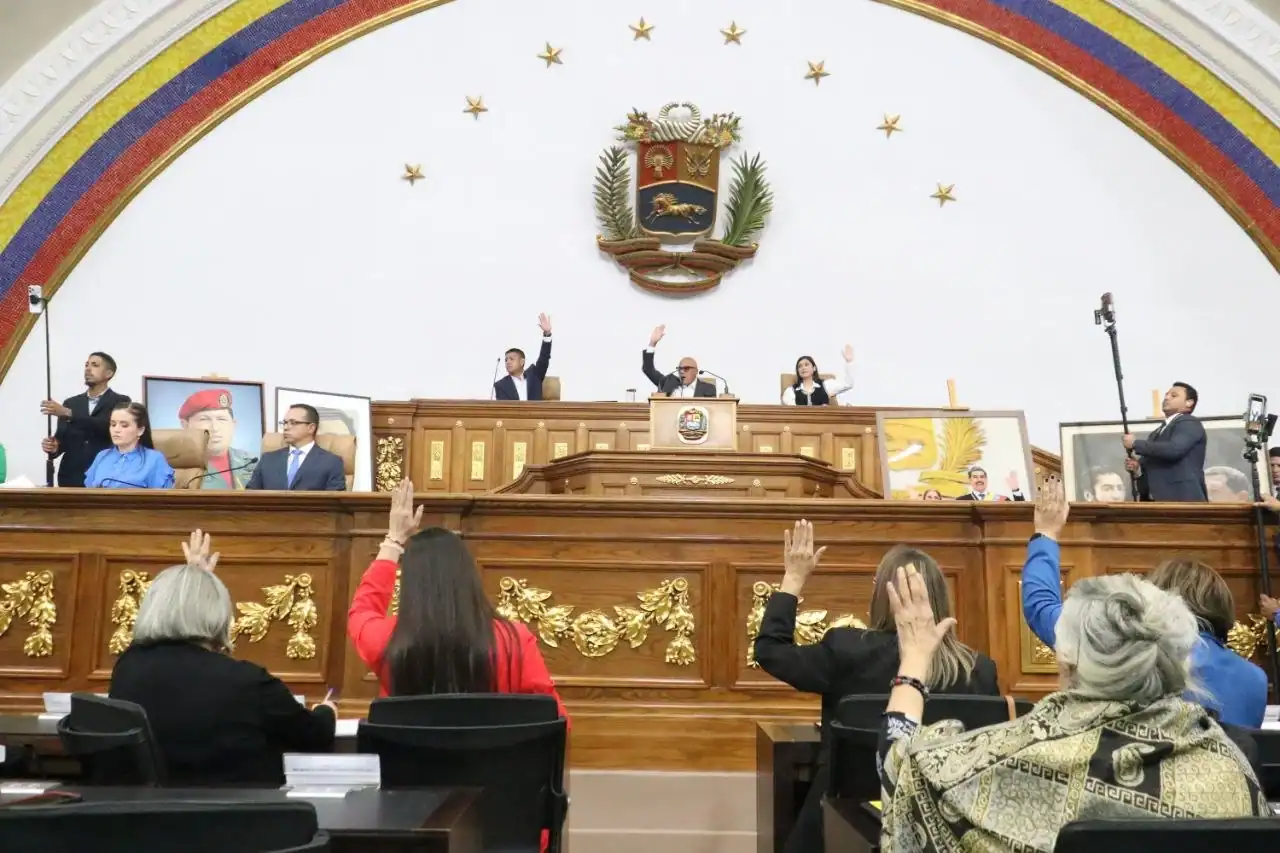
The Venezuela government reshuffle continued on Tuesday as the National Assembly approved Arianny Viviana Seijo Noguera to replace Reinaldo Muñoz as procurador general, the official responsible for defending the state’s legal and financial interests domestically and internationally. The Rio Times, the Latin American financial news outlet, examines who she is, why her background matters, and what the appointment signals about the direction of the post-Maduro transition.
Acting president Delcy Rodríguez proposed the appointment after Muñoz, who held the post since 2015, submitted his resignation. Assembly president Jorge Rodríguez described Seijo as a graduate of the Universidad Central de Venezuela with two master’s degrees and a doctorate from the University of Westminster’s School of Law in London.
A PDVSA Insider at a Critical Moment
Until her appointment, Seijo served as the chief legal counsel of Petróleos de Venezuela (PDVSA), the state oil company at the center of the country’s economic recovery. She also worked as an external adviser to the Procuraduría itself and in 2023 was part of a 27-member legal delegation that accompanied Delcy Rodríguez to the International Court of Justice in The Hague for hearings on the Essequibo territorial dispute with Guyana.
Her PDVSA background carries particular weight right now. Venezuela is negotiating with international oil companies on new investment contracts worth an estimated $1.4 billion, restructuring billions in outstanding debts to European partners, and seeking to recover frozen assets abroad as sanctions are gradually eased. The procurador general is the state’s lead representative in all of these matters.
The Amnesty Connection in the Venezuela Government Reshuffle
Venezuelan media reported a detail that adds a political dimension to her profile. Cyberactivist Giuseppe Gangi published metadata from the amnesty law approved in February showing Seijo’s name as the document’s author. If confirmed, it means the new procurador general drafted the legislation that freed more than 3,200 political detainees held under the Maduro era.
That positions her as both a legal technician trusted by PDVSA and someone directly involved in the Rodríguez government’s political normalization strategy. It also means the person now defending the state’s patrimony helped write the law that amnestied those the same state had imprisoned.
Part of a Broader Institutional Overhaul
The appointment follows a pattern in the Venezuela government reshuffle. Since assuming the acting presidency after Maduro’s capture by U.S. forces in January, Rodríguez has replaced the attorney general, the ombudsman, cabinet ministers, and military commanders. The previous procurador, Muñoz, had served for over a decade, first under Maduro and then under Rodríguez.
The speed of these changes reflects two pressures operating simultaneously. Domestically, Rodríguez needs institutions staffed by people loyal to her rather than to the old Maduro inner circle. Internationally, she needs credible interlocutors as Venezuela negotiates with Washington, manages the fallout from the Alex Saab prosecution, and courts foreign investment for a devastated economy.
What It Means for Justice
The procurador general does not prosecute crimes — that role belongs to the fiscal general. The procuraduría advises the executive on legal matters and represents the state in litigation, arbitration, and international proceedings. The appointment will not directly change how political cases are handled or whether opposition figures face persecution.
What it may change is Venezuela’s capacity to protect its interests in the complex legal landscape of sanctions relief, debt restructuring, and oil contract renegotiation. Whether Seijo uses that capacity to entrench the current power structure or to build a more transparent legal framework will be one of the clearest tests of whether the Rodríguez era represents continuity under new management or the beginning of something genuinely different.
More: Latin America news in English, every day from The Rio Times.
This article was produced by The Rio Times’ automated newsroom system. How we use AI · Report an error · Editorial responsibility: Matthias Camenzind, Editor-in-Chief