Irani Q1 2026 Profit Plunges 68% on Planned Mill Shutdowns
Irani (RANI3) Q1 2026 net income plunged 68% to R$19.4 million, missing consensus by 56% as Gaia XI shutdowns compressed production.
Irani Q1 2026 Earnings: What Happened
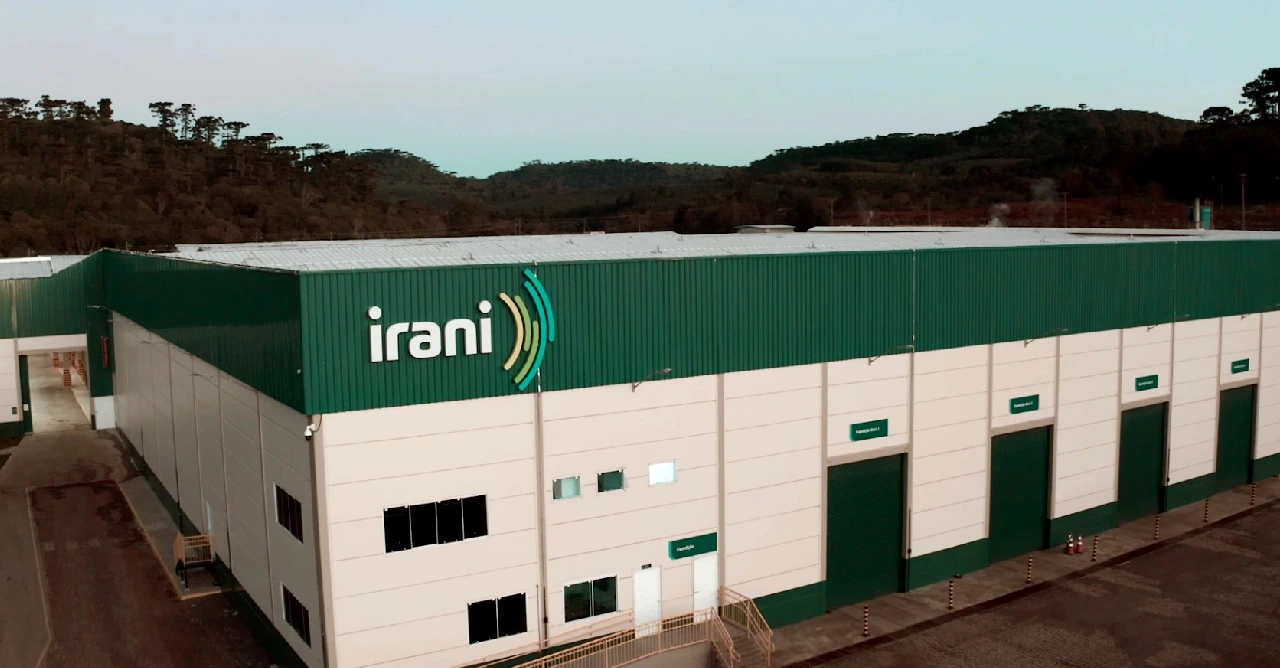
Irani Papel e Embalagem S.A. (B3: RANI3) is one of Brazil’s leading sustainable packaging companies, founded in 1941 and headquartered in Porto Alegre, Rio Grande do Sul. The company operates through three segments: Sustainable Packaging (corrugated cardboard boxes and sheets — the core business), Packaging Paper (kraft and recycled papers for domestic and export markets), and RS Forestry (pine plantation and resin production in Rio Grande do Sul). Irani is the only company listed on B3 exclusively in the sustainable packaging segment, with manufacturing plants in Santa Catarina (Campina da Alegria and Vargem Bonita), Rio Grande do Sul, and São Paulo. The company underwent a CEO transition in early 2026 and is currently executing its multi-year Gaia investment cycle — a series of capital projects designed to modernize production capacity and improve efficiency. Irani Q1 2026 results are covered by The Rio Times as part of its Latin American financial news reporting on B3-listed paper and packaging companies.
The 68% profit collapse needs to be decomposed: approximately R$26.8 million of the EBITDA decline was directly attributable to planned, pre-announced operational events — the Gaia XI reform of Paper Machine #5 (MP#5, the company’s primary kraftliner machine) and the mandatory biannual inspection of the Caldeira de Força (recovery boiler), which forced a temporary shutdown of Paper Machine #1 (MP#1). These shutdowns were communicated to the market via fato relevante in November 2025, meaning the impact was anticipated but the magnitude exceeded what the consensus had modeled. Without the shutdown effects, adjusted EBITDA would have been approximately R$140 million, broadly in line with the trailing quarterly run rate.
RANI3 closed at R$8.07 ($1.53) on Wednesday before the after-market release, with the stock trading at 7.9x trailing P/E and a 5.2% dividend yield. The average analyst target price of R$12.25 implies approximately 52% upside, while InvestingPro’s fair value estimate of R$10.39 suggests 29% upside. Market capitalization stands at approximately R$2.0 billion ($380M). The stock has declined 5.5% year-to-date but has a notably low beta of 0.23, reflecting the defensive characteristics of a domestic packaging business with limited export exposure and consistent dividend payments.
Key Drivers Behind Irani’s Q1 2026 Weakness
Gaia XI Project and Planned Shutdowns
The Projeto Gaia XI reform of Paper Machine #5 (MP#5) — Irani’s primary kraftliner production line at the Campina da Alegria plant in Santa Catarina — required a full shutdown during Q1, removing a significant portion of the company’s paper output capacity. Simultaneously, the biannual regulatory inspection of the Caldeira de Força (recovery boiler) forced a temporary halt to Paper Machine #1 (MP#1). The combined effect reduced paper production volumes, forced Irani to purchase rigid paper on the open market at higher costs to maintain corrugated cardboard packaging output for its customers, and reduced paper sales to third parties. The R$20.65 million ($3.9M) direct EBITDA impact from the Gaia shutdowns represents the revenue loss from unsold paper plus the margin cost of purchasing replacement material. Upon completion, the reformed MP#5 is expected to deliver a 7% productivity increase — a structural improvement that will enhance Irani’s competitive position and should more than compensate for the Q1 disruption over a 12-month horizon.
TG4 Transformer Failure and Energy Costs
A separate technical issue — failure of the turbogenerator 4 (TG4) transformer — compounded the planned shutdown impact by reducing Irani’s self-generation capacity. The company typically generates a significant portion of its electricity requirements from biomass (pine waste, black liquor) through its cogeneration infrastructure. With TG4 offline, Irani was forced to purchase R$6.1 million ($1.2M) in additional electricity from third parties at market rates, directly compressing operating margins. This was unplanned and represents a genuinely non-recurring event distinct from the pre-announced Gaia shutdowns.
Revenue Mix Shift and FX Impact on Exports
Net revenue of R$409.8 million ($77.9M) declined 3.1% year-over-year, with the domestic market (90.6% of revenue) falling 2.4% to R$371.2 million ($70.6M) and exports declining 10% to R$38.5 million ($7.3M). The export decline reflects both the BRL appreciation (the same 10% real/dollar headwind affecting WEG and Suzano) and the reduced availability of paper for external sale due to the shutdowns. Domestically, the corrugated cardboard market (measured by Empapel) showed positive demand trends, but Irani’s inability to produce at full capacity during the shutdowns prevented it from fully capturing this growth. The company characterized the market as “positive” despite its own operational constraints.
Live Company IntelligenceIrani Papel e Embalagem S.A — the full investor dossier
Valuation & profitability
Price & risk
$7.5252-wk high
$9.74
Revenue trend · 6y
Ownership
Dividend
Irani Q1 2026 Financial Detail
The profit-to-EBITDA divergence — 68% net income decline versus 17% EBITDA decline — reflects the amplification of operating weakness through the financial result. With leverage at 2.11x and debt costs tied to CDI at approximately 8.9% post-tax, the financial expense consumes a significant share of the R$113.5 million EBITDA. When operating earnings decline by R$23 million, the fixed financial charge means the proportional impact on net income is much larger. ROIC of 12.3% with a 3.1pp spread over the cost of debt confirms that the underlying business still creates value — but the margin of safety has narrowed from the wider spreads seen in 2024–2025.
The dividend discipline is notable even in a weak quarter. The AGO approved R$59.7 million ($11.4M) in additional dividends for the 2025 fiscal year, equivalent to R$0.259 per share. For Q1 2026, the company proposed distributing 25% of net income — R$5.17 million ($983K) or R$0.022 per share. This consistent dividend policy — paying out every quarter regardless of the earnings cycle — is the investment thesis anchor for RANI3, which has delivered approximately R$0.74 per share in trailing 12-month distributions, representing a 9.2% yield on the R$8.07 closing price. The question for investors is whether the Q1 weakness is genuinely non-recurring (as management claims) or whether the combination of higher Selic, BRL strength, and competitive pressure represents a structural margin headwind.
Management Signals from Irani
Key Facts
— CFO André Camargo de Carvalho’s framing — that the result “was expected in light of the planned shutdown” communicated to the market in November 2025 — is technically accurate but incomplete. While the shutdowns were pre-announced, the 56% consensus miss suggests that either the market underestimated the magnitude of the production disruption, the TG4 transformer failure (which was not pre-announced) added an unexpected layer of cost, or both. The 7% productivity improvement expected from the Gaia XI completion is the offsetting positive — if delivered, it would add approximately R$10–15 million in annualized EBITDA through higher MP#5 output.
— The “value over volume” strategy cited by Investing.com’s pre-results analysis — average packaging prices increasing 10.9% YoY in Q4 2025 even as physical volumes declined 2.5% — is the longer-term strategic positioning. Irani has been deliberately prioritizing pricing power over market share growth, targeting higher-value corrugated solutions (branded packaging, custom designs) rather than commodity boxes. This strategy is sustainable in a growing Brazilian domestic economy but becomes vulnerable if the Selic-driven slowdown reduces demand from Irani’s key customer segments (food, beverage, agriculture, e-commerce).
— The CEO transition — part of Irani’s governance renewal — adds a layer of execution uncertainty to the Gaia project cycle. The Gaia investment program (from Gaia I through the current Gaia XI) has been the company’s multi-year modernization strategy, systematically upgrading each major production line. New leadership must demonstrate continuity on this program while potentially bringing fresh strategic perspectives on diversification, M&A, or market positioning.
What to Watch Next for Irani
Q2 2026 normalization is the critical proof point. If the Gaia XI reform and boiler inspection are completed as planned and MP#5 returns to operation with the projected 7% productivity improvement, Q2 EBITDA should revert to the R$130–140 million range (implying a 30%+ margin), confirming the Q1 weakness was genuinely non-recurring. Any delay in the MP#5 restart or additional unplanned maintenance would challenge the non-recurring narrative and raise questions about the aging production infrastructure.
Corrugated cardboard demand trends in Brazil — tracked by the Empapel index — will determine whether Irani can recapture the volume lost during Q1 shutdowns. The Brazilian packaging market has historically correlated with GDP, industrial production, and agricultural exports. If the Selic easing cycle gains traction and the economy accelerates in H2 2026, packaging demand should strengthen, supporting both volume and pricing recovery for Irani.
New CEO’s strategic direction and capital allocation priorities will shape the medium-term investment thesis. The Gaia cycle has delivered systematic modernization over multiple years — the question is what comes after Gaia XI. Options include further capacity expansion (organic or through acquisition), diversification into adjacent packaging formats (flexible packaging, molded fiber), or a shift toward higher shareholder returns (dividend increase, buybacks) as the investment cycle matures. The new leadership’s first strategic communication will be closely watched by the R$12.25 target-price consensus.
Irani Quarterly Results (Q1 2026 vs Q1 2025)
| Metric | Q1 2025 | Q1 2026 | Chg |
|---|---|---|---|
| Net Revenue | R$422.9 mn | R$409.8 mn ($77.9M) | -3.1% |
| Adj. EBITDA | R$136.2 mn | R$113.5 mn ($21.6M) | -16.7% |
| EBITDA Margin | 32.2% | 27.7% | -4.5pp |
| Net Income | R$60.8 mn | R$19.4 mn ($3.7M) | -68.1% |
| Domestic Revenue | R$380.3 mn | R$371.2 mn ($70.6M) | -2.4% |
| Export Revenue | R$42.8 mn | R$38.5 mn ($7.3M) | -10% |
Irani Strategic and Operational Summary
| Metric | Value |
|---|---|
| Shutdown EBITDA Impact | ~R$26.8 mn (Gaia R$20.7M + TG4 R$6.1M) |
| Gaia XI Expected Benefit | +7% MP#5 productivity post-reform |
| Leverage (ND/EBITDA) | 2.11x (Q1 2025: 2.21x) |
| ROIC | Spread | 12.3% | +3.1pp above cost of debt |
| 2025 Dividends (AGO) | R$59.7 mn ($11.4M) | R$0.259/share |
| Q1 2026 Dividend Proposed | R$5.17 mn ($983K) | R$0.022/share |
| Share | P/E | DY | R$8.07 ($1.53) | 7.9x | 5.2% |
| Consensus Miss | R$19.4M vs R$44M est. (-56%) |
Risks Facing Irani
The “non-recurring” label may mask structural pressures. While the Gaia XI and boiler shutdowns are genuinely planned events, the 56% consensus miss suggests the market was not adequately prepared for their magnitude. If additional maintenance needs arise in Q2–Q3 — particularly given the TG4 transformer failure, which was unplanned — the production disruption could extend beyond Q1, challenging the recovery narrative. Irani’s production infrastructure, while being systematically modernized through the Gaia cycle, is aging and may require more frequent maintenance as the modernization program progresses through remaining equipment.
Selic sensitivity through the leverage structure. At 2.11x ND/EBITDA with an 8.9% post-tax cost of debt, Irani’s financial expenses consume a disproportionate share of operating earnings in a high-rate environment. Until the Selic declines meaningfully (currently 14.50% with 25bp cuts per meeting), the financial expense burden will continue to amplify any operating weakness into significant net income volatility — as demonstrated by the 17% EBITDA decline translating into a 68% profit decline in Q1.
Competitive dynamics in Brazilian corrugated packaging are intensifying. International Paper (through its Brazilian subsidiary), Klabin’s packaging division, and regional players are all competing for the same pool of domestic corrugated demand. Irani’s “value over volume” strategy — pricing 10.9% above prior-year levels while accepting 2.5% volume decline — is sustainable only if the premium pricing can be maintained against competitors willing to offer lower prices for comparable products. Any price war triggered by a demand slowdown would compress margins beyond the Gaia productivity gains.
Brazilian Packaging and Paper Sector Context
Key Facts
— The Brazilian corrugated cardboard market tracked by the Empapel industry association has shown positive demand trends in early 2026, with shipments growing in the low-to-mid single digits year-over-year. The market is driven by food and beverage packaging (Irani’s core), agricultural exports (seasonal), and e-commerce delivery packaging (structural growth). The Empapel data confirms that underlying demand was healthy in Q1 — Irani’s revenue and volume weakness was self-inflicted (shutdowns) rather than market-driven, which is actually the better scenario for recovery.
— Irani occupies a unique niche as the only B3-listed company exclusively focused on sustainable packaging. While Klabin (KLBN11) and Suzano (SUZB3) are much larger and produce packaging paper, their primary businesses are market pulp and integrated paper — not corrugated converting. This differentiation gives Irani scarcity value for investors seeking direct exposure to Brazilian packaging demand without the commodity pulp price volatility that dominates Klabin’s and Suzano’s earnings. The 0.23 beta confirms this defensive profile: Irani’s earnings are driven by domestic Brazilian consumer and industrial demand rather than by global commodity prices or FX movements.
— The Gaia investment cycle — now in its eleventh iteration — has been Irani’s defining strategic program for over a decade. Each Gaia project has systematically upgraded a major production line, expanded capacity, or improved energy efficiency. The cumulative effect has been a transformation of the company’s cost structure and product quality from a regional player to a nationally competitive producer. With Gaia XI focusing on the flagship MP#5, the program is reaching the end of its major phases — raising the question of what the post-Gaia Irani looks like: higher dividends, lower capex, and possibly a re-rating from “investment phase” to “harvest phase” multiples.
Irani Q1 2026 | RANI3 earnings results | Brazil sustainable packaging corrugated cardboard | Gaia XI project | Latin American financial news | The Rio Times
This article was produced by The Rio Times’ automated newsroom system. How we use AI · Report an error · Editorial responsibility: Matthias Camenzind, Editor-in-Chief
LatAm Markets: Live Signals → — real-time movers, turnover leaders and FX across Latin America.