Europe Bands Together, Builds New Joint Air Shield Against Modern Missile Threats
European governments have launched their biggest-ever joint air defense effort, called the European Sky Shield Initiative (ESSI), to protect against the growing risk of missile and drone attacks.
Led by Germany since 2022, this project now brings together 24 countries—from NATO members to neutral states like Switzerland and Austria—to overcome years of fragmented, incompatible systems that left dangerous gaps in Europe’s skies.
Why now? For decades, European countries each spent heavily to build separate air defense with their own suppliers, causing duplication and higher costs.
But the war in Ukraine showed modern missile and drone threats are simply too fast and unpredictable for old, disjointed setups. European officials from Germany and Switzerland have publicly stated they must share technology, radar data, and budgets to keep up.
ESSI actually links three layers of defense: short-range systems like IRIS-T SLS and NASAMS to destroy low-flying drones; medium-range defenses such as IRIS-T SLM and Patriot PAC-3, guarding wide areas about 40 kilometers out.
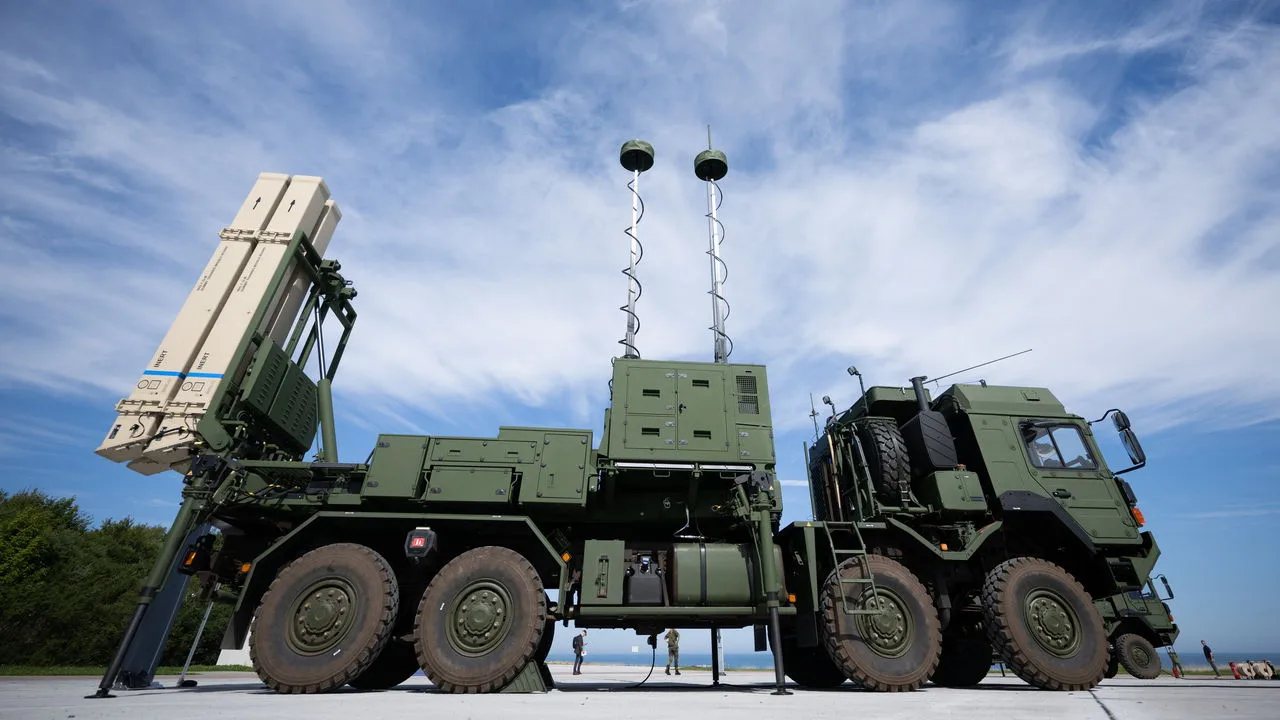
It also includes long-range Arrow 3 interceptors, bought by Germany for €4 billion. These long-range systems are able to shoot down ballistic missiles even as they pass through space.
Each country keeps full control of its own batteries and chooses what fits. Switzerland recently agreed to buy five IRIS-T SLM batteries in July 2025. Its government confirmed the new systems will be managed by Swiss forces—retaining long-standing Swiss neutrality.
Austria invested in Skyranger vehicles. All members must use compatible equipment so that information about incoming threats instantly reaches whichever unit can respond.
Advanced European and Israeli radars watch for threats across the continent. When one appears, a multinational network rapidly decides which system can shoot and passes the launch order to national commanders.
This means a missile spotted over the Baltic could be intercepted by a military in a different country. Not every European nation joined. France, Spain, Italy, and Poland declined, mainly to keep building their own missile technology and maintain industrial independence.
French officials emphasized they will rely on their SAMP/T system instead. This reflects long-running debates about how much Europe should depend on U.S. and Israeli weapons.
ESSI reflects a hard lesson: real crises on the continent’s borders forced countries to drop old rivalries and share defense. Yet the project needs continued political and financial support to fully work.
For business and security, ESSI signals Europe’s new realism—pooling money and knowledge to face today’s threats, not yesterday’s.
This article was produced by The Rio Times’ automated newsroom system. How we use AI · Report an error
Read More from The Rio Times