

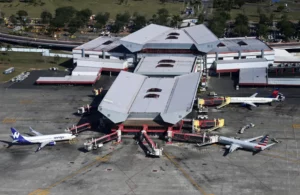
At José Martí International Airport in Havana, an official aeronautical notice now carries a message rarely seen at any functioning airport on Earth: “JET A1 FUEL NOT AVBL.”
The notice, coded A0356/26 in the global NOTAM system, confirms that Cuba’s main gateway — and all eight of its other international terminals — will be unable to refuel a single commercial aircraft for an entire month, from February 10 through March 11.
It is the starkest evidence yet that Washington’s energy blockade is physically severing the Caribbean island from the outside world.
The crisis traces a direct line to two executive actions by President Donald Trump. On January 3, the U.S. military operation in Caracas that detained Venezuelan President Nicolás Maduro cut off Cuba’s largest oil supplier overnight.
Then, on January 29, Trump signed a presidential order threatening tariffs on any country that continues selling petroleum to the island, warning that Cuba constitutes “an unusual and extraordinary threat” to U.S. national security.
Fuel cutoff grounds Cuba’s aviation lifeline
Mexico, Cuba‘s second-largest fuel source, halted its shipments under pressure, though President Claudia Sheinbaum said she is using “all diplomatic channels” to find a solution and has pledged humanitarian aid in the meantime.
The aviation shutdown threatens to paralyze what remains of Cuban tourism, once a vital source of hard currency. According to Cirium data, nearly 400 weekly flights were scheduled for February, representing over 70,000 seats — routes operated by WestJet, American Airlines, Copa Airlines, Iberia, Air Canada, Delta, and Lufthansa, among others.
Airlines now face three costly options: carry enough extra fuel from departure airports to make the round trip, add technical refueling stops in Cancún, Nassau, or Punta Cana, or cancel flights outright.
Cuba had already closed hotels and begun relocating tourists before the NOTAM was issued. Visitor arrivals fell 20.5% through September 2025, and the full year brought barely 1.8 million tourists — the worst figures in nearly two decades.
Supporters of Washington’s approach argue this is maximum pressure designed to force Havana’s hand toward democratic reform; critics, including UN Secretary-General António Guterres, warn it risks humanitarian “collapse” for 11 million people.
Parts of the country already endure 20-hour daily blackouts. Garbage trucks sit idle for lack of diesel. Families cook with wood and coal.
President Miguel Díaz-Canel, in a rare televised address, said Cuba is open to dialogue “without preconditions,” but also declared the country is preparing a “defense plan” — while Kremlin spokesman Dmitry Peskov said Monday that Russia is seeking solutions through “diplomatic and other channels.”
Some 4,000 Russian tourists remain on the island; their flights, for now, are still operating. Whether anyone else’s will is the question hanging over Havana’s silent runways.