Colombian Peso Gains Amid Optimism Over Ukraine-Russia Peace Talks
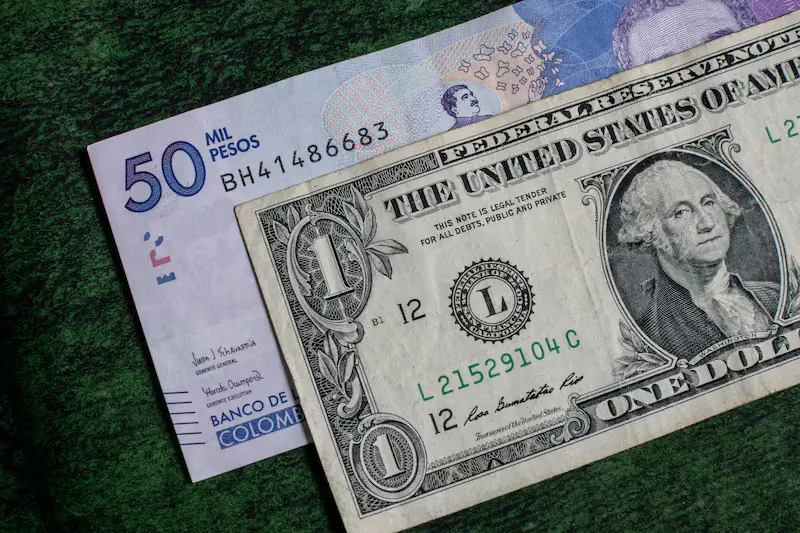
The Colombian peso strengthened on Thursday, rising 0.5% to COP 4,142 per dollar, as optimism grew over potential peace negotiations between Russia and Ukraine.
This development followed U.S. President Donald Trump’s announcement of discussions with Russian President Vladimir Putin and Ukrainian President Volodymyr Zelenskyy, signaling a possible resolution to the years-long conflict.
Trump’s phone calls with both leaders reportedly covered topics ranging from the war in Ukraine to broader issues like energy and international security. Markets reacted positively to the news, with Ukrainian dollar bonds gaining value and Russia’s ruble appreciating by 5%.
European currencies also rallied, while oil prices declined sharply. This was driven by expectations that peace could lead to the lifting of sanctions on Russian exports. The peso’s performance reflects Colombia’s sensitivity to global market trends, particularly those tied to oil prices.
Brent crude dropped 0.7% to $74.66 per barrel, while U.S. crude fell 0.5% to $70 per barrel. Analysts attributed these declines to hopes that peace talks could stabilize supply chains disrupted by the war.
Despite the optimism, skepticism remains about the feasibility of a lasting agreement. Reports suggest that Russia seeks significant concessions from Ukraine, including territorial adjustments and commitments to neutrality.
Latin American Currencies and Geopolitical Developments
European leaders have expressed concerns about being excluded from negotiations, fearing a deal that could undermine Ukraine’s sovereignty. The peso’s rise also came amid broader movements in Latin American currencies.
Chile’s peso gained 0.8%, driven by higher copper prices, while Brazil’s real remained flat following revised economic forecasts. Mexico’s peso edged up 0.2%, reflecting its close ties to U.S. trade policies.
While the Colombian peso benefited from improved sentiment, it remains vulnerable to external shocks, including U.S. inflation data and Federal Reserve policy decisions. Recent inflation figures in the U.S., showing the largest monthly increase in over a year, have dampened expectations for further rate cuts in 2025.
Colombia’s currency gains highlight its exposure to geopolitical developments and global commodity markets. As peace talks progress, the peso will likely remain a barometer for investor confidence in the region’s stability and economic prospects.
More: Colombia news in English, every day from The Rio Times.
Live Market IntelligenceColombia — Live Market Board
Rio Times · Live Market Intelligence
Colombia — Live Market Board
+0.17%
185,899.93
-0.37%
63,536.96
+0.25%
11,410.19
+0.46%
2,990,605
-0.28%
2,570.03
+0.17%
59,529.36
+0.20%
| Instrument | Last | Change | YoY | Prev. | High | Low | Volume |
|---|---|---|---|---|---|---|---|
| COLCAP | 2,570.03 | +0.17% | — | 9.04 | 9.05 | 9.02 | 4,133 |
| USD/COP | 3,140 | +0.03% | -22.04% | 3,139 | 3,141 | 3,105 | — |
| BRENT | 88.88 | -0.03% | +34.42% | 88.91 | 90.07 | 88.12 | 29,713 |
| WTI | 83.11 | -0.11% | +31.57% | 83.20 | 84.35 | 82.40 | 166,848 |
| ECOPETROL | 16.92 | -0.53% | +98.01% | 17.01 | 17.05 | 16.79 | 737,591 |
| BANCOLOMBIA | 95.87 | -2.18% | +96.15% | 98.01 | 100.36 | 95.73 | 188,740 |
| GRUPO AVAL | 5.40 | +2.66% | +76.89% | 5.26 | 5.49 | 5.32 | 146,447 |
| TECNOGLASS | 42.30 | -1.10% | -48.04% | 42.77 | 42.73 | 42.05 | 60,908 |
| CREDICORP | 375.17 | -0.49% | +49.60% | 377.00 | 384.43 | 372.27 | 88,375 |
| BUENAVENTURA | 34.45 | -1.02% | +88.07% | 34.80 | 35.62 | 34.33 | 275,831 |
| SOUTHERN COPPER | 193.97 | -0.26% | +104.01% | 194.48 | 199.36 | 192.59 | 367,102 |
This article was produced by The Rio Times’ automated newsroom system. How we use AI · Report an error
In depth
Read More from The Rio Times