

Key Points
Brazil’s largest traditional retailer has decided that pride of channel is less important than being where the customer already shops. Casas Bahia announced Monday that it will sell directly on Amazon Brazil as a first-party vendor, marking the latest shift in a Brazil retail landscape where old-guard chains are racing to partner with digital giants rather than compete against them, The Rio Times, the Latin American financial news outlet, reports.
Brazil Retail Giant Goes Where Customers Are
The partnership, disclosed to securities regulator CVM, puts thousands of Casas Bahia products — televisions, smartphones, computers, and its Bartira furniture line — onto Amazon’s Brazilian marketplace immediately. Unlike third-party sellers, Casas Bahia retains full control over pricing, inventory selection, and customer experience.
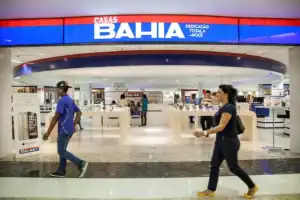
A second phase will connect Casas Bahia’s logistics infrastructure to Amazon’s delivery network, making products eligible for the Prime badge with free and fast shipping. The Brazilian retailer’s competitive advantage in transporting large items like refrigerators, sofas, and washing machines — a logistical challenge that pure digital players struggle with — becomes a shared asset.
The Mercado Libre Proof of Concept
The Amazon deal follows a pattern. In October 2025, Casas Bahia entered Mercado Libre’s marketplace in its first venture outside proprietary channels after decades of selling exclusively through its own stores and website. The results were disproportionate: Mercado Libre accounted for just 5% of digital revenue in the fourth quarter but drove nearly half of all online sales growth.
Overall first-party e-commerce sales grew 25% year-over-year in the fourth quarter, while physical stores contracted 1.2%. A Shopee partnership followed Mercado Libre. Amazon is the third marketplace in five months, a pace that signals Casas Bahia’s board views multi-platform distribution as essential to survival.
To mark the launch, Casas Bahia is offering free shipping on orders above R$399 ($70) in São Paulo and Rio de Janeiro. The promotional push targets the two cities where Amazon’s delivery infrastructure is most mature and where appliance purchases — the retailer’s core category — are highest.
Franklin told Brazil Journal that the company sees no significant customer overlap between the platforms. Each marketplace brings a distinct buyer profile, and the data from Mercado Libre supports that thesis — new customers, not cannibalized sales from the retailer’s own website.
Turnaround Strategy Takes Shape in Brazil Retail
CEO Renato Franklin framed the move as building what he calls the largest first-party omnichannel operation in Brazil’s retail market. At an Investor Day coinciding with the announcement, the company outlined four pillars for reaching profitability: AI-driven pricing and logistics efficiency, lower financing costs, operating leverage through marketplace partnerships, and growth of its consumer credit business.
The company has posted nine consecutive quarters of improving EBITDA margins, but has not yet set a date for turning a net profit. For Amazon Brazil, led by president Juliana Sztrajtman, the deal expands the platform’s local product offering in appliances and furniture — categories where it has historically trailed Brazilian competitors.
The broader signal matters for investors watching Brazil’s digital economy. A traditional retailer with over 1,000 physical stores choosing to sell on its competitors’ platforms suggests the old model of channel exclusivity is over. What replaces it — logistics as a service, data-driven pricing across platforms, and the traditional installment-payment system adapted for digital — may define who survives in Brazilian retail’s next chapter.