Brazil Startup Acquisitions 2026: Why Buyouts Beat IPOs

Key Facts
—Ecosystem scale. Around 57,000 active Brazilian startups in 2026, ~25 unicorns, the largest venture-funded cohort in Latin America.
—Macro discipline. Selic at 14.50% after the 30 April 2026 cut. Headline inflation ~4.6%. IMF projects 1.5% GDP growth. The result is selective capital, not absent capital.
—Capital deployment. Early 2026 saw ~US$424 million across ~50 institutional rounds. Late-stage Latin American exits hit ~US$4.9 billion in 2025, weighted toward strategic M&A.
—Sector mix. Fintech ~40% of VC flows. Applied AI in legal, HR and B2B SaaS. AgTech tied to the new regulated carbon market. Healthtech and green energy maturing.
—Geography. São Paulo dominant. Rio, Belo Horizonte, Florianópolis and Campinas now institutionally visible secondary hubs with materially lower entry valuations.
RioTimes Deep Analysis | Series: The Global Lens
Brazilian startups 2026 sit on top of a market disciplined by two consecutive years of capital scarcity and a Selic policy rate at 14.50%. The growth-at-any-cost playbook is gone. Investors are pricing real unit economics, real margins and credible paths to profitability — and the cohort that survives is structurally more durable than any prior vintage.
What the macro frame demands
The Central Bank of Brazil cut the Selic by 25 basis points to 14.50% on 30 April 2026, the second consecutive 25-basis-point reduction. That backdrop matters more than any sector narrative: a sovereign curve that pays meaningfully in local currency raises the bar for every early-stage investment, and it has reshaped the kinds of companies that get funded. Year-to-date equity funding in early 2026 sits well below 2021 peaks. Private market estimates put the deployment at around US$424 million across roughly 50 institutional rounds in the first months of the year. That is a market that has rebalanced toward selectivity, not collapsed.
The IMF projects 2026 GDP growth of around 1.5% for Brazil with headline inflation near 4.6%. The currency has been relatively stable against the dollar through the first half of the year. None of these are exciting headlines, but together they create the predictability that institutional capital needs to commit to multi-year early-stage portfolios. For founders, the practical effect is a tighter funnel: term sheets now require defensible gross margins, sensible burn multiples and demonstrated ability to operate against a benchmark sovereign rate above 14%. For investors, it means the entry valuations and governance discipline are the most reasonable they have been in five years.
Fintech: still the centre of gravity
Fintech continues to absorb close to 40% of total venture capital flowing into Brazil. The composition of that allocation has changed materially. The first wave of consumer fintech expansion is over. Nubank is a public company. The next wave is infrastructure: embedded finance, B2B payment orchestration, open finance plumbing and the developer layer beneath Pix. Companies like Barte, which raised roughly R$16.5 million for B2B payment infrastructure, and Lina OpenX in open finance data exchange, illustrate the shift toward picks-and-shovels rather than consumer brands.
Drex, the Central Bank’s digital real, is now in implementation. That has created a regulated environment for smart-contract use cases — tokenised collateral, wholesale settlement, programmable credit — that earlier blockchain ventures could not access. The regulatory sandbox the Central Bank operates for fintech and blockchain experimentation has become a meaningful filter: the firms that emerge from sandbox cycles tend to attract institutional follow-on capital faster than those building outside it. Credit-quality orchestration is the other dominant fintech theme. With the Selic at 14.50%, capital is expensive and credit risk premiums are high. Startups that can underwrite better than the incumbent banks — particularly in SME credit, supply-chain finance and embedded lending — are the ones drawing late-stage interest.
“This is the efficiency era. Brazilian startups 2026 are not being valued on user-acquisition curves — they are being valued on margins, burn multiples and the credible ability to outrun a 14.50% sovereign rate.”
The Rio Times, 2026 Brazilian Startups Outlook
Applied AI, agtech and healthtech
The Brazilian AI conversation in 2026 is not about foundation models. It is about applied AI built on top of foreign and domestic large models, tuned for local regulatory and operational problems. Legal AI is a particularly active vertical. Brazilian corporate compliance is famously complex, and AI tools that automate tax-appeal filings, contract review under the new dual VAT regime, and E-Social labour reporting are reducing real cost lines for mid-market companies. HR automation is following a similar path. Generative AI applied to enterprise workflows is also showing through, primarily in B2B SaaS — customer support automation, sales operations and document processing are the most-funded use cases.
Brazil’s structural advantage in agriculture continues to translate into a distinct agtech profile. Solinftec, which operates autonomous farm robotics across multiple agricultural regions and has raised more than US$125 million to date, sits inside a broader category of companies tying digital infrastructure to soybeans, sugarcane, cotton and cattle operations. The more interesting subset for institutional investors is the integration of agtech with carbon and biodiversity markets. Brazil’s regulated carbon market under Law No. 15.042 of 2024 creates demand for verifiable offset data tied to specific land parcels. Healthtech has matured into a sector with several scaled players — Capim providing embedded financing for dental clinics, Arvo applying AI to billing-cycle automation — and a clear secondary wave of infrastructure platforms for the providers and operators of the existing system.
Brazilian startups 2026: the sector snapshot
| Sector | 2026 theme | Capital signal |
|---|---|---|
| Fintech | Infrastructure layer, embedded finance, Drex use cases | ~40% of VC flow |
| Applied AI | Legal, HR, B2B SaaS workflow tools | Late-stage Series B/C concentration |
| AgTech | Autonomous machinery + carbon market integration | Longer-cycle institutional capital |
| Healthtech | Embedded financing, billing-cycle AI, provider infrastructure | Stable, recurring-revenue allocation |
| Green energy | Distributed generation, storage, industrial decarbonisation | BNDES + international co-finance |
Green energy and the climate corridor
The 2026 climate framework under Plano Clima 2024–2035 — including the 67% greenhouse-gas reduction target by 2035 and the regulated carbon market — has created a sectoral pull for climate-aligned startups. Solar integration, distributed generation, battery storage and industrial decarbonisation services are all drawing institutional interest, often co-financed by BNDES. The combination of Brazil’s existing renewable matrix and the new regulatory architecture makes the country one of the more credible green-investment destinations in the region. The Brazil Platform for Climate and Ecological Transformation Investments (BIP) is the formal channel through which international capital is being coordinated into these projects.
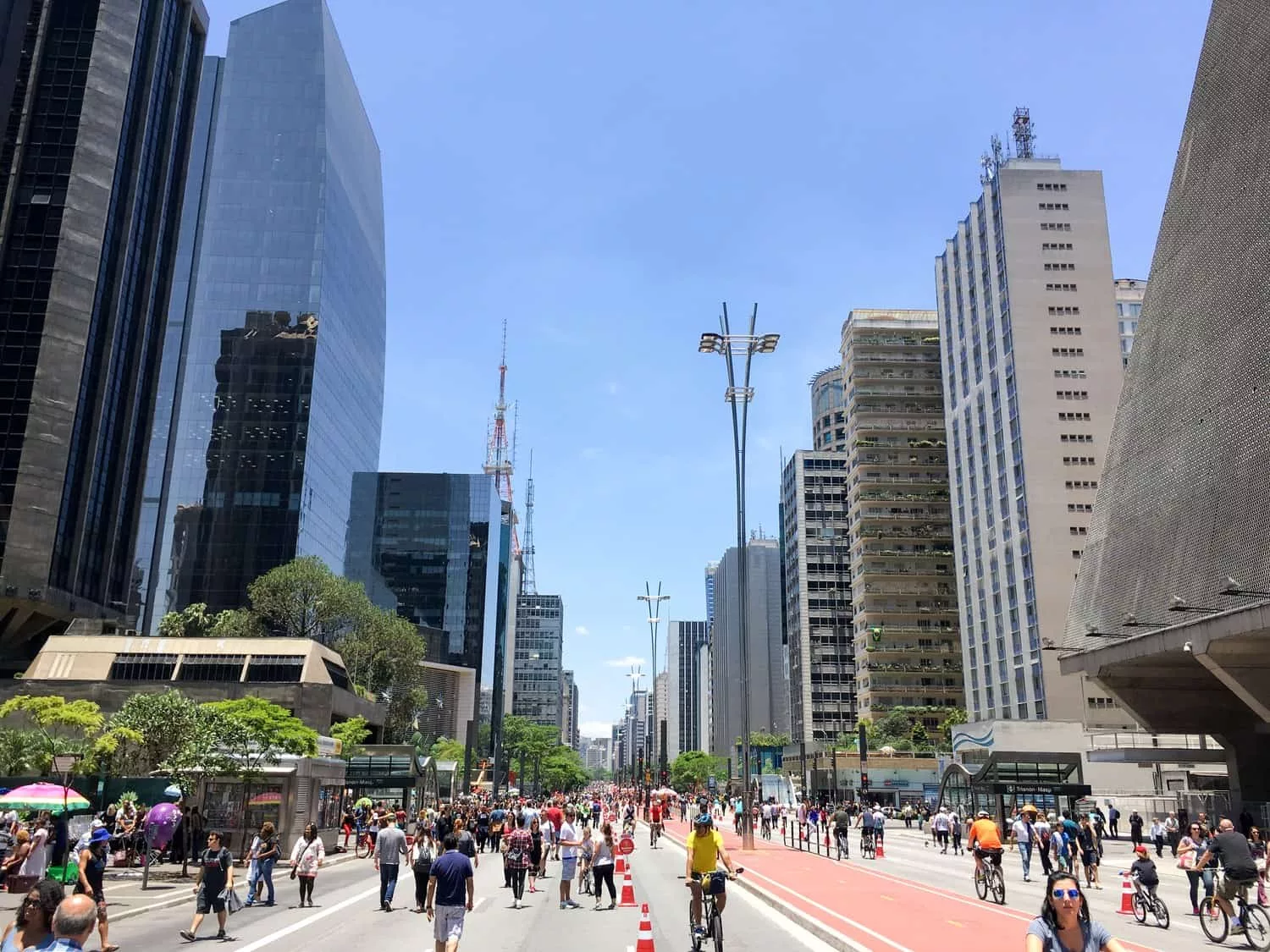
Geographically, São Paulo remains the dominant hub by every measure — capital deployed, founders, late-stage rounds. Beneath that, four secondary hubs are now institutionally visible: Rio de Janeiro in financial services, energy and the climate stack; Belo Horizonte in B2B SaaS and industrial technology; Florianópolis in SaaS and developer tooling; and Campinas in deep-tech around the regional university research base. State-level accelerator funding and BNDES matching programmes have supported this regional diversification. For investors, the effect is more deal flow outside São Paulo than at any previous stage, and meaningfully lower entry valuations in the secondary hubs.
The exit environment
Late-stage exits in 2025 reached approximately US$4.9 billion across Latin America, a substantial year-on-year recovery. The expectation for 2026 is a continuation of that trend, weighted toward strategic M&A rather than IPOs. International acquirers — primarily from the United States, Europe and increasingly Asia — are using M&A as the primary entry route into the Brazilian market, acquiring established local platforms rather than building from scratch. This is the channel through which the unicorn cohort and the secondary tier are most likely to be monetised over the next twenty-four months.
The B3 IPO window is expected to reopen progressively as the Selic eases. A material wave of technology IPOs would require the policy rate well below current levels and macro conditions that support equity risk premia. That is more plausible for 2027 than for 2026. Until then, Brazilian startups 2026 are being structured for strategic acquisition by global incumbents rather than public-market exits — and that has implications for cap-table design, governance and how founders manage dilution across the next two funding rounds.
What to Watch
- Selic trajectory. Further cuts compress the hurdle rate; pauses or reversals tighten the funnel further. Every 25 bps repositions early-stage valuations.
- Drex implementation milestones. Operational tokenised collateral and programmable credit are the first real test of whether the Brazilian fintech infrastructure layer extends globally.
- Carbon market activity. Law 15.042 enforcement and Secretariat ruling cadence determine the economics of agtech-and-carbon-linked startups.
- B3 IPO window. The first credible technology IPO at meaningful scale will signal that the exit environment has broadened beyond strategic M&A.
The Rio Times read
Brazilian startups 2026 are not the cheap, fast, growth-at-any-cost market of 2021. They are also not the distressed market of late 2023. They are something new: a maturing ecosystem in which capital is more selective, governance is more disciplined, and the underlying infrastructure — Pix, Open Finance, Drex, the standalone 5G network, the renewable power matrix and the new carbon market — supports a substantially broader range of credible technology businesses than the country has previously had.
The constraints remain real. Custo Brasil is structural, the talent shortage in technology professionals is well-documented, and the 14.50% Selic continues to discipline every investment decision. None of that disappears in the next twelve months. But for investors with a five-to-seven-year horizon and a willingness to engage with the regulatory and operational complexity, the 2026 cohort of Brazilian startups looks more durable than any prior generation. The capital deployed against this market today is, by structural design, capital that has already priced the risks.
More: Brazil news in English, every day from The Rio Times.
Connected Coverage
The early-stage channel feeding this cohort is detailed in our Brazil angel investor networks 2026 structural guide. The sector backdrop is set out in our Brazil technology sector growth 2026 analysis. Regional framing is in our Key investment opportunities in Latin America 2026 and South America economic trends 2026 readouts.
Reported by The Rio Times — Latin American financial news. Filed May 18, 2026. Part of The Global Lens series on Latin American technology and capital flows.
This article was produced by The Rio Times’ automated newsroom system. How we use AI · Report an error · Editorial responsibility: Matthias Camenzind, Editor-in-Chief