

Two Years, No Charges
Brazil’s Supreme Court formally closed its criminal investigation into Elon Musk on Tuesday, ending a two-year probe that had made the billionaire a central figure in the country’s battles over free speech, judicial authority, and digital platform regulation. Justice Alexandre de Moraes — the same judge who opened the inquiry in April 2024 — archived the case after Attorney General Paulo Gonet concluded that federal police had not produced sufficient evidence to sustain charges of obstruction of justice, criminal organization, or incitement to crime.
Gonet’s assessment was blunt: the investigation revealed “operational failures” by X in complying with court orders to block certain accounts, but found no evidence that the platform’s representatives deliberately instrumentalized the network to undermine the Brazilian judiciary. Instances where suspended accounts briefly regained access to their content were classified as technical glitches inherent to managing a global-scale network, not fraudulent intent. Moraes accepted the finding, noting that under Brazil’s accusatorial system, the decision to file or drop charges belongs exclusively to the public prosecutor and is “irretractable, except upon the emergence of new evidence.”
How the Standoff Began
The inquiry grew out of one of the most unusual confrontations between a sovereign government and a tech platform. In early 2024, Moraes had ordered the suspension of dozens of accounts linked to allies of ex-President Jair Bolsonaro, accusing them of operating as “digital militias” that spread disinformation, coordinated attacks on democratic institutions, and attempted to influence elections. Musk publicly challenged the orders, accused Moraes of censorship, and threatened to reactivate blocked accounts — prompting the justice to open a formal criminal investigation.
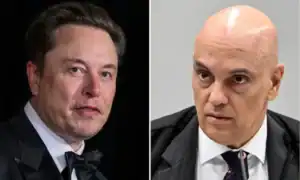
The conflict escalated through mid-2024. Moraes imposed daily fines on X, froze the company’s Brazilian financial assets, and eventually ordered the platform suspended across Brazil for approximately one month — an unprecedented move affecting one of the world’s largest democracies and an estimated 22 million users. X ultimately complied with the court orders, paid outstanding fines, appointed a new legal representative in Brazil, and restored its operations. But the criminal inquiry against Musk personally remained open, casting a shadow over the platform’s return and becoming a recurring irritant in U.S.-Brazil relations.
Diplomatic Timing
The archiving comes at a diplomatically convenient moment. President Lula is seeking to arrange a visit to Washington to meet Donald Trump — a summit that has been repeatedly delayed over scheduling conflicts but that both sides view as important for managing bilateral tensions over trade, the Iran war, and the potential U.S. designation of Brazilian criminal organizations as terrorist groups. Musk, who heads Trump’s Department of Government Efficiency and is considered one of the president’s closest advisors, would have been an awkward subject at any bilateral meeting while facing active criminal charges in the host’s country. A live criminal investigation against Trump’s close ally would have complicated those discussions considerably.
Musk’s Brazilian defense team, led by criminal lawyer Sérgio Rosenthal, said the archiving “reflects the correct and collaborative posture of the company, which does not condone, nor has ever condoned, any illegality.” The case may be reopened only if new evidence emerges — a threshold that, given the attorney general’s definitive assessment, appears unlikely to be met. What began as a clash of wills between a Supreme Court justice and the world’s richest man ends, for now, with a quiet filing and a one-page decision.