Brazil and Mercosur Near Free Trade Deal with EFTA, Group of Europe’s Wealthiest Countries
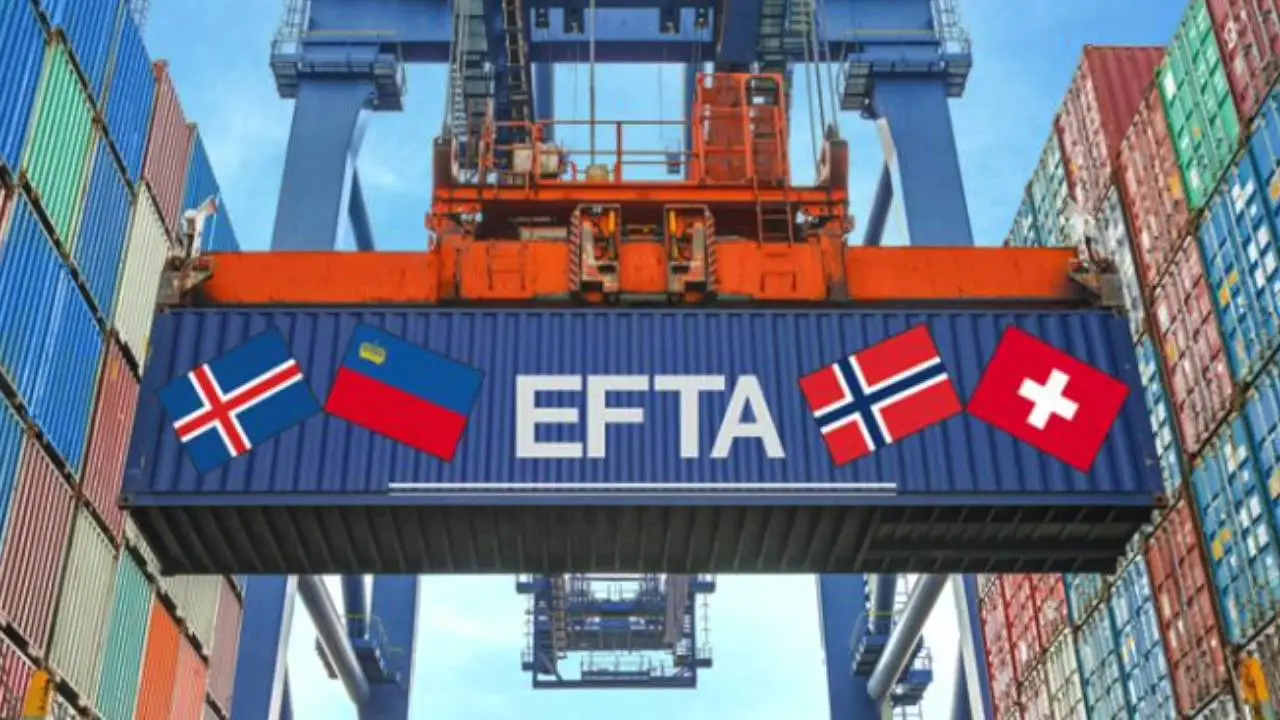
Brazil and its Mercosur partners are moving to finalize a free trade agreement with the European Free Trade Association (EFTA), comprised of Switzerland, Norway, Iceland, and Liechtenstein.
Official sources confirm that negotiations have accelerated since 2024, with both sides aiming to announce the deal at the Mercosur summit in July 2025.
This comes as global trade faces new barriers and uncertainty, particularly after the tariff wars initiated by former U.S. President Donald Trump.
Trade between Brazil and EFTA reached $7.1 billion in 2024, with Brazil exporting $3.07 billion worth of goods, mainly gold, aluminum oxide, coffee, soybeans, meat, and food preparations.
Imports from EFTA totaled $4.03 billion, led by pharmaceuticals, chemicals, machinery, petroleum, gas, and seafood. Switzerland and Norway account for most of this commerce, reflecting their status as EFTA‘s main economies and their combined GDP of $1.4 trillion.
Negotiators have focused on resolving issues such as rules of origin, which determine whether a product qualifies for tariff benefits. EFTA’s small, landlocked countries often rely on production chains that cross borders, making this a sensitive point.
Both sides are considering flexible solutions, like allowing inputs from different countries, to ensure products can qualify under the agreement. The deal covers more than just goods. It includes government procurement, intellectual property, investment, and services.
Mercosur-EFTA Trade Deal Advances with Flexibility
EFTA is the world’s tenth-largest importer of services and the eighth-largest global investor, with nearly $1.5 trillion in worldwide investment.
The agreement will give Mercosur companies access to EFTA’s $85 billion public procurement market and aims to boost foreign direct investment into South America.
Mercosur recently reduced its common external tariff by 10 percent, aiming to make its economies more competitive and better integrated into global value chains.
The bloc’s foreign ministers have met repeatedly in 2025, underlining their commitment to regional integration and external partnerships. The agreement’s text still requires legal review and ratification by national legislatures.
Switzerland may hold a referendum, and environmental issues, such as deforestation in Brazil, could influence the final outcome. However, officials on both sides remain optimistic that the deal will move forward.
This trade deal matters because it represents a practical response to shifting global trade dynamics. It aims to secure new markets, attract investment, and strengthen economic ties between South America and Europe, offering tangible benefits for businesses and consumers on both sides.
For the full picture, see our Mercosur EU Trade Deal: Complete Guide.
More: Brazil news in English, every day from The Rio Times.
This article was produced by The Rio Times’ automated newsroom system. How we use AI · Report an error
Read More from The Rio Times