Bolsonaro Govt Completes Most Anticipated Infrastructure Work
RIO DE JANEIRO, BRAZIL – The Northeast is home to 28% of Brazil’s population and only 3% of the country’s water resources. The São Francisco River holds 70% of the total water resources of the region, which has been hit by severe droughts in the past.
Some 175 years after the first project to solve the drought problem in the Northeast, written in 1847 by the intendant of the city of Crato (CE), Marco Antônio Macedo, the north and east axes of the São Francisco detour, the Velho Chico, have been completed and will benefit the population suffering from drought in the states of Pernambuco, Paraíba, Ceará and Rio Grande do Norte.
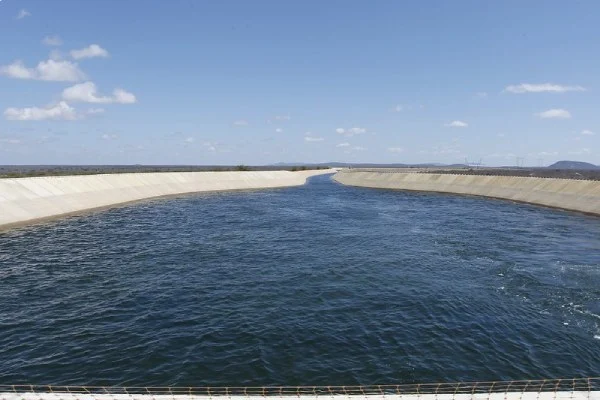
Through the Ministry of Regional Development (MDR), the current federal government is completing one of the most anticipated projects in the country’s history, which will significantly change the lives of millions of Brazilians.
In addition to providing water, the project guarantees dignity and health to the beneficiary families, boosts the economy, and creates numerous jobs in the region.
When all the complementary and additional works are completed, more than 16.47 million Brazilians from 565 municipalities in seven northeastern states will benefit from the water resources of the São Francisco River.
“It was this government that set the São Francisco project in motion. When we took office, only 31.54% of the structures of the northern axis were in operation, and the water had not even left its state of origin, Pernambuco,” says Regional Development Minister Rogério Marinho.
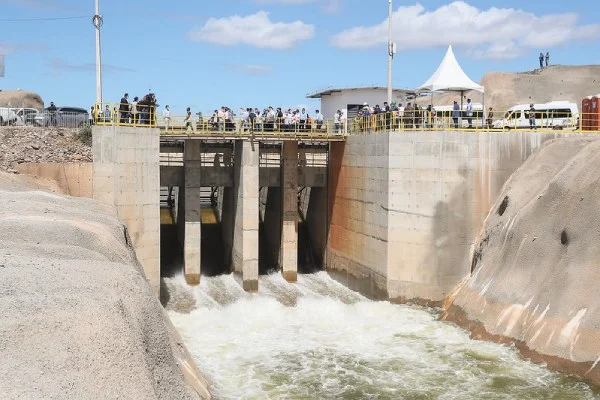
Since 2019, the federal government has invested R$3.49 billion (US$670 million) so that the waters of the São Francisco can reach the states of Ceará and Rio Grande do Norte, as well as Paraíba through the northern axis – the state has already been supplied by the eastern axis since 2017.
When the two axes are completed, the implementation of water will benefit 12 million people in 390 cities.
“For us, this is an extraordinary event that justifies everything we have done. It is the fruit of the determination and prioritization of President Bolsonaro, who has spared no effort to provide us with the conditions for this moment,” Marinho stressed.
When these works are fully completed, more than 16.47 million Brazilians from 565 municipalities in seven northeastern states will benefit from the waters of the São Francisco.
HISTORY
The São Francisco River is the largest river located entirely in Brazil, with a length of just over 2,800 kilometers. Its waters originate at the top of the Canastra Mountains in Minas Gerais and flow through five states until they reach the Atlantic Ocean.
Those who think that the idea of channeling the waters of the Velho Chico to the semi-arid northeastern region is new should remember that the first project for this feat dates back to 1847, when the Intendant of the Crato District (CE), Marco Antônio Macedo, author of the municipality’s topographical map, pointed out the possibility of a canal from the São Francisco River.
He even proposed its relocation to Emperor Dom Pedro II, because, between 1844 and 1845, part of the states of Piauí and Ceará was affected by drought. Reportedly, the proposed canal was to begin at Cabrobó in Pernambuco and supply the Jaguaribe River, one of the most important rivers in the state of Ceará.
The emperor was on the verge of carrying out the project. Historical documents from the Senate and the Chamber of Deputies show that several bills providing for its implementation passed through the hands of senators and deputies of the Second Empire. None of them, however, advanced.
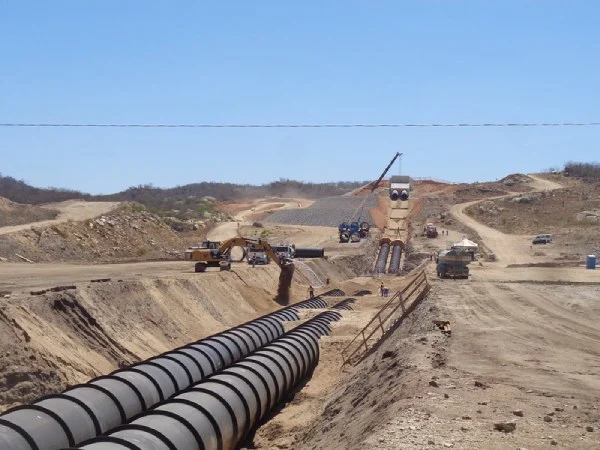
In addition, after another severe drought between 1877 and 1879, studies by the Baron of Capanema showed that there were no technical means to allow the flow of water through the Chapada do Araripe, located on the border of the states of Ceará, Pernambuco, and Piauí.
It was not until years later, in 1906, already in the Republican period, that the first structure to alleviate the drought in the region was built: the Cedro Dam in Quixadá (CE).
Paraíba-born ex-President Epitácio Pessoa, who governed the country between 1919 and 1922, adopted a series of emergency measures in the semi-arid northeastern region to combat the severe drought that hit the region at the beginning of his term.
He even traveled to Europe to seek solutions to the problem, which only worsened over the years with the collapse of major supply systems in the 1990s, such as those of Fortaleza, Recife, Caruaru (PE), Campina Grande (PB) and João Pessoa.
It was not until 2007 that the implementation of the São Francisco began to take shape when work began on the access channels to the Itaparica (BA) and Cabrobó (PE) reservoirs.
However, the project, which was to be completed in 2012, was interrupted by problems with the misappropriation of funds under the leftist Worker’ Party government of Lula da Silva, delays, and the abandonment of the works by the construction companies.
The abandonment of the work led to the deterioration of some of the work that had already been done, requiring new bids and consequently more funds, which were guaranteed by the current federal government.
Almost 14 years after the start of the implementation works, the eastern and northern axes have been completed, leaving only auxiliary and complementary works.
AGUAS BRASILEIRA PROGRAM
In addition to bringing water to the regions that need it most, the Brazilian government is committed to ensuring that it remains available for generations to come. Watershed revitalization, conservation, and restoration programs are designed to ensure water production.
The Águas Brasileiras program is one example. Launched in December 2020, it seeks partnerships with the private sector to promote actions to conserve and restore degraded areas in watersheds.
The goal is to increase the quantity and quality of water available for consumption and the productive sector in order to promote regional development and ensure a better quality of life for the population.
In the first public announcement of the program, 26 projects were selected that will benefit 250 municipalities in the basins of the São Francisco, Parnaíba, Taquari and Tocantins-Araguaia rivers.
It will also allow for the planting of more than 100 million trees in these priority watersheds. In the second call for proposals, which included watersheds throughout the country, 49 projects were selected from 23 units of the federation.
Several companies showed interest, and partnerships have already been signed with 12 of them to implement Águas Brasileiras’ actions. With the contracts already signed, approximately R$80 million is guaranteed for the projects selected under the program.
In addition, the projects that will receive the Alliance for Brazilian Waters seal will generate R$492.7 million, which will be invested in watershed revitalization actions.
Watershed revitalization actions have also received an important boost with the approval of the Eletrobras Capitalization Law.
Accordingly, R$5.8 billion will be invested exclusively in actions that ensure the vitality of rivers, the preservation of springs, the restoration of riparian forests and the cleaning of watercourses. The funds will be invested over a period of 10 years.
More: Brazil news in English, every day from The Rio Times.
This article was produced by The Rio Times’ automated newsroom system. How we use AI · Report an error · Editorial responsibility: Matthias Camenzind, Editor-in-Chief