Behind the Walls: What the World’s Largest Catholic Churches Really Reveal
A new review of global data on Catholic churches, based on verified architectural and historical sources, highlights more than religious devotion. It reveals a centuries-long competition for power, prestige, and economic positioning in cities across the globe.
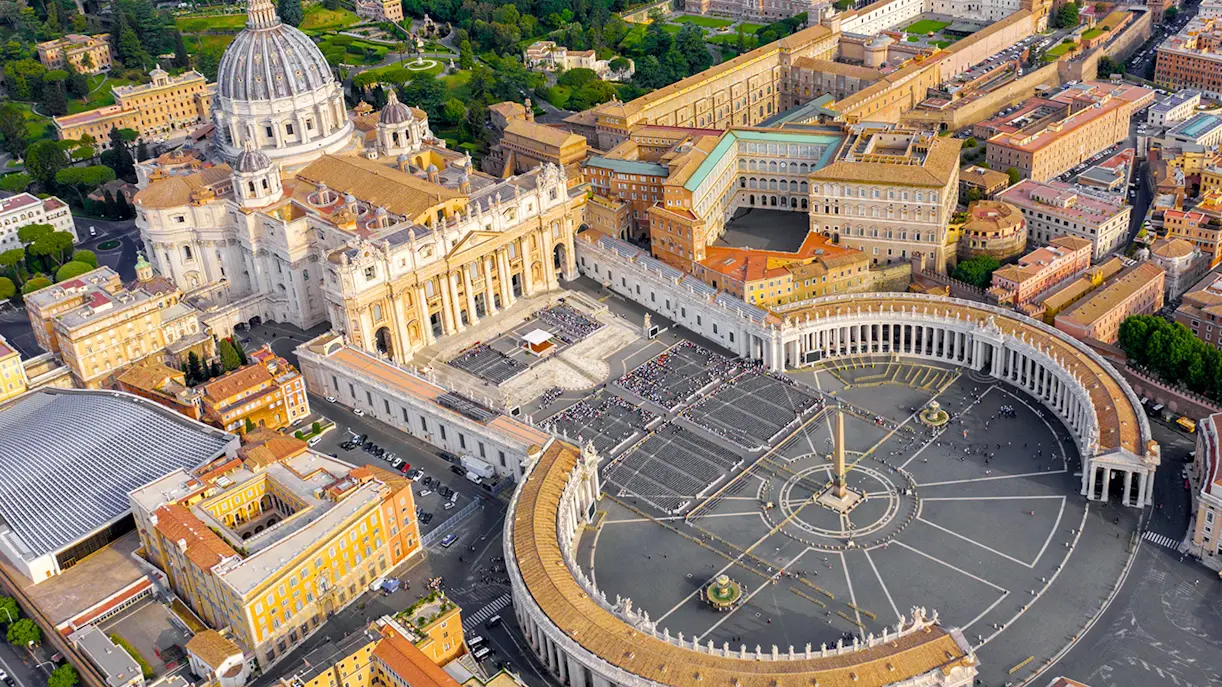
St. Peter’s Basilica in Vatican City leads in size and symbolism. With 15,160 square meters of interior space and room for about 60,000 people, it remains the undisputed centerpiece of Catholic authority.
Its construction spanned over 120 years, starting in 1506, and involved the most prominent architects and artists of the Renaissance. Brazil’s Basilica of the National Shrine of Our Lady of Aparecida ranks second in internal area.
Completed in 1980, it covers 12,000 square meters and can host up to 45,000 people. As Brazil became a key market for Catholic expansion, this structure cemented its status as the religious and pilgrimage hub of South America.
In Milan, the Duomo stands as a Gothic monument built over six centuries. It reaches 11,700 square meters and holds 40,000. Besides spiritual relevance, it anchors Milan’s tourism and retail core.
The city’s investment in the cathedral reflects a blend of religious tradition and commercial strategy. Seville’s cathedral follows closely, covering 11,520 square meters. It offers capacity for about 30,000.
Built on the site of a former mosque, it demonstrates how religious architecture shaped—and often replaced—local heritage to assert dominance. In the U.S., the Cathedral of Saint John the Divine in New York spans 11,200 square meters.
Though unfinished, it can host about 20,000 people. While Episcopalian rather than Catholic, it illustrates how religious monuments compete for attention in urban centers.
A Symbol of Influence and Legacy
The most controversial case remains the Basilica of Our Lady of Peace in Yamoussoukro, Côte d’Ivoire. Built between 1985 and 1989 under President Félix Houphouët-Boigny, it covers 30,000 square meters externally but only 7,989 inside.
With a capacity of 18,000, it cost between $175 million and $600 million. This vast investment in a sparsely populated area sparked debate about motives—religious intent or political legacy.
These structures vary by capacity, floor area, and influence. But each tells more than a religious story. They reflect economic ambition, urban strategy, and political calculation.
The choice of location, scale, and architectural style often served not only spiritual needs but national interests and urban branding. Constantine’s fourth-century move to legalize Christianity triggered the first wave of large-scale church building.
Since then, governments, elites, and city planners have used these monumental sites to influence culture, economy, and identity. As Catholicism shifted globally, so did the construction of its largest symbols.
These buildings still host pilgrims and tourists. But behind their altars and arches lies a quieter story—one of influence, investment, and legacy.
This article was produced by The Rio Times’ automated newsroom system. How we use AI · Report an error · Editorial responsibility: Matthias Camenzind, Editor-in-Chief
Read More from The Rio Times