Argentina’s Peso Faces Pressure as IMF Deal Offers Fragile Relief
Argentina’s peso struggled against the US dollar on April 10, 2025, as the country navigates economic turmoil despite a new IMF deal. The official exchange rate stood at 1,075 pesos per dollar, while the unofficial blue dollar rate decreased to 1,276 pesos per dollar.
This marked the first decline in the blue dollar rate in several days, likely driven by optimism surrounding the $20 billion bailout agreement with the International Monetary Fund.
The IMF deal aims to stabilize Argentina’s economy by replenishing critically low foreign reserves and easing inflationary pressures. However, market participants remain cautious about its long-term impact.
The Central Bank intervened heavily on April 9, selling $300 million in reserves to stabilize the peso. Despite these efforts, foreign reserves fell to $24.675 billion, their lowest level since January 2024, reflecting the depth of Argentina’s financial challenges.
The gap between the official and blue dollar rates narrowed slightly to approximately 18.7%, signaling a temporary improvement in market sentiment. The blue dollar, often seen as a barometer for public confidence in government policies, has consistently traded higher.
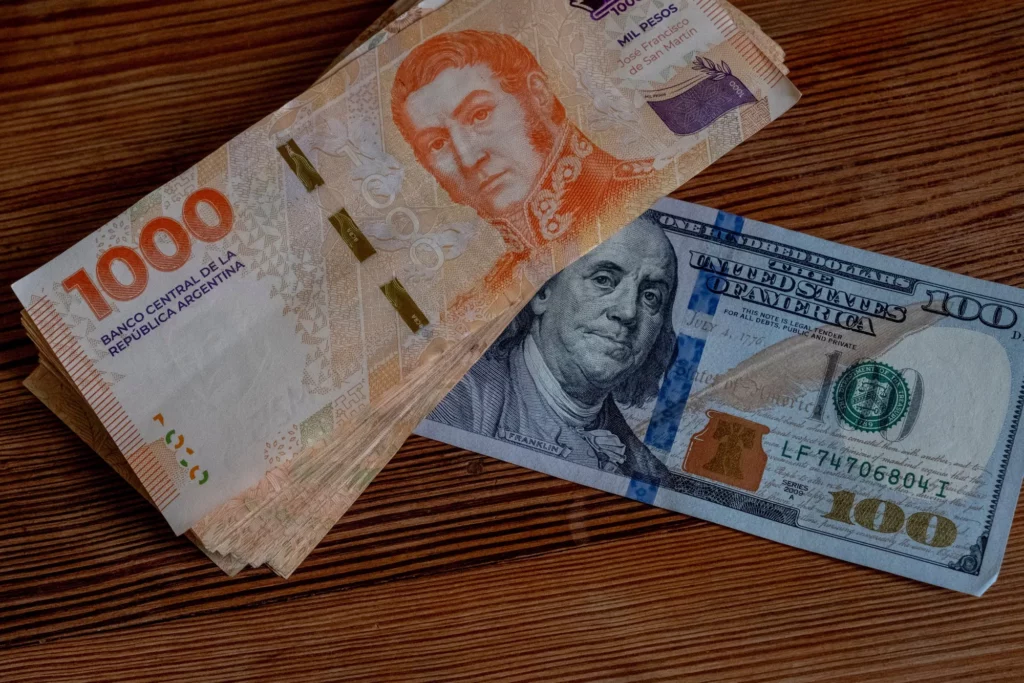
This is due to skepticism about economic management. Analysts believe this divergence underscores inefficiencies in Argentina’s dual exchange rate system and persistent distrust among investors.
Argentine Peso Under Pressure Despite IMF Backing
Argentina-focused exchange-traded funds (ETFs) recorded net outflows of $5.2 million on April 9, highlighting lingering concerns among international investors.
Futures contracts on ROFEX for April settled at 1,132.5 pesos per dollar, suggesting expectations of further depreciation by nearly 6% before the end of the month.
Currency strategists note that while the IMF agreement provides short-term relief, structural reforms are essential to restore long-term stability. Inflation remains a critical issue, eroding purchasing power and fueling demand for dollars in unofficial markets.
Annual inflation stands at approximately 70%, down from its peak in late 2023 but still alarmingly high. The peso’s depreciation reflects both domestic and global factors.
Dwindling reserves limit the government’s ability to defend the currency, while political uncertainty compounds economic instability. Although the IMF deal temporarily boosts confidence, analysts warn that its success depends on effective implementation of fiscal and monetary reforms.
Market participants predict further depreciation of the official peso rate, with some forecasting it could reach 1,400 pesos per dollar by year-end.
The slight narrowing of the gap between official and blue dollar rates offers a glimmer of hope but highlights Argentina’s urgent need for sustainable economic policies.
The peso’s struggle against the dollar underscores deep-seated challenges in Argentina’s economy. While the IMF deal offers a lifeline, its impact hinges on addressing inflation, rebuilding reserves, and restoring investor trust.
More: Argentina news in English, every day from The Rio Times.
This article was produced by The Rio Times’ automated newsroom system. How we use AI · Report an error
In depth
Read More from The Rio Times