Argentina Tax Revenue Drop Hits Ninth Month as Milei Flies to Milken Conference
Argentina’s tax revenue fell in real terms for the ninth consecutive month in April, the country’s collection agency ARCA confirmed on Monday, May 4, 2026, hours before President Javier Milei boarded a flight to Los Angeles for the 29th annual Milken Institute Global Conference.
ARCA collected 17.4 trillion pesos in April, up 27.2 percent in nominal terms but well below the 32.6 percent inflation registered in the previous twelve months, implying a real-terms decline of roughly 3.8 percent. The drop mostly reflects the deliberate reduction of export retentions on soybeans, wheat and corn, plus a slowdown in imports from a high comparison base.
Key Points
Key Facts
— Argentine tax authority ARCA reported April collections of 17,400,833 million pesos on Monday, May 4, 2026, with a nominal year-on-year increase of 27.2 percent against inflation of 32.6 percent.
— The first-quarter consolidated drop reaches 6.7 percent in real terms according to the Instituto Argentino de Análisis Fiscal (IARAF), or 5.3 percent excluding trade-linked taxes.
— Export-duty collections dropped 34.4 percent year-on-year in real terms, the largest single contributor, on the deliberate cut to soybean, wheat and corn alíquotas.
— The fuel tax was the only major levy with real-terms growth, collecting 586 billion pesos in April for a 74.1 percent year-on-year increase tied to oil price moves.
— Provincial automatic transfers to the 24 jurisdictions fell 3.2 percent in real terms in April, with Salta, Catamarca and Tierra del Fuego the largest losers per capita.
— President Milei boarded a flight to Los Angeles at 13:00 Buenos Aires time on Tuesday, May 5, with Karina Milei, foreign minister Pablo Quirno and U.S. ambassador Alec Oxenford for the Milken Institute conference.
What ARCA Reported
The Rio Times, the Latin American financial news outlet, reports that the April figure marks the ninth consecutive month in which inflation has outpaced nominal collection growth. Nominal-terms recovery from the February low of minus 2.6 percent activity contraction is real, but it remains insufficient to clear the inflation hurdle.
Value-added tax brought in 6,049 billion pesos in April with a nominal increase of 28.3 percent, slightly below the inflation rate. The income tax collected 3,136 billion pesos. Empiria economist Lucas Tettamanti calculated that activity-linked taxes fell 1.5 percent in real terms in April and 2.6 percent in the first quarter.
IARAF director Nadín Argañaraz attributed the export-duty drop to the elimination of agricultural retentions and noted that derechos de importación fell 12.5 percent in real terms in the first quarter. Bienes Personales fell 15.3 percent and internos coparticipados 17.6 percent.
| Tax category | April 2026 (ARS bn) | YoY nominal | Real-terms direction |
|---|---|---|---|
| VAT (IVA) | 6,049 | +28.3% | Negative |
| Income tax | 3,136 | N/A | Negative |
| ANSES social security | 4,552 | +26.6% | Negative |
| Export duties | 574 | -13.3% | Strongly negative |
| Fuel tax | 586 | +74.1% | Positive |
Why the Argentina Tax Revenue Drop Matters
Economy Minister Luis Caputo told reporters Monday that “la recaudación empieza a crecer,” framing the nominal growth as evidence the model is working. The political bind is that the design choice itself is responsible for much of the drop. Trump-aligned trade liberalisation, agricultural retention cuts, and import duty reductions were all deliberate.
The Epyca consultancy framed the trade-off bluntly: “el equilibrio fiscal es el eje ordenador de la gestión de Javier Milei,” but the procyclical character of the model means each new spending cut compresses the tax base further, requiring more cuts.
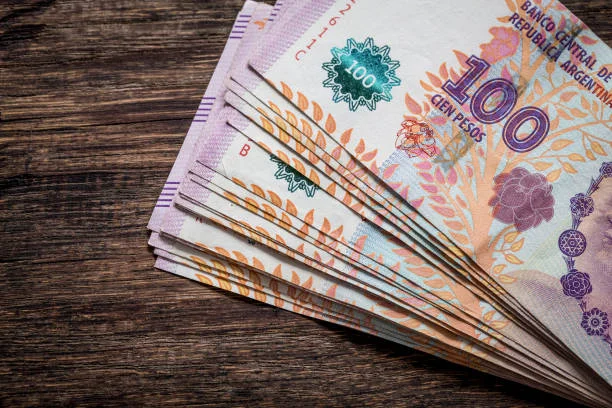
Provincial finances are absorbing part of the impact. Coparticipación transfers fell 3.6 percent in real terms in April. The cumulative loss across all jurisdictions reached 184 billion pesos in April alone according to IARAF, with provinces like Salta, Catamarca and Tierra del Fuego the largest per-capita losers.
Milei’s Milken Roadshow
President Milei was scheduled to board his flight to Los Angeles at 13:00 Buenos Aires time on Tuesday, May 5, accompanied by Karina Milei, foreign minister Pablo Quirno, and Argentine ambassador to the United States Alec Oxenford. Arrival in Los Angeles is expected near midnight local time.
Wednesday’s agenda begins with a private meeting with Milken Institute president Michael Milken at 14:00 Argentine time, followed by a small-group session with senior executives. Milei will then deliver the keynote at the 29th annual Milken Conference at 18:00 Argentine time.
For broader context, see our prior coverage of the Milei trip and the Adorni cabinet probe and our analysis of Argentina’s holdout settlement.
What Happens Next
Three near-term tests:
- May 14 — INDEC inflation print: The official April CPI release will confirm or revise the implied real-terms decline. Market consensus is around 2.7 percent monthly.
- May 6 — Milken keynote: Milei is expected to detail structural reforms and investment opportunities to the Milken executive group, with capital-allocation signals important for sovereign spreads.
- Q2 fiscal results: Caputo’s superávit anchor is the central political product. Whether the second quarter sustains the result without further procyclical compression will define the second-half trajectory.
More: Argentina news in English, every day from The Rio Times.
Frequently Asked Questions
What is the Argentina tax revenue drop reported on May 4, 2026?
ARCA, Argentina’s tax authority, reported on Monday, May 4, 2026, that April tax collection reached 17.4 trillion pesos with a nominal year-on-year increase of 27.2 percent. Twelve-month inflation reached 32.6 percent in the comparable period, implying a real-terms decline of roughly 3.8 percent. The April result is the ninth consecutive month in which collection has fallen in real terms.
Why is Argentine tax revenue falling so sharply?
Two main factors drive the drop. The Milei administration deliberately reduced agricultural export retentions on soybeans, wheat and corn, cutting derechos de exportación collection by 34.4 percent in real terms in April, while a slowdown in imports from a high 2025 comparison base also reduces import-duty revenue. The combination accounts for roughly 1.4 percentage points of the 6.7 percent first-quarter consolidated decline.
What is the Milei Milken Institute trip about?
President Javier Milei flew to Los Angeles on May 5, 2026, to deliver the keynote at the 29th annual Milken Institute Global Conference, hosted by founder Michael Milken. The agenda includes a private meeting with Milken at 14:00 Argentine time on May 6, a small-group session with senior executives, and the public keynote at 18:00 Argentine time. Karina Milei, foreign minister Pablo Quirno, and U.S. ambassador Alec Oxenford accompany the president.
How does the tax revenue drop affect Argentine markets?
The Merval has been losing ground in recent sessions according to El Destape, with ANSES contributions among the few flows preventing a sharper decline. Provincial finance pressure rose: coparticipación transfers fell 3.6 percent in real terms in April, a 184 billion peso shortfall across all jurisdictions. Sovereign spreads will be sensitive to whether Milei’s Milken keynote produces incremental investor pledges or signals a reform-fatigue plateau.
Updated: 2026-05-05T09:45:00Z by Rio Times Editorial Desk
This article was produced by The Rio Times’ automated newsroom system. How we use AI · Report an error · Editorial responsibility: Matthias Camenzind, Editor-in-Chief
In depth