Argentina Beef Exports Hit US$1B in Q1 2026, Up 54%
Argentine beef exports hit US$1.028B in Q1 2026—up 54% year-on-year—as US quota jumps fivefold and prices surge 31%. See what's driving the boom.
Key Facts
— Key Points
— —Argentine beef exports reached US$1.028 billion in Q1 2026, a 53.95% year-on-year jump, on 199,658 tonnes equivalent res con hueso (+17.08%) at an average price of US$5,149 per tonne (+31.48%), according to the Secretaría de Agricultura, Ganadería y Pesca.
— —Approximately 20,000 tonnes shipped to the United States in Q1 after Trump’s February 2026 decree raised Argentina’s annual quota fivefold from 20,000 to 100,000 tonnes, with the Wall Street Journal reporting further tariff cuts under consideration.
— —Global beef prices climbed 24.1% from May 2025 to March 2026 per World Bank data, with INDEC reporting Argentine refrigerated beef averaging US$12,710 per tonne (+33.7% year-on-year) as US beef-cattle stocks fell to a 75-year low.
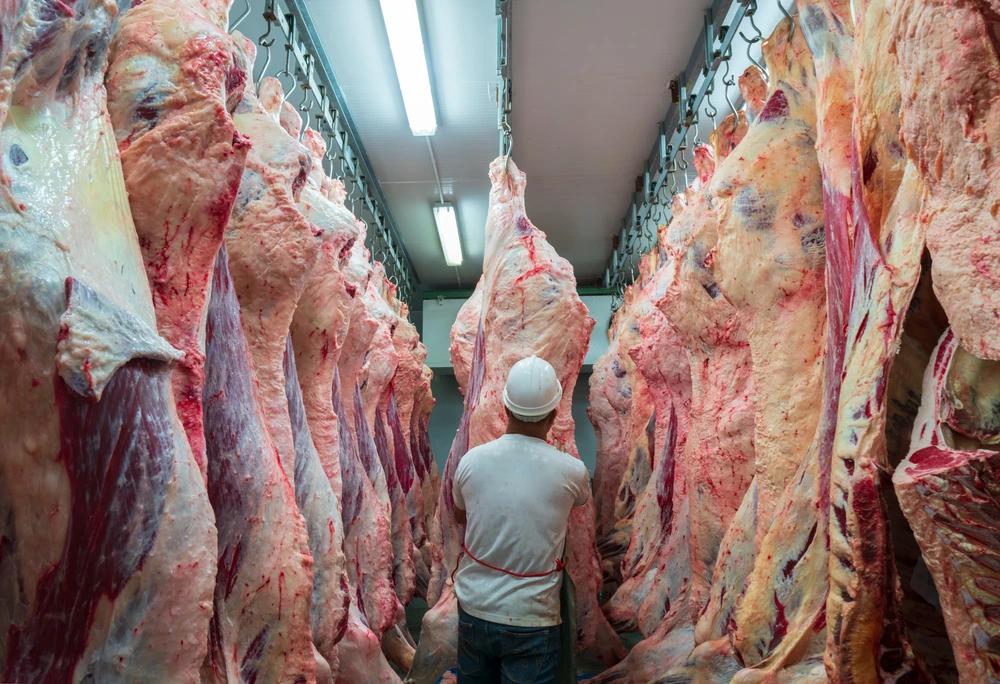
Argentine beef exports reached US$1.028 billion in Q1 2026, a 53.95% year-on-year surge driven by the combined effect of a fivefold US quota expansion under President Trump, global beef-price highs unseen since INDEC began tracking the category in 1986, and a sharp 31.48% jump in average export price to US$5,149 per tonne. Total volume reached 199,658 tonnes equivalent res con hueso, up 17.08%, with approximately 20,000 tonnes shipped to the United States in the quarter under the cooperation agreement signed in February, a result Economy Minister Luis Caputo celebrated publicly on X. The performance positions Argentina to capture additional volume if Trump pursues the temporary tariff-quota suspension reported by the Wall Street Journal on May 11, with US grocery prices for beef hitting records and beef-cattle stocks at 75-year lows.
The Rio Times, the Latin American financial news outlet, reports that the Argentina beef exports 2026 surge represents one of the strongest single-sector trade results in recent Argentine history. The Caputo Tuesday May 11 announcement framed the result as evidence of Milei-era export-policy success: “In the first quarter of the year, beef exports grew 54% versus the same period last year. Sector exports totalled 199,658 tonnes and reached US$1.028 billion, with the cooperation agreements with the United States playing an important role.”
March 2026 alone delivered 61,600 tonnes peso producto of refrigerated and frozen beef worth US$419.3 million, up 25.1% in volume and 34% in value against February. The average export price for refrigerated and frozen Argentine beef reached US$6,802 per tonne in March, 7.1% above February and 42.9% above March 2025 at US$4,760.
The Trump Quota Expansion and US Market Surge
President Trump signed a decree in February 2026 raising Argentina’s annual beef quota from 20,000 to 100,000 tonnes, with quarterly caps. The decision came one day after the February Argentina-US reciprocal trade and investment agreement, and was designed to bring down US retail beef prices, which the Bureau of Labour Statistics reported at US$14.75 per kilo for ground beef (+US$2 YoY) and US$28 per kilo for steaks (+16% YoY).
The US Department of Agriculture projects a 10.1% beef-price increase across 2026, driven by a US cattle stock at the lowest level in 75 years and adverse weather in Argentina, Brazil and the United States itself. The Wall Street Journal reported on Monday May 11 that the Trump administration is considering a temporary suspension of the tariff-rate quota applied across all beef-exporting nations, a move that would further accelerate Argentine exports to the US market.
The Argentine embassy in Washington formally launched “Argentine Beef Week” in the United States on April 27, with Ambassador Alejandro “Alec” Oxenford and PromArgentina president Diego Sucalesca opening commercial-promotion campaigns across major US retail and HORECA channels.
The Q1 2026 Numbers and Destination Mix
| Q1 2026 indicator | Value |
|---|---|
| Total export value | US$1.028 billion (+53.95%) |
| Total volume | 199,658 tonnes (+17.08%) |
| Average price per tonne | US$5,149 (+31.48%) |
| US destination | ~20,000 tonnes |
| US quota 2026 | 100,000 tonnes (5x prior) |
| China quota 2026 | ~511,000 tonnes |
The destination diversification reduces Argentine dependence on China, which had absorbed roughly 70% of beef exports in 2024. Israel, Chile and the European Union also recorded growing demand. The 511,000-tonne 2026 Chinese quota carries a 55% surcharge for shipments above the cap, but Argentine volumes remained inside the limit through Q1, preserving standard tariff treatment.
Argentine slaughter contracted 9.5% to 3.94 million bovines in January through April versus the same period of 2025, with April faena down 6.7% on March and 15.3% on April 2025, according to the Consorcio de Exportadores de Carnes Argentinas (ABC) led by Mario Ravettino. Domestic production reached 226,100 tonnes equivalent carcass in April. The lower slaughter combined with stronger export volume signals continued price-led growth rather than supply-side expansion.
The European Deforestation Regulation Test
A regulatory headwind is taking shape in Europe. The EU‘s deforestation regulation requires full traceability and certification that beef does not come from deforested zones, a compliance threshold that the Argentine cattle sector is now addressing through VISEC Carne, a national traceability and environmental-certification platform. The system geo-locates origin, validates farm-level emissions, and maintains chain-of-custody documentation through processing.
The EU framework is the principal medium-term threat to the Argentina beef export trajectory, with non-compliance risking exclusion from the European market that has consistently delivered the highest per-tonne prices. Argentine refrigerated boneless cuts reached US$11,441 per tonne in June 2025 and US$12,710 in Q1 2026, with European buyers paying premium prices reflecting traceability and quality compliance.
Connected Coverage
The Argentine beef-export surge complements our coverage of São Paulo agribusiness 2025 results, where Brazilian beef cattle led the state’s R$174.6 billion VPA. The bilateral Argentina-US context is in our Argentina Casa de Moneda privatisation analysis and our Argentina Economy 2026 guide.
Regional comparative reading is in our Latin America Economy 2026 guide.
What to Watch
- Trump beef-tariff executive order: confirmation of the temporary tariff-rate-quota suspension reported by the Wall Street Journal, with potential effect on Q2-Q3 Argentine exports.
- Argentine slaughter recovery: whether the 9.5% cumulative drop versus 2025 reverses through Q3 2026 or persists, with implications for full-year export volumes.
- EU deforestation regulation implementation: timeline for compliance enforcement and Argentine VISEC Carne system uptake at exporter level.
- China 511,000-tonne quota tracking: whether Argentine shipments remain within the cap through year-end or trigger the 55% surcharge.
- USDA price forecasts: monthly updates on the 10.1% 2026 beef-price projection that drives US import demand and Argentine pricing power.
More: Argentina news in English, every day from The Rio Times.
Frequently Asked Questions
How much beef did Argentina export in Q1 2026?
Argentina exported 199,658 tonnes of beef worth US$1.028 billion in Q1 2026, a 53.95% year-on-year increase in value and a 17.08% rise in volume. The average export price reached US$5,149 per tonne, up 31.48%, with March alone delivering US$419.3 million on 61,600 tonnes.
How does the Trump quota change affect Argentina?
Trump’s February 2026 decree raised Argentina’s US beef quota from 20,000 to 100,000 tonnes per year, a fivefold increase, with quarterly caps. Argentina shipped roughly 20,000 tonnes to the US in Q1 2026 alone. The Wall Street Journal reported May 11 that further tariff-quota suspension is under consideration.
Why did Argentine beef prices rise so much?
Global beef prices rose 24.1% from May 2025 to March 2026 according to World Bank data, with US cattle stock at a 75-year low. The USDA projects a 10.1% beef-price rise for 2026. Argentina’s average export price hit US$5,149 per tonne (+31.48%), with refrigerated cuts at US$12,710 per tonne (+33.7%).
What is the EU deforestation regulation risk?
EU regulation requires full traceability and certification that beef does not originate from deforested zones, with enforcement targeting 2026-2027 implementation. Argentina is implementing VISEC Carne, a national traceability and environmental-certification platform, to maintain access to the European market that pays the highest per-tonne prices for premium cuts at over US$12,000 per tonne.
Updated: 2026-05-12T14:00:00Z
This article was produced by The Rio Times’ automated newsroom system. How we use AI · Report an error