

An Iranian-made Shahed drone hit a runway at RAF Akrotiri in Cyprus shortly after midnight on Monday, marking the first time the Iran conflict has struck European territory. By Tuesday, British Prime Minister Keir Starmer announced the deployment of HMS Dragon, a Type 45 air defence destroyer, along with Wildcat helicopters armed with Martlet missiles for counter-drone operations.
British forces intercepted two more drones approaching Akrotiri hours later, and Paphos International Airport was evacuated. Cypriot authorities said the drones were likely launched from Lebanon by Hezbollah.
Europe Mobilizes
The UK is not acting alone. France confirmed it will send anti-missile and anti-drone systems along with a frigate. Greece activated its Common Defence Doctrine with Cyprus, dispatching two frigates and four F-16 fighter jets. Germany has agreed to send a warship. The combined response represents an unprecedented European mobilization against a direct Iranian threat.
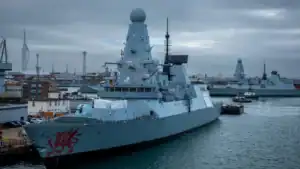
Starmer told parliament that the Cyprus bases are not being used by U.S. forces. He had agreed on Sunday to a U.S. request to use other British bases for limited defensive strikes against Iran’s missile sites. Iran’s Revolutionary Guard general Sardar Jabbari responded by threatening to launch missiles at Cyprus with enough force to drive the Americans from the island.
A Widening Conflict
The drone strike on Cyprus is part of a broader Iranian retaliation since February 28, when the U.S. and Israel launched Operation Epic Fury against Iranian military and nuclear targets, killing Supreme Leader Ali Khamenei. Tehran responded with waves of missiles and drones targeting U.S. bases in Bahrain, Qatar, Kuwait, and the UAE.
Gulf Under Fire
Missiles struck near the headquarters of the U.S. Navy’s Fifth Fleet in Bahrain. Drone strikes damaged three Amazon Web Services data centers in the UAE and Bahrain, the first time a major American technology company’s infrastructure has been hit by military action, disrupting roughly 60 cloud services. In Qatar, Hamad International Airport came under drone attack but authorities said they intercepted the projectiles. Six U.S. service members have been confirmed killed so far.
Oil Markets and the Strait of Hormuz
The IRGC declared the Strait of Hormuz closed on Monday, threatening to set ablaze any ship that attempted to pass. While no formal blockade is in place, insurance companies have withdrawn war-risk coverage and major shipping lines including Maersk, MSC, and CMA CGM have halted bookings through the corridor, which normally carries roughly 20% of the world’s daily oil supply. Brent crude has surged above $80 a barrel, with analysts warning prices could approach $100 if disruptions persist.
For Latin America, the energy shock cuts both ways. Brazil and other oil exporters stand to benefit from higher crude prices and could capture market share from disrupted Gulf supply. But surging energy costs threaten to fuel inflation and derail the rate-cutting cycles that central banks across the region had been preparing. Iran warned Tuesday that any European defensive action against its military capabilities would constitute an act of war, a message aimed squarely at London, Paris, and Berlin as the conflict enters its fourth day with no sign of de-escalation.