

The Iran war is fracturing NATO from the inside. On Tuesday, President Donald Trump threatened a full trade embargo on Spain after Madrid blocked the use of jointly operated military bases for strikes on Iran, calling the country “terrible” and ordering Treasury Secretary Scott Bessent to sever all commercial ties.
The Trigger: Bases at Rota and Moron
On Monday, Spanish Foreign Minister Jose Manuel Albares announced that Madrid would not permit the Rota naval base and Moron air base in southern Spain to support any operations not covered by Spain’s bilateral agreement with the United States or the UN Charter. The bases, which the U.S. has used since the 1950s, were not involved in the initial strikes on Iran, Albares confirmed.
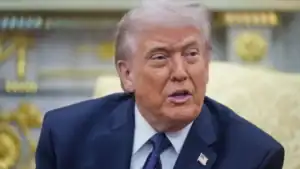
The U.S. responded by relocating 15 aircraft, including refueling tankers, from both installations. Hours later, Trump escalated the dispute during a meeting with German Chancellor Friedrich Merz. “I told Scott to cut off all dealings with Spain,” Trump said. “We don’t want anything to do with Spain.”
Spain Pushes Back
Prime Minister Pedro Sanchez had already condemned the U.S.-Israeli strikes as an “unjustifiable and dangerous military intervention,” making him one of the few Western leaders to directly challenge the operation’s legality. His government demanded immediate de-escalation while also condemning Iran’s retaliatory strikes across the Gulf.
Madrid’s response to the trade threat was measured but firm. The Spanish government said Washington must respect “the autonomy of private companies, international law, and bilateral agreements between the European Union and the United States.” It added that Spain has “the necessary resources to contain the possible impact” of any embargo.
A Trade Relationship in Context
The practical implications of an embargo remain unclear. The U.S. ran a $4.8 billion trade surplus with Spain in 2025, exporting $26.1 billion in goods against $21.3 billion in imports. Spain’s main exports to the U.S. include olive oil, auto parts, steel, and chemicals. Analysts note Spain is less vulnerable to American economic pressure than larger European trading partners. The European Commission said it would ensure EU interests are “fully protected.”
Wider Cracks in the Alliance
Trump also targeted Britain. “I’m not happy with the UK,” he said, complaining that Prime Minister Keir Starmer delayed access to British bases. “He is not Winston Churchill,” Trump added. Starmer eventually permitted use of two bases for limited defensive operations.
Germany, by contrast, received praise. Merz aligned Berlin with Washington, saying Germany was “eager for the day after” the Iranian regime’s fall. But even Merz acknowledged strain over Spain’s defense spending, noting allies were pressuring Madrid to raise outlays to 3-3.5% of GDP — still below Trump’s 5% demand that Spain alone has rejected.
For Latin America, the episode carries direct implications. Spain is the region’s largest European investor and a traditional diplomatic bridge between the Americas and Europe. Any sustained disruption to U.S.-Spanish relations could ripple through trade flows that connect Madrid to Mexico City, Bogota, and Buenos Aires.