The Trump Administration Report: Censorship and Human Rights in Brazil
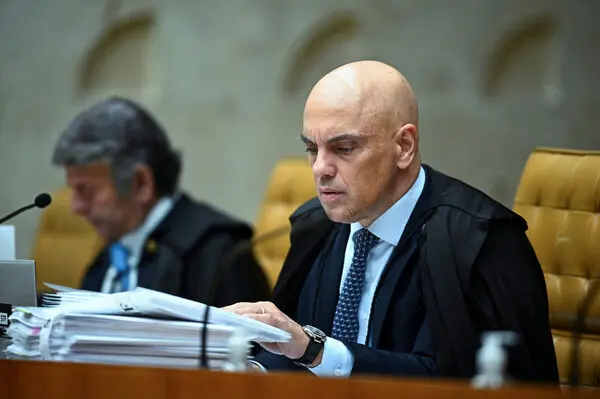
(Analysis) The United States Department of State’s annual human rights report has accused Brazilian Supreme Court Justice Alexandre de Moraes of imposing disproportionate restrictions on free expression and internet freedom.
The document, released on 12 March, states that Brazil’s human rights situation worsened during President Luiz Inácio Lula da Silva’s term. According to the report, Brazilian courts adopted broad measures that undermined online freedom.
These included blocking millions of users from accessing a major social media platform in response to a harassment case, restricting access to what was deemed “anti-democratic” content, and disproportionately targeting political speech from supporters of former president Jair Bolsonaro.
The report says journalists and elected officials were also affected, often through secret proceedings without due process guarantees. Authorities frequently labeled politically unfavorable speech as “hate speech,” using a definition not tied to international human rights law.
The report cites credible accounts of unlawful killings, torture, arbitrary detention, and serious restrictions on press freedom, including violence or threats against journalists. It also notes that authorities failed to reliably investigate and punish rights abuses by officials.
It lists several cases:
Police in São Paulo were accused of unlawful killings during anti-crime operations in the first half of the year and between July 2023 and April in the Baixada Santista region.
In one case, Captain Marcos Correa de Moraes Verardino and Corporal Ivan Pereira da Silva were charged with killing Fábio Oliveira Ferreira after he surrendered, and with evidence tampering. Both were acquitted in December, but prosecutors appealed.
In April, civil police in Roraima moved to dismiss over 100 military police officers suspected of belonging to a militia and death squad.
Allegations included providing armed security for illegal miners, robbing rival miners, torturing intruders, and even stealing from their employers.
In the 2018 assassination of councilwoman Marielle Franco and her driver Anderson Gomes, police in March arrested federal deputy Chiquinho Brazão, state audit court member Domingos Brazão, and former Rio police chief Rivaldo Barbosa for alleged involvement.
Two ex-police officers were convicted in November: Ronnie Lessa received 78 years and 9 months for firing the shots, and Élcio de Queiroz received 59 years and 8 months for driving the getaway car.
Moraes Acts as Social Media Czar
Brazil’s constitution guarantees freedom of expression, but Supreme Court decisions restricted it when deemed anti-democratic. Justice Moraes personally ordered more than 100 X (formerly Twitter) accounts suspended, mainly affecting Bolsonaro supporters.
In August, telecom regulator Anatel ordered ISPs to block X after the platform failed to appoint a legal representative or pay fines for refusing to remove content.
The Supreme Court also authorized daily fines of R$50,000 (US$9,000) for those accessing the platform through VPNs, although none were collected. X resumed service in October after compliance and payment. Similar orders targeted other media companies.
The report states that such restrictions limited Brazilians’ access to information and viewpoints and that the temporary VPN ban undermined press freedom by removing anonymity protections for whistleblowers.
It also notes that journalists sometimes faced threats or violence from criminal groups. On labor rights, the law permits union activity, collective bargaining, and strikes, with some restrictions such as a “one union per category per city” rule.
The private sector widely uses collective bargaining. Enforcement is generally effective, with proportional penalties. The law sets a 44-hour work week, minimum wages above the poverty line, paid leave, and limits on overtime.
Unsafe working conditions remain common, especially in construction. Labor inspectors can act without notice but are insufficient in number. The informal sector accounts for roughly 40% of the workforce, and gig economy workers lack labor protections.
The report records no government-linked forced disappearances. In July, President Lula re-established a special commission on political deaths and disappearances during the 1961–1979 period, which had been dissolved in 2022 by Bolsonaro.
While Brazilian law forbids arbitrary arrest, political figures and human rights groups allege that hundreds detained after the 8 January 2023 government building invasions were held for months without charges and denied legal counsel.
Pretrial detention frequently equals or exceeds maximum sentences, and a quarter of Brazil’s prison population awaits trial. The constitution prohibits torture, but the report cites credible cases.
In May, Porto Alegre police allegedly tortured Vladimir Abreu de Oliveira for 40 minutes before killing him, then tried to dispose of his body. Five officers were charged, two remain in custody.
Child marriage is still reported, with UNICEF data showing one in five women marrying before age 18. The law sets the minimum age at 18, or 16 with parental consent.
Rising Antisemitism, Lula Compares Israel to Hitler
Regarding antisemitism, the Brazilian Jewish population is about 120,000, mostly in São Paulo and Rio de Janeiro. Brazil criminalizes Nazi symbols.
Jewish groups reported a sharp rise in antisemitic incidents after Hamas’s October 2023 attack on Israel, with 886 cases from January to May 2024, six times the same period in 2023.
Most occurred online. President Lula compared Israel’s actions in Gaza to Hitler’s persecution of Jews, prompting public condemnation from Jewish organizations. In October, prosecutors arrested four alleged neo-Nazis planning violent acts.
The State Department’s report compiles these findings as part of its broader monitoring of human rights and civil liberties worldwide.
More: Brazil news in English, every day from The Rio Times.
This article was produced by The Rio Times’ automated newsroom system. How we use AI · Report an error · Editorial responsibility: Matthias Camenzind, Editor-in-Chief