

Ecuador has entered another 60-day state of emergency aimed squarely at the country’s economic lifeline: the Pacific coast.
The order covers Manabí, Guayas, Santa Elena, Los Ríos and El Oro—plus three inland cantons linked to key road corridors—and temporarily relaxes the inviolability of the home and of correspondence so police and the armed forces can run targeted raids and intercept criminal communications under judicial oversight.
There is no blanket curfew. Schools, shops and flights continue; expect more checkpoints, identity checks and inspections in logistics hubs, ports and high-risk neighborhoods.
The story behind the story is the battle for control of trade routes. Over the last few years, gangs embedded themselves in ports and prisons, feeding off extortion (“vacuna”), cargo theft and cocaine transit to North America and Europe.
The coast—especially the Guayaquil area—became the choke point. Successive short emergencies tried to contain the surge; this new decree concentrates resources where the problem is most acute and ties operations to concrete legal tools rather than open-ended force.
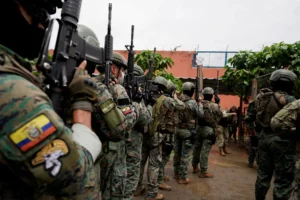
For expats, investors and foreign readers, three things matter. First, continuity: businesses remain open, but compliance stops will be more frequent, particularly for trucking, warehousing and seafood or agricultural exports.
Second, predictability: security forces have clearer authority to enter properties and seize evidence with a judge’s authorization, reducing the grey zone that criminals exploit.
Third, signals: authorities are betting that visible, rules-based action restores confidence faster than broad political speeches ever could.
Critics warn about “militarization” and repeat use of emergency powers. The government’s answer is that the measures are time-limited, geographically precise and backed by courts and Congress.
The test will be whether measurable indicators—homicides, extortion complaints, port seizures and the number of neighborhoods retaken—improve without eroding civil life.
What to watch next: concentrated operations around port access roads, prison transfers to break gang command-and-control, and customs and police task forces inside terminals.
If supply chains move with fewer shakedowns and fewer neighborhoods fall under criminal “taxation,” the coastal economy can breathe—and so can ordinary families who simply need to commute, ship a container or run a shop without fear.