Brazilian fashion retailer Riachuelo (RIAA3) reported R$5 million (US$1 million) in net profit for Q1 2026, reversing the R$45.9 million (US$9.3 million) net loss recorded in Q1 2025 and breaking a six-year streak of first-quarter losses for the company also known as Guararapes.
Net revenue rose 6.7% to R$2.32 billion (US$471M) and consolidated EBITDA grew 14.1% to R$268 million (US$54M) above the consensus of R$256.8 million.
Apparel same-store sales (SSS) rose 10.1% in the quarter, marking the 11th consecutive quarter of growth, while CEO André Farber told Bloomberg Línea the recovery “will not stop here” and the company aims for profit in every quarter going forward.
Key Points
Key Facts
— Q1 2026 net profit: R$5M (US$1M), reversing R$45.9M (US$9.3M) loss in Q1 2025.
— Net revenue R$2.32B (US$471M), up 6.7% YoY; EBITDA R$268M (US$54M), up 14.1%.
— Apparel SSS +10.1% (11th consecutive quarter of growth); apparel gross margin 54.9%.
— Average store sales R$784,000 per month (+11.2% YoY); retail EBITDA R$135M (+23.7%).
— RIAA3 stock up 16.4% YTD; market cap R$5B (US$1.02B).
The Turnaround Mechanics
The Rio Times, the Latin American financial news outlet, reports that the Q1 print resulted in a Brazilian fashion-retail anomaly: profit in a quarter that has historically been the weakest for the sector. CEO André Farber told Exame that despite Brazilian household debt rising and delinquency increasing, Riachuelo “has been able to operate very well in these waters”. The strategy combines revenue growth (+6.7% YoY) with margin expansion: apparel gross margin reached 54.9%, up 1.2 percentage points, marking the 10th consecutive quarter of margin improvement.
Farber attributes the structural shift to a strategy focused on proprietary fashion design rather than price competition, with the company controlling more of the creative and product-development chain. Retail-segment EBITDA reached R$135 million (+23.7% YoY) with a margin gain of 1.1 percentage points to 8.1%, which the company described as the highest first-quarter retail-EBITDA margin in nine years. The Midway financial-services arm contributed an additional R$133 million in EBITDA.
New Store Format and Expansion
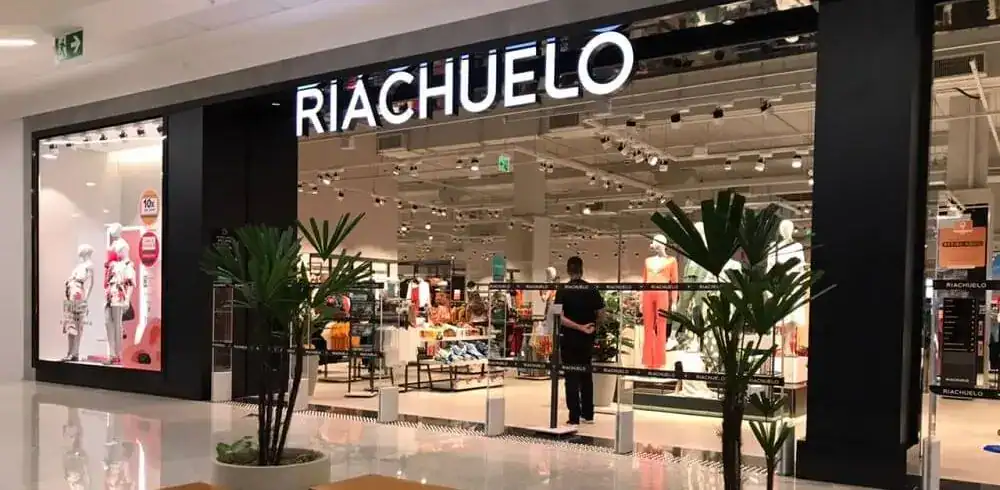
Riachuelo opened a new format store at ParkShopping Barigüi in Curitiba, building on a smaller pilot tested last year in São Paulo’s Pinheiros neighborhood, and plans 4 to 5 additional reformatted stores by end-2026 with a long-term goal of converting the entire network. The company has identified opportunities to open approximately 150 new stores based on internal mapping. Farber said the new format prioritizes consumer experience and product visibility, while the company has invested in senior product-design talent and recruited additional stylists to drive innovation.
Macro Context and Risks
Brazilian retail operates under tight macro conditions, with Selic restrictive, household debt high, delinquency rising, and inflation pressure persisting, while Farber acknowledged the macro is harder but said operational discipline keeps Riachuelo resilient. RIAA3 stock has risen approximately 56% over the past 12 months, outperforming peers C&A (CEAB3, +3.61%) and Lojas Renner (LREN3, +10%) over the same period. The CEO expressed concern about the potential end of the “taxa das blusinhas” (the import tax on low-value e-commerce parcels), warning the asymmetry between domestic and imported retail must be corrected.
Itaú BBA highlighted Riachuelo’s beat versus consensus as a trigger for potential earnings revisions, identifying the company as a leader in Brazilian fashion retail’s improving fundamentals. Riachuelo‘s parent Guararapes has been on a multi-year recovery trajectory, with full-year 2025 net profit of R$512 million more than doubling 2024 and reversing the R$34 million loss reported in 2023. The Natal mega-factory has emerged as the central pillar of the supply-chain strategy that allowed the company to compete on speed and quality rather than price alone.
| Metric Q1 2026 | Value |
|---|---|
| Net profit | R$5M (US$1M); reverses R$45.9M loss |
| Net revenue | R$2.32B (US$471M), +6.7% YoY |
| Consolidated EBITDA | R$268M (US$54M), +14.1% |
| EBITDA margin | 11.5% (+0.7 p.p.) |
| Apparel SSS | +10.1% (11th consecutive quarter) |
| Apparel gross margin | 54.9% (+1.2 p.p.) |
| Retail EBITDA | R$135M (US$27M), +23.7% |
| Midway EBITDA | R$133M (US$27M) |
| RIAA3 YTD performance | +16.4%; market cap R$5B (US$1.02B) |
Connected Coverage
For broader Brazilian Q1 earnings and retail context, see our coverage of Tenda, Moura Dubeux, and Totvs Q1 2026 record results and our analysis of Enter becoming Latin America’s first AI unicorn at US$1.2 billion.
What Happens Next
- Q2 2026: 4-5 store reformats expected; winter-season apparel sales test.
- 2026: targeting profit in every quarter; ~150-store expansion pipeline.
- Risk: potential end of the “taxa das blusinhas” import-parcel tax remains a watchpoint.
Frequently Asked Questions
How much did Riachuelo earn in Q1 2026?
Riachuelo (RIAA3) reported R$5 million (US$1 million) in net profit for Q1 2026, reversing the R$45.9 million net loss in Q1 2025 and ending six consecutive years of first-quarter losses for the parent company Guararapes. Net revenue grew 6.7% YoY to R$2.32 billion and consolidated EBITDA rose 14.1% to R$268 million, beating the R$256.8 million consensus. Apparel same-store sales rose 10.1%, the 11th consecutive quarter of growth.
What is driving the turnaround?
CEO André Farber attributes the recovery to a strategic shift from price-led competition to proprietary fashion design, with the company controlling more of the creative and product-development chain. Apparel gross margin reached 54.9%, the 10th consecutive quarter of margin improvement, while the Natal mega-factory has anchored a supply-chain strategy emphasizing speed and quality. The retail segment posted R$135 million EBITDA (+23.7%), the highest Q1 retail-EBITDA margin in 9 years.
How is the stock performing?
RIAA3 has risen 16.4% year-to-date in 2026 and approximately 56% over the past 12 months, outperforming peers C&A (CEAB3, +3.61%) and Lojas Renner (LREN3, +10%). Market cap reached R$5 billion (US$1.02 billion). Itaú BBA flagged the Q1 beat above consensus as a trigger for potential earnings revisions, while Farber said the company’s turnaround is not yet fully reflected in the stock price.
What is the macro risk outlook?
Brazilian retail operates under restrictive Selic conditions (currently above 11%), with high household debt, rising delinquency, and persistent inflation pressure. Farber acknowledged the harder macro but said Riachuelo has not yet felt material effects, attributing resilience to operational discipline and constant business-model adjustment. The CEO flagged the potential end of the “taxa das blusinhas” (import-parcel tax) as a key watchpoint that could affect domestic-vs-imported asymmetry, though Riachuelo was already growing before the tax.
Updated: 2026-05-07T16:30:00Z by Rio Times Editorial Desk
This article was produced by The Rio Times’ automated newsroom system. How we use AI · Report an error · Editorial responsibility: Matthias Camenzind, Editor-in-Chief
LatAm Markets: Live Signals → — real-time movers, turnover leaders and FX across Latin America.