Prio Posts $460M Q1 Profit as Wahoo First Oil Drives Record 155K Barrel Output
Prio S.A. (B3: PRIO3), Brazil’s largest independent oil producer, reported Q1 2026 net income of US$460 million on Tuesday May 5, up 33 percent year-on-year from US$345 million, with adjusted EBITDA surging 91 percent to US$852 million on record production of 155,400 barrels per day, according to the company’s earnings release filed with CVM and B3.
Revenue reached US$1.2 billion (+67%), driven by the first oil at the Wahoo field on March 18 and a 42 percent year-on-year production increase across the portfolio. Prio Q1 2026 results beat XP Investimentos’ estimates of US$777 million EBITDA and US$351 million net income.
Despite the operational outperformance, PRIO3 fell 3.81 percent intraday on Wednesday as Brent crude declined more than 3 percent, according to B3 trading data.
Key Points
What Prio Did in Q1 2026
The headline milestone was the first oil at Wahoo on March 18, produced through the FPSO Valente platform at the Frade field. Three wells have been connected with the fourth imminent, and Prio expects Wahoo to reach approximately 40,000 barrels per day at plateau, according to the earnings release. This single field addition transformed the production profile: Q1 average output of 155,400 barrels per day was 42 percent above Q1 2025 and 21 percent above Q4 2025’s 128,000 bpd. Total sales of 14.8 million barrels rose 45 percent year-on-year.
“We started 2026 reaffirming our culture of efficiency, discipline in capital allocation, cost control and focus on execution,” Prio stated in its quarterly report. The company highlighted the operational turnaround from Q4 2025’s US$185 million loss — which was driven by non-cash D&A and FX items — into the current quarter’s US$460 million profit, validating the thesis that Peregrino integration and Wahoo startup would restore the earnings trajectory.
The average FOB realised price was US$75.34 per barrel, implying an US$8.15 discount to the Q1 Brent average, according to the filing. The widened discount reflects the increased share of Peregrino heavy crude oil — which accounted for nearly 50 percent of Q1 revenues — in the sales mix. Peregrino’s heavier API gravity commands a lower price than the lighter Frade and Albacora Leste crudes. Net financial expenses of US$128 million reflected higher debt levels from the Peregrino acquisition and losses on hedging derivatives.
Live Market IntelligenceCommodities — Live Market Board
Rio Times · Live Market Intelligence
Commodities — Live Market Board
-0.03%
| Instrument | Last | Change | YoY | Prev. | High | Low | Volume |
|---|---|---|---|---|---|---|---|
| GOLD | 4,461 | +1.78% | +33.20% | 4,383 | 4,503 | 4,421 | 139,824 |
| SILVER | 65.59 | +1.26% | +73.05% | 64.77 | 66.98 | 64.81 | 46,406 |
| BRENT | 88.88 | -0.03% | +34.42% | 88.91 | 90.07 | 88.12 | 29,713 |
| WTI | 83.11 | -0.11% | +31.57% | 83.20 | 84.35 | 82.40 | 166,848 |
| COPPER | 6.61 | +0.03% | +46.70% | 6.61 | 6.71 | 6.61 | 39,543 |
| LITHIUM | 75.20 | +1.47% | +62.95% | 74.11 | 75.80 | 75.08 | 89,275 |
| IRON ORE | 161.91 | — | +58.10% | 161.91 | 161.91 | 1 | |
| SOY | 1,184 | +3.20% | +17.05% | 1,148 | 1,199 | 1,168 | 163,179 |
| CORN | 480.50 | +10.02% | +29.34% | 436.75 | 480.75 | 459.50 | 341,248 |
| WHEAT | 655.00 | +3.93% | +29.70% | 630.25 | 657.75 | 631.50 | 128,793 |
| COFFEE | 317.25 | -5.51% | +0.67% | 335.75 | 321.20 | 313.55 | 21,747 |
| SUGAR | 16.43 | -1.79% | -3.01% | 16.73 | 17.11 | 16.22 | 171,992 |
| COCOA | 5,719 | +3.18% | -34.96% | 5,543 | 5,779 | 5,574 | 26,773 |
| ORANGE JUICE | 138.55 | -0.47% | -45.38% | 139.20 | 141.05 | 137.50 | 703 |
| COTTON | 85.03 | +2.33% | +26.78% | 83.09 | 82.90 | 81.96 | 16,546 |
| BEEF | 223.60 | -3.93% | -5.18% | 232.75 | 226.40 | 223.00 | 16,126 |
| CATTLE | 339.10 | -3.16% | -1.82% | 350.17 | 345.50 | 338.60 | 10,164 |
| USD/BRL | 5.16 | +0.01% | -5.13% | 5.16 | 5.18 | 5.14 | — |
Why Prio’s Q1 2026 Result Matters
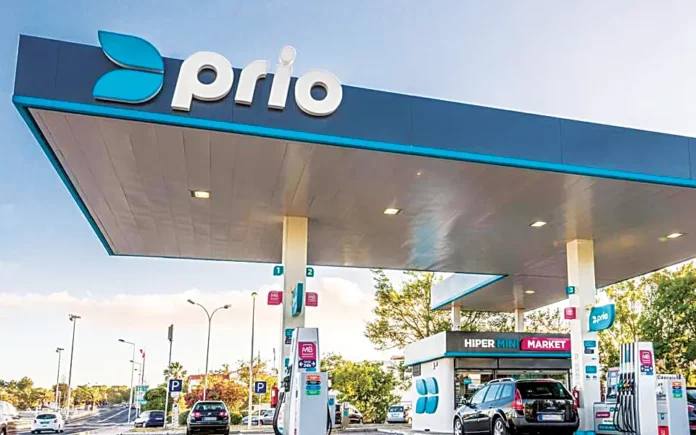
Prio is Brazil’s largest independent oil producer and the second-largest offshore operator after Petrobras, specialising in the revitalisation of mature fields in the Campos Basin through a buy-and-optimise model. The Q1 result demonstrates that the strategy of acquiring underperforming assets (Frade, Albacora Leste, Peregrino) and applying operational efficiency can generate returns that compete with integrated majors. Genial Investimentos characterised the quarter as “solid” with ROE of 24.8 percent, according to their post-results note.
The lifting cost returning to single digits at US$9.4 per barrel is the operational proof point. This represents a 26.5 percent quarter-over-quarter improvement, driven by Peregrino synergies, Wahoo’s dilution of fixed costs, and optimisation across the fleet. Among global independent E&P peers, sub-US$10 lifting costs place Prio in the lowest cost decile, according to industry benchmarks. The Albacora Leste field reached 95.4 percent operational efficiency — the highest ever recorded at the asset, per the company’s disclosure.
Prio Q1 2026 Quarterly Snapshot
| Indicator | Q1 2025 | Q1 2026 | Chg |
|---|---|---|---|
| Net Income | US$345M | US$460M | +33% |
| Adj. EBITDA | US$446M | US$852M | +91% |
| Total Revenue | US$719M | US$1.2B | +67% |
| Production (avg bpd) | 109.4K | 155.4K (record) | +42% |
| Sales Volume | 10.2M bbl | 14.8M bbl | +45% |
| Lifting Cost | ~US$12.8/bbl | US$9.4/bbl | -26.5% QoQ |
| FOB Realised Price | — | US$75.34/bbl | Brent -$8.15 |
| Leverage (ND/EBITDA) | — | 2.0x (from 2.3x Q4) | Improving |
How Prio’s Result Reframes Brazil’s Independent E&P Sector
Prio’s Q1 contrasts sharply with its independent peers. Brava Energia (BRAV3), whose production fell slightly to 76 kbpd with an expected net loss of R$255 million on hedge losses, according to XP’s preview, and PetroReconcavo (RECV3), where output declined 2.5 percent to 24.4 kbpd, are both struggling to maintain production levels while Prio has grown 42 percent. The divergence confirms that within Brazil’s junior oil space, Prio has separated from the pack on both scale and execution quality.
The stock’s 3.81 percent intraday decline despite the earnings beat reflects pure crude-price sensitivity: with 155,000 barrels per day and no hedging beyond normal course, PRIO3 is the most leveraged B3 equity to Brent movements, according to broker commentary. Empiricus Research maintains Prio among its recommended stocks, projecting a 50 percent cumulative free-cash-flow yield for the 2026–2028 triennial. At 3–4x forward EV/EBITDA, Prio trades among the cheapest independent E&P multiples globally, per Bloomberg data — a discount that reflects both the emerging-market venue risk and the heavy-oil Brent discount that widens with Peregrino’s share of the revenue mix.
What Happens Next for Prio
Near-term: Wahoo’s fourth and final well connection is imminent. Reaching the approximately 40 kbpd plateau would push Prio’s total production above 170 kbpd, per the earnings release guidance.
Deleveraging trajectory: At 2.0x ND/EBITDA and declining, XP analysts expect leverage below 1.5x by year-end 2026, which would unlock accelerated shareholder returns through buybacks and dividends.
Brent volatility: Middle East conflict has pushed Brent above US$90 in recent weeks, but the OPEC+ production-increase speculation that drove Wednesday’s decline creates near-term price uncertainty. Each US$1 move in Brent translates to approximately US$13–15 million in quarterly EBITDA for Prio at current production levels.
Peer results: Brava Energia and PetroReconcavo Q1 reports this week will provide the comparative framework that reinforces Prio’s relative outperformance within Brazil’s independent E&P sector.
Frequently Asked Questions
Did Prio beat Q1 2026 estimates?
Prio beat XP Investimentos’ estimates across all three headline metrics: net income of US$460 million versus US$351 million expected (+31%), EBITDA of US$852 million versus US$777 million (+10%), and net revenue of US$1.12 billion versus US$1.1 billion. The outperformance was driven by higher-than-expected production from the early Wahoo contribution and lower lifting costs at US$9.4 per barrel.
How did PRIO3 react to the Q1 results?
PRIO3 fell 3.81 percent intraday on Wednesday May 6 despite the strong earnings beat, tracking a 3 percent decline in Brent crude prices amid OPEC+ production-increase speculation. Prio is the most Brent-sensitive equity on B3 given its 155,000 barrels per day production with minimal hedging, making short-term price action driven by crude rather than fundamentals.
What is Wahoo and why does it matter for Prio?
Wahoo is an offshore oil field connected to the FPSO Valente at Prio‘s Frade complex. First oil was achieved on March 18, 2026, with three wells connected and a fourth imminent. Prio expects Wahoo to reach approximately 40,000 barrels per day at plateau, which would push total company production above 170,000 bpd and make Prio one of the 15 largest offshore producers in the Americas.
When will Prio start paying higher dividends?
XP analysts expect Prio’s leverage to fall below 1.5x ND/EBITDA by end-2026, at which point the company has signalled it will accelerate shareholder returns through dividends and buybacks. Empiricus projects a cumulative 50 percent free-cash-flow yield for the 2026–2028 period. The pace depends on Brent prices, Wahoo ramp-up speed, and whether Prio pursues additional acquisitions.
Updated: 2026-05-06T12:00:00-03:00 by Rio Times Editorial Desk
Prio Q1 2026 | PRIO3 earnings results | Brazil independent oil producer | Wahoo first oil offshore | Latin American financial news | The Rio Times
This article was produced by The Rio Times’ automated newsroom system. How we use AI · Report an error
LatAm Markets: Live Signals → — real-time movers, turnover leaders and FX across Latin America.
Read More from The Rio Times