

From Cattle Country to the Paraguay Space Program
Paraguay is not the first country that comes to mind when the conversation turns to space technology. A landlocked nation of 7 million people known for soybeans, cattle, and hydroelectric power, it launched its first nanosatellite only in 2021 — a shoebox-sized device called GuaraniSat-1 that was built with Japanese help and deployed from the International Space Station’s Kibo module. Now the Paraguay space program is about to take a far more ambitious leap. This is part of The Rio Times’ comprehensive coverage of Latin American financial markets and economic developments.
On Tuesday, President Santiago Peña presided over the signing of a $24 million grant agreement with Japan at the Palacio de López in Asunción. The funds — 3.818 billion yen in non-repayable cooperation — will finance the construction of a Space Technology Utilization Center on the campus of the National University of Asunción in San Lorenzo. It will be the first facility of its kind in Latin America.
What the Paraguay Space Center Will Actually Do
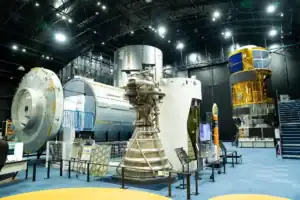
The four-story, 3,400-square-meter building will house two core laboratories of the Paraguayan Space Agency (AEP): SpaceLab, dedicated to satellite development and testing, and GeoLab, focused on Earth observation data processing. The equipment list reads like a wish list for any emerging space program: nanosatellite vibration testing systems, thermal vacuum chambers that simulate the extreme conditions of orbit, anechoic chambers for radio-frequency testing, and S- and X-band ground station antennas capable of receiving and processing satellite data.
The practical applications are tailored to Paraguay’s economy. Satellite imagery will support agricultural monitoring — critical for a country where farming and ranching form the backbone of GDP. The center will also process data for disaster risk management, environmental monitoring, and territorial planning. Fourteen Japanese consultants from four specialized firms spent the past twelve months working with Paraguayan engineers to design the facility to the country’s specific needs.
A Strategic Relationship Takes Flight
The agreement marks a tangible outcome of a diplomatic upgrade. In May 2024, then-Prime Minister Fumio Kishida visited Paraguay and the two nations elevated their bilateral relationship to strategic partner status — the first time Japan extended that designation to Paraguay. The visit also launched the Japan-Paraguay Space Cooperation Program, backed by JICA and JAXA, Japan’s development and space exploration agencies respectively. The signing ceremony on Tuesday coincides with the 90th anniversary of Japanese immigration to Paraguay, a community of roughly 10,000 people that remains a quiet bridge between the two countries.
The GuaraniSat Journey
The satellite center arrives at a pivotal moment for the AEP. Paraguay‘s second nanosatellite, GuaraniSat-2, is scheduled to launch in October 2026 from Vandenberg Space Force Base in California. Unlike its predecessor, GuaraniSat-2 was entirely designed and assembled by Paraguayan scientists. The CubeSat’s primary mission is to study the South Atlantic Magnetic Anomaly — a phenomenon linked to the extreme temperatures that affect the region — measuring cosmic ray particles called muons. The project involves collaborators including NASA’s Jet Propulsion Laboratory, Mexico’s UNAM, and Italian firm Astradyne.
Until now, the AEP’s greatest limitation has been the absence of domestic testing infrastructure. GuaraniSat-2‘s environmental tests had to be conducted at Kyushu Institute of Technology in Japan because Paraguay lacked the vacuum chambers and vibration equipment required. The new center eliminates that dependency entirely. AEP president Osvaldo Almirón stated that Paraguay will become a regional reference for satellite data utilization and for the design, development, and operation of small satellites across Latin America.
President Peña framed the investment in broader terms. The country he wants to build, he said, cannot rely solely on macroeconomic stability or physical infrastructure. It also requires investment in science, technology, and specialized human capital. For a country that five years ago had zero experience in space technology, a $24 million satellite center and a homegrown nanosatellite heading to orbit suggest the bet is beginning to pay off.