

Key Points
Residents of Kabul were jolted awake before 2 a.m. on Friday by Pakistani jets. Two bombing runs hit the Afghan capital within minutes of each other, followed by anti-aircraft fire that continued into a Ramadan morning. By dawn, Pakistan’s defence minister had declared what his country had spent months trying to avoid: open war with the Taliban government next door.
What Happened
Pakistan launched Operation Ghazab Lil Haqq — “Righteous Fury” — striking Kabul, Kandahar and the southeastern province of Paktia. Officials said the raids hit Taliban brigade headquarters, command centers, intelligence offices and ammunition depots, including the Pul-e-Charkhi military compound east of Kabul. In Kandahar, where Supreme Leader Hibatullah Akhundzada is believed to be based, residents reported jets until dawn.
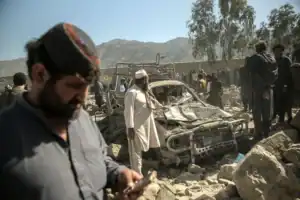
Casualty claims diverge sharply. Pakistan said it killed 274 Taliban fighters and destroyed 73 border posts. Afghanistan reported eight soldiers killed and accused Pakistan of killing 13 civilians in earlier strikes on Nangarhar province, a toll the UN mission confirmed. Neither side’s battlefield figures could be independently verified.
How It Escalated
The sequence began on February 21, when Pakistan conducted airstrikes across Nangarhar, Paktika and Khost provinces, targeting camps it attributed to the Pakistani Taliban (TTP) and Islamic State–Khorasan. Kabul said 18 civilians died, including 11 children from a single family in Nangarhar. Pakistan said it killed more than 80 militants. On Thursday night, the Taliban launched what it called retaliatory attacks on Pakistani military installations along the 2,600-kilometer border. Pakistan’s strikes on Kabul followed hours later.
The fighting shatters a ceasefire brokered by Qatar and Turkey in October 2025, after the deadliest cross-border clashes in years. Saudi Arabia had intervened this month to mediate the release of three Pakistani soldiers captured during the October fighting — a gesture that now looks like a footnote.
Why Pakistan Crossed the Line
Pakistan’s justification rests on a fundamental grievance: since the Taliban’s return to power in August 2021, TTP attacks inside Pakistan have surged. The year 2025 was one of the most violent in over a decade, with more than 1,000 TTP incidents recorded. A February 6 suicide bombing at a Shia mosque in Islamabad killed at least 40 people. Defence Minister Asif accused the Taliban of harboring militants and turning Afghanistan into a proxy for India, Pakistan’s archrival.
This is the first time Pakistan has directly targeted Taliban government military infrastructure rather than just militant hideouts — a critical distinction that transforms the conflict from a counterterrorism operation into a state-on-state confrontation. Analysts warn the Taliban, lacking an air force, will likely respond asymmetrically: suicide bombers, kamikaze drones and urban attacks inside Pakistan.
Russia and Iran have called for immediate de-escalation. The International Crisis Group urged both sides to resume negotiations through Turkey, Qatar and Saudi Arabia. But with Pakistan’s patience publicly exhausted and the Taliban vowing a response, the question is no longer whether this conflict will worsen — but how far it will go before anyone can stop it.