

On the same day that a Brazilian newspaper reported the buyer might walk away from the deal, the regulator approved it. That sequence captures everything you need to know about the tortured ownership saga of Braskem, Latin America’s largest petrochemical producer and the last major asset still attached to the ruins of Odebrecht — once the biggest construction conglomerate in the developing world, now a bankrupt shell operating under the rebranded name Novonor.
Brazil’s antitrust authority CADE cleared the transaction on March 6, approving without restrictions the transfer of Novonor‘s controlling stake to an investment fund advised by IG4 Capital, a private equity firm specialising in distressed assets. The approval becomes final in 15 days unless appealed.
How a Corruption Empire Lost Its Last Asset
To understand why this matters, you have to go back to Operation Car Wash. Odebrecht was at the centre of the largest corruption investigation in Latin American history — a bribery network that spanned 12 countries, brought down presidents in Brazil and Peru, and resulted in a $3.5 billion settlement with U.S., Brazilian, and Swiss authorities. The company entered judicial recovery in 2019, rebranded as Novonor, and has spent years liquidating assets to pay creditors.
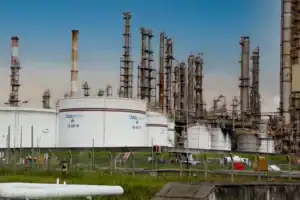
Braskem was the prize that remained. The company produces the raw materials — polyethylene, polypropylene, PVC — that go into everything from packaging to car parts across Latin America. But years of ownership uncertainty, a devastating geological disaster at its salt mining operations in the northeastern state of Alagoas, and a brutal downturn in global petrochemical markets have hammered its value and strained its finances.
A Deal Built on Debt, Not Cash
The mechanics of the transaction are unusual. IG4 did not buy Braskem shares on the open market. Instead, in December, it signed a binding agreement with five major banks — Itaú, Bradesco, Santander, Banco do Brasil, and BNDES — to purchase roughly R$20 billion ($3.5 billion) in Novonor debt that was backed by Braskem shares. Through a specially created fund structure called Shine I FIDC, those debt instruments will convert into equity, giving IG4 control of 50.1% of Braskem’s voting capital and 34.3% of total shares.
Novonor will retain a residual 4% stake. IG4 will then share control with Petrobras, Braskem’s other major shareholder — but only if the two can agree on a new shareholders’ pact, which has not yet been negotiated.
The Bankruptcy Clock
The approval arrived at a precarious moment. Hours before CADE’s decision, the financial newspaper Valor Econômico reported that IG4 was considering abandoning the negotiations entirely, citing regulatory delays. The paper also reported — citing an unnamed executive involved in the talks — that Braskem could be forced into bankruptcy within two to three months if conditions do not improve. Braskem‘s cash position has deteriorated amid weak petrochemical spreads, lower plant utilisation, and problems at its Mexican joint venture Braskem Idesa.
Petrobras CEO Magda Chambriard added a further note of ambiguity. She told reporters that the CADE approval could still be overturned by its administrative tribunal, and that Petrobras would need a new shareholder agreement before considering any capital injection. Without fresh capital from Petrobras, Braskem’s financial position remains fragile.
What Happens Next
If the deal closes and Braskem survives, IG4 faces a multi-year restructuring project: stabilise the balance sheet, negotiate with Petrobras, restore operational performance, and eventually sell the Braskem shares at a higher value to repay the banks. The timeline for that recovery could stretch to five years.
If it fails, Brazil’s largest petrochemical company — one that supplies raw materials to thousands of manufacturers across the continent — could enter bankruptcy protection, with consequences rippling through industrial supply chains from São Paulo to Mexico City. Either way, the Odebrecht name will finally be severed from the last company it built. Whether what replaces it proves more durable than the empire that created it remains an open question.