New Trade Agreement Promises $7 Billion in Short-Term Gains for Brazil
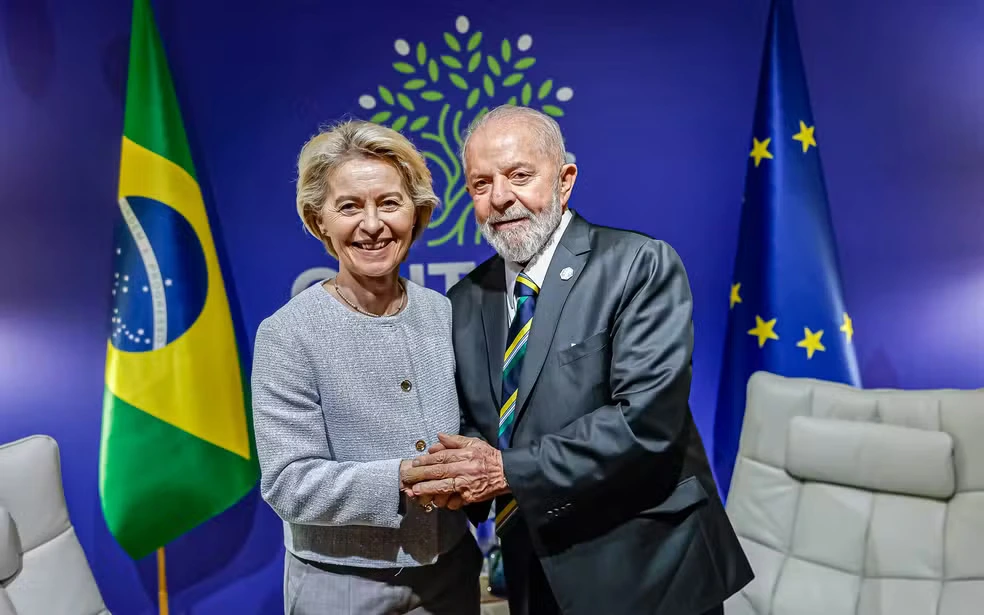
The recent signing of the Mercosur-European Union trade agreement opens new economic avenues for Brazil. This agreement, finalized on December 6, 2024, after years of negotiation, stands to reshape trade dynamics between these regions.
This deal involves approximately 25% of the global economy and connects around 780 million people. It eliminates tariffs on 97% of industrial goods and 77% of agricultural products from Mercosur countries over a ten-year period.
Such measures aim to enhance market access for Brazilian exports. According to the Brazilian Agency for Promotion of Exports and Investments (ApexBrasil), Brazil can expect an increase of about $7 billion in exports to the EU in the short term.
This projection stems from the reduction of tariffs on 242 specific products. These products represent a significant portion of the EU’s annual imports, valued at approximately $109.8 billion.
The agreement is particularly crucial for Brazil as it seeks to diversify its export portfolio. Currently, Brazilian exports heavily rely on commodities like oil, coffee, and soybeans.
The deal encourages the export of higher-value goods, including machinery and processed foods. Historically, Brazil’s trade with the EU has diminished over the past two decades.
Brazil-EU Trade Agreement
The EU’s share of Brazilian exports fell from 23% in 2003 to just 13.6% in 2023. This decline reflects Brazil’s increasing trade with Asia, especially China. The new agreement could help restore the EU’s significance as a trading partner.
The potential economic impact is substantial. ApexBrasil estimates that immediate tariff reductions could yield $3.5 billion in additional exports. If Brazil captures a mere 10% of the EU market for these products, it could achieve that $7 billion target quickly.
Moreover, studies suggest that this agreement could lead to a long-term GDP increase of 0.46% by 2040, translating to roughly $9.3 billion in constant prices. Such growth would likely stem from improved trade relations and increased foreign investment.
However, challenges remain. Increased competition from European goods may pressure local industries that are not prepared to compete effectively. The phased tariff reductions necessitate that Brazilian businesses adapt strategically to this new competitive landscape.
As Brazil moves forward with this agreement, it faces both opportunities and challenges. The Mercosur-EU trade agreement represents a pivotal moment for Brazil’s economy.
It provides a chance for growth through expanded trade and investment while emphasizing the importance of self-reliance in a globalized market.
More: Brazil news in English, every day from The Rio Times.
Live Market IntelligenceBrazil — Live Market Board
Rio Times · Live Market Intelligence
Brazil — Live Market Board
+0.47%
205,082.56
+0.47%
69,879.62
-0.01%
10,746.36
-0.31%
3,017,221
—
2,540.10
+0.46%
57,021.19
+0.13%
| Instrument | Last | Change | YoY | Prev. | High | Low | Volume |
|---|---|---|---|---|---|---|---|
| IBOV | 205,082.56 | +0.47% | +21.85% | 204,120.12 | 168,310 | 167,142 | — |
| USD/BRL | 5.16 | +0.01% | -5.13% | 5.16 | 5.18 | 5.14 | — |
| SELIC | 14.00% | — | — | — | — | — | |
| PETR4 | 41.64 | -0.05% | +35.19% | 41.66 | 41.97 | 41.15 | 41,499,400 |
| VALE3 | 72.97 | +0.83% | +30.75% | 72.37 | 73.54 | 72.66 | 17,658,000 |
| ITUB4 | 38.60 | -1.03% | +4.57% | 39.00 | 39.34 | 38.39 | 29,487,800 |
| BBDC4 | 16.85 | +0.36% | +3.50% | 16.79 | 16.90 | 16.67 | 19,416,900 |
| BBAS3 | 19.37 | +0.47% | +0.73% | 19.28 | 19.44 | 19.16 | 11,069,200 |
| B3SA3 | 14.26 | -0.21% | +12.73% | 14.29 | 14.47 | 14.11 | 33,037,800 |
| ABEV3 | 14.89 | -0.80% | +21.91% | 15.01 | 15.07 | 14.81 | 16,453,100 |
| WEGE3 | 47.59 | +0.49% | +29.99% | 47.36 | 48.08 | 47.36 | 3,364,600 |
| PRIO3 | 59.14 | -0.19% | +50.67% | 59.25 | 59.81 | 58.74 | 3,325,600 |
| SUZB3 | 41.33 | +2.35% | -23.55% | 40.38 | 41.48 | 40.35 | 3,914,900 |
| RENT3 | 34.68 | -0.09% | +0.84% | 34.71 | 34.96 | 34.35 | 7,979,100 |
| AZZA3 | 15.89 | -2.63% | -53.76% | 16.32 | 16.42 | 15.82 | 1,330,300 |
| CSNA3 | 4.30 | +0.47% | -42.65% | 4.28 | 4.41 | 4.26 | 10,076,100 |
| GGBR4 | 24.69 | +2.19% | +51.38% | 24.16 | 24.85 | 24.18 | 7,047,600 |
| ENEV3 | 24.21 | -1.38% | +70.49% | 24.55 | 24.64 | 23.99 | 9,297,000 |
This article was produced by The Rio Times’ automated newsroom system. How we use AI · Report an error · Editorial responsibility: Matthias Camenzind, Editor-in-Chief
LatAm Markets: Live Signals → — real-time movers, turnover leaders and FX across Latin America.
Brazil runoff, Sunday, October 25: Brazil runoff: date, poll closing times and when results start. Latest: Brazil runoff polls, Flávio 51%, Lula 49%.