Neoenergia Q1 2026 Profit Jumps 28% as Iberdrola Moves to 98% Control of Brazilian Utility
Neoenergia (NEOE3) posted Q1 2026 net profit of R$1.2 billion, up 28%, as Iberdrola completed OPA to reach 98% ownership. Cash EBITDA of R$3 billion on tariff resets.

Neoenergia Q1 2026 Earnings: What Happened
Neoenergia S.A. (B3: NEOE3) is one of Brazil’s largest integrated electricity companies, controlled by Spain’s Iberdrola S.A. (BME: IBE) — one of the world’s largest electric utilities by market capitalization. The company operates five major distribution franchises serving over 16 million customers: Coelba (Bahia), Neoenergia Pernambuco, Cosern (Rio Grande do Norte), Elektro (São Paulo and Mato Grosso do Sul), and Neoenergia Brasília (Federal District). Beyond distribution, Neoenergia holds generation assets (thermal, wind, solar, hydro) and transmission lines across Brazil. The company is led by CEO Eduardo Capelastegui and has been listed on B3’s Novo Mercado since 2019 (though its predecessor entities traded earlier). Neoenergia Q1 2026 results are covered by The Rio Times as part of its Latin American financial news reporting on B3-listed utilities.
The Q1 2026 print continues the strongest operational momentum in the Brazilian electricity distribution sector through the current regulatory cycle. Combined with Q4 2025’s R$1.48 billion net profit (+73% YoY), Neoenergia has delivered approximately R$2.7 billion ($513M) in cumulative net profit across two quarters — the best back-to-back performance since the 2021 CEB-D (Brasília distributor) acquisition cycle. The company attributed the positive performance to “operational efficiency at our distributors, driven by Parcela B tariff resets, and the entry into operation of new transmission assets.”
NEOE3 shares traded around R$33.75 ($6.42), up approximately 58% over the past 12 months, with a P/E of 8.1x and a 4.2% dividend yield. The stock is trading above the OPA price of R$32.50 (adjusted for Selic), reflecting the market’s expectation that Iberdrola — now at approximately 98% ownership — will either delist the company or offer a sweetened exit to the remaining 2% minority shareholders. The delisting process was initiated with a CVM filing in November 2025; the leilão timing remains subject to regulatory approval.
Key Drivers Behind Neoenergia’s Q1 2026 Results
Parcela B Tariff Resets and Distribution Efficiency
The Parcela B component of Brazilian electricity tariffs compensates distributors for their operational costs, depreciation, and return on invested capital. Annual tariff resets — approved by ANEEL based on each distributor’s regulatory asset base and cost structure — are the primary revenue driver for the distribution segment. The Q1 improvement reflects the cumulative effect of favorable resets across Neoenergia’s five distributors, which together serve over 16 million customers across geographically diversified jurisdictions. Energy injected rose 1.9% year-over-year in Q1, with the customer base expanding 2% — both metrics confirming steady underlying demand growth in Neoenergia’s franchise territories. The grid-loss reduction trend continued, with energy distributed growing faster than energy injected, reflecting the payoff from years of distribution capex investment.
New Transmission Assets and Concession Renewals
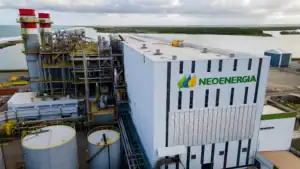
The commissioning of new transmission assets in Q1 added revenue from the Annual Permitted Revenue (RAP) that transmission concessions generate upon entering commercial operation. CEO Capelastegui stated at Q1 2025 results that 2025 would be the final year of major transmission investment, with the last four auction lots to be delivered. From 2026 forward, the company redirects capital toward organic distribution growth and deleveraging. The concession renewal convocations for Coelba, Cosern, and Elektro — all for 30-year extensions — provide long-term visibility for the distribution franchise. Pernambuco’s early renewal to 2060 (the first in Brazil) set the precedent, and the three pending renewals cover the majority of Neoenergia’s customer base.
Iberdrola OPA and Path to Delisting
In April 2026, Iberdrola completed the tender offer, acquiring 14.21% of Neoenergia’s capital for R$5.8 billion ($1.1B) at R$32.50/share. This lifted Iberdrola’s total stake to approximately 98%, with the stated objective of canceling the open-company registration — effectively delisting NEOE3 from B3. The OPA was filed with CVM in November 2025 and the leilão is pending regulatory approval. For minority shareholders (approximately 2% remaining), the question is whether the current market price above R$32.50 reflects sufficient premium or whether Iberdrola will need to offer a sweetened price to reach the threshold required for delisting under B3’s Novo Mercado rules. The OPA price of R$32.50, adjusted by Selic from filing to settlement, implies an effective price of approximately R$34–35 by mid-2026.
Live Company IntelligenceNeoenergia S.A — the full investor dossier
Valuation & profitability
Price & risk
$25.9152-wk high
$33.87
Revenue trend · 6y
Ownership
Dividend
Neoenergia Q1 2026 Financial Detail
The margin amplification — 8% EBITDA growth translating into 28% net income growth — reflects improved financial leverage dynamics as deleveraging reduces interest expense. Neoenergia’s leverage had been approximately 3.5x ND/EBITDA through most of 2025, and the strategic shift away from new transmission and renewable investments toward organic distribution growth and debt reduction is compressing the interest burden. Operating expenses rising 7% year-over-year are consistent with inflation pass-through and the cost of serving a 2% larger customer base — the 7% cost growth against 8% EBITDA growth represents slight operational leverage expansion.
The BRR of R$45.6 billion ($8.7B) is the cornerstone of the investment thesis. Under Brazil’s regulatory framework, distributors earn a regulated return on their recognized asset base (BRR), with the return rate set by ANEEL at each tariff review cycle. Every real of distribution capex that ANEEL recognizes adds to the BRR and creates a regulated revenue stream for the life of the concession. With R$1.7 billion ($323M) in quarterly distribution capex — and 30-year concession renewals providing the time horizon — Neoenergia is in a multi-decade compounding cycle where capex investment today generates predictable regulated returns for decades to come.
Management Signals from Neoenergia
Key Facts
— The strategic pivot from growth investor to optimization mode — no new renewables or transmission investments, 94% of capex directed to distribution, focus on deleveraging — is the defining management signal. CEO Capelastegui has been explicit: distribution organic growth is the priority through at least 2026, with the GIC partnership providing an exit mechanism for transmission assets (the Itabapoana sale at R$127.5 million with R$577 million debt deconsolidation being the template). This capital discipline, imposed by Iberdrola’s governance framework, differentiates Neoenergia from Brazilian-controlled peers that often chase growth at the expense of returns.
— The concession renewal convocations for Coelba, Cosern, and Elektro — covering the majority of Neoenergia’s customer base — are transformational for the long-term investment case. Thirty-year renewals provide the certainty needed to justify continued distribution capex at R$6–7 billion annually, knowing that the regulatory return framework extends to the 2050s. Pernambuco’s early renewal to 2060 (the first in Brazil) validated the approach; the three pending renewals would effectively lock in the franchise through the energy transition.
— Iberdrola’s move to 98% ownership with the stated intention to delist is the governance endgame. For the parent company, Neoenergia represents approximately 12–15% of group revenue and provides emerging-market growth exposure within a regulated framework. Full ownership eliminates minority conflicts, simplifies capital allocation, and allows Iberdrola to optimize Neoenergia’s capital structure and dividend policy without the constraints of B3 listing requirements. For remaining minority shareholders, the path forward is the OPA price (R$32.50 + Selic adjustment) or continued trading at market — with the stock currently above the OPA price.
What to Watch Next for Neoenergia
The OPA settlement and potential delisting timeline are the near-term corporate events. CVM regulatory approval, B3 Novo Mercado delisting requirements, and the final OPA price (R$32.50 + Selic adjustment from November 2025 filing to settlement date) will determine the exit value for the remaining approximately 2% minority shareholders. Any delay or challenge to the delisting process could extend the trading life of NEOE3 beyond mid-2026.
Concession renewal terms for Coelba, Cosern, and Elektro will set the regulatory framework for the next 30 years. The specific conditions — tariff reset mechanisms, investment obligations, quality-of-service targets, and any efficiency-sharing clauses — will determine the long-term return profile on the R$45.6 billion BRR. The Pernambuco precedent was favorable; market expectation is that the three pending renewals will follow similar terms.
The broader Brazilian utility-sector capital flow story provides the macro context. The Compass R$25 billion IPO filing, Engie Brasil’s R$10 billion follow-on, and Sabesp’s stock split with Wellington Management’s 5% stake represent approximately US$10 billion in fresh institutional capital flowing into Brazilian utility exposure in Q2–Q3 2026. This wave confirms that international institutional investors are rerating Brazilian regulated assets upward — a trend that Neoenergia’s consistent operational outperformance directly supports.
Neoenergia Quarterly Results (Q1 2026 vs Q1 2025)
| Metric | Q1 2025 | Q1 2026 | Chg |
|---|---|---|---|
| Net Profit | ~R$940 mn | R$1.2 bn ($228M) | +28% |
| Cash EBITDA | R$2.78 bn | R$3.0 bn ($570M) | +8% |
| Operating Expenses | — | — | +7% YoY |
| Q1 Capex (Total) | — | R$1.8 bn ($342M) | — |
| Distribution Capex | — | R$1.7 bn ($323M) | 94% | — |
| Energy Injected | — | — | +1.9% YoY |
| Customer Base | — | 16+ mn | +2% YoY |
Neoenergia Strategic Summary
| Metric | Value |
|---|---|
| BRR (Regulatory Base) | R$45.6 bn ($8.7B) |
| Iberdrola Ownership | ~98% post-OPA (Apr 2026) |
| OPA Price | R$32.50/share + Selic adj. |
| Concession Renewals | Coelba, Cosern, Elektro (30 yr) |
| Pernambuco Renewal | To 2060 (1st in Brazil, early) |
| Share | P/E | DY | R$33.75 ($6.42) | 8.1x | 4.2% |
| FY2025 Capex | R$10.1 bn ($1.9B) |
| Distributors | 5 (BA, PE, RN, SP/MS, DF) |
Risks Facing Neoenergia
Delisting and liquidity risk for remaining minority shareholders. With Iberdrola at 98%, the free float is approximately 2% — NEOE3 trading liquidity has already deteriorated significantly, and any remaining shareholders who do not tender into the OPA may find themselves holding an illiquid position in a company that is effectively private. The Novo Mercado delisting rules require a minimum acceptance threshold; if not met, the company may continue as a listed entity with minimal float, creating an adverse governance dynamic for minorities.
Regulatory risk in concession renewal terms. While the Pernambuco precedent was favorable, ANEEL and the Ministry of Mines and Energy could impose more stringent conditions on the Coelba, Cosern, and Elektro renewals — including higher investment obligations, tighter quality targets, or efficiency-sharing mechanisms that reduce the distributor’s share of productivity gains. Any adverse terms would compress the return on incremental BRR investment over the 30-year renewal period.
Brazilian macroeconomic conditions affect distribution volumes and collection rates. Neoenergia‘s Northeast exposure (Bahia, Pernambuco, Rio Grande do Norte) includes lower-income consumer bases where electricity non-payment rates are structurally higher than in São Paulo or Brasília. Any economic deterioration — driven by sustained high Selic, employment weakness, or the October 2026 election cycle — could increase technical and commercial losses in these territories, partially offsetting the BRR-driven revenue growth.
Brazilian Utility Sector Context
Key Facts
— The Brazilian utility sector is experiencing its strongest institutional capital flow cycle since 2019. The Compass R$25 billion IPO, Engie Brasil’s R$10 billion follow-on, Sabesp’s stock split with Wellington Management’s 5% stake, and Iberdrola’s R$5.8 billion OPA for Neoenergia represent a combined approximately US$10 billion in fresh capital committed to Brazilian regulated infrastructure in Q1–Q2 2026. This wave reflects a fundamental reassessment by international institutional investors of Brazilian regulatory predictability, fiscal credibility, and the risk-adjusted return available in regulated assets at current Selic-driven yield levels.
— Neoenergia’s Q1 result arrives within this capital flow context as the cleanest read on distribution-sector operational dynamics. CPFL Energia (Camargo Corrêa/State Grid), Enel Brasil (Italian-controlled), EDP Brasil (Portuguese-controlled), and Energisa are the primary distribution-sector comparables. Neoenergia’s consistent quarterly outperformance — 28% net profit growth on 8% EBITDA growth through financial leverage optimization — suggests that Iberdrola’s governance framework and operational discipline create a competitive advantage over locally-controlled peers in the Brazilian regulatory environment.
— For Iberdrola group investors (BME: IBE, OTCMKTS: IBDRY), Neoenergia provides the strongest single-quarter Brazilian contribution since the post-pandemic period, representing approximately 12–15% of group revenue. The move to 98% ownership eliminates minority conflicts and allows full optimization of capital structure and dividend policy. Combined with the Mercosur-EU trade deal entering force — which reduces structural country risk perceptions — Brazil’s regulatory-asset complex offers Iberdrola a compounding platform that few other emerging-market utility franchises can match.
Neoenergia Q1 2026 | NEOE3 earnings results | Iberdrola Brazil utility | electricity distribution | Latin American financial news | The Rio Times
This article was produced by The Rio Times’ automated newsroom system. How we use AI · Report an error · Editorial responsibility: Matthias Camenzind, Editor-in-Chief
LatAm Markets: Live Signals → — real-time movers, turnover leaders and FX across Latin America.