Mexico’s Year-End Trade Flip: A Surplus In Raw Data, A Deficit After Adjustment
Key Points
- Mexico’s December balance showed a $2.43 billion surplus in raw terms, but a $861 million deficit after seasonal adjustment.
- Exports jumped to $60.651 billion, led by manufacturing, while oil exports sank on weaker volumes and prices.
- For all of 2025, Mexico swung to a $771 million surplus from a $18.541 billion deficit in 2024.
Mexico’s December trade report looks like a contradiction at first glance. In the unadjusted numbers, the country posted a $2.43 billion goods-trade surplus. In the seasonally adjusted series, it recorded a $861 million deficit.
That flip is not a statistical trick. Seasonal adjustment strips out calendar patterns that repeat every year, including year-end shipping surges. It is meant to make month-to-month comparisons cleaner, even when the raw sign changes.
Under the hood, the momentum was strong. December exports reached $60.651 billion, up 17.2% from a year earlier. Imports totaled $58.221 billion, up 16.7% year over year.
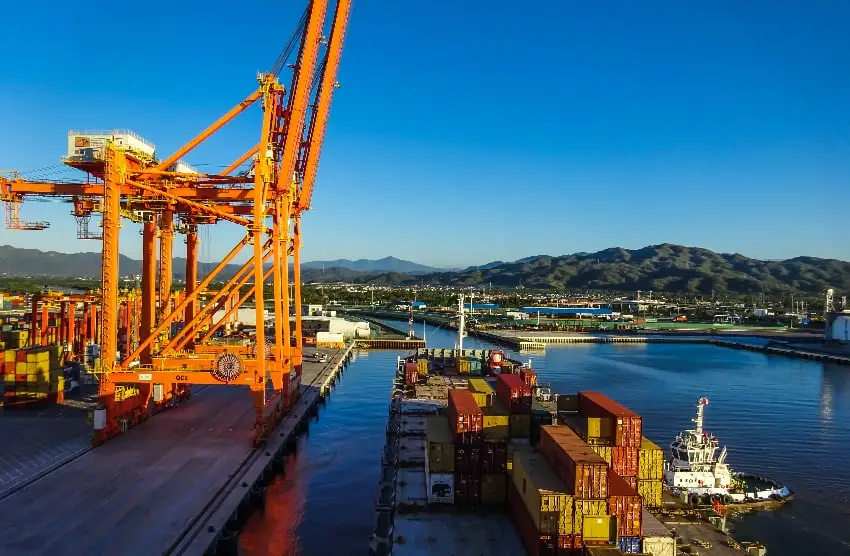
The export engine was manufacturing. Manufactured exports rose to $55.615 billion, up 20.6% year over year. Autos were large but flat, with vehicle exports at $15.077 billion, up 0.8%.
Oil was the weak spot. Oil exports fell to $1.522 billion, down 32.9% year over year. The average Mexican crude export price was $56.26 per barrel, while volumes slipped to 481,000 barrels per day.
On the import side, the composition matters. Consumer-goods imports climbed to $9.510 billion, up 25.3% year over year. Intermediate-goods imports hit $43.639 billion, up 17.3%, reflecting factory demand.
Capital-goods imports were $5.072 billion, down 0.6%, a soft signal for future investment. The bigger shift is annual. Mexico ended 2025 with a $771 million trade surplus after running a $18.541 billion deficit in 2024.
The improvement came from non-oil trade, which produced a $26.323 billion surplus in 2025. Energy, however, remains a drag.
The oil balance was a $25.552 billion deficit in 2025, larger than in 2024. That is the part policymakers cannot spin away.
For investors and households, trade flows influence growth expectations and the peso’s direction. A manufacturing-led surplus supports stability. A widening oil gap raises questions about energy strategy and state-led priorities.
Related coverage: Brazil’s Morning Call | Dollar Stays Under Pressure As Peso Tests New Lows And Mexic This is part of The Rio Times’ daily coverage of Mexico affairs and Latin American financial news.
Key Facts
— Deep Dive
— For the complete picture, read our in-depth guide: Mexico Economy 2026: GDP, Peso, Nearshoring, Banxico and Trade
This article was produced by The Rio Times’ automated newsroom system. How we use AI · Report an error · Editorial responsibility: Matthias Camenzind, Editor-in-Chief
In depth
Read More from The Rio Times