

The Big Three
Merval rebounds 1.8% after Monday’s 3.8% rout. The index climbed to 2,812,414 points, adding 49,355 on the session, as Banco Francés surged 5.3% to lead the panel. The recovery was a partial retrace of a brutal February that has seen the Merval shed roughly 6% in dollar terms.
Bonds fell and country risk rose to 545 despite equity rally. Sovereign dollar bonds (Globales and Bonares) declined 0.6% on average as JP Morgan’s country risk index climbed to 545 from 537, its highest since late January. The decoupling between equities and bonds reflects lingering caution around the government’s new dollar-denominated bond issuance program.
Dollar rebounds from four-month lows; BCRA extends buying streak to 35 days. The wholesale dollar rose ARS 10 to 1,380.50, bouncing from Monday’s ARS 1,360 low (a level not seen since late September). The BCRA purchased USD 48M, lifting its 2026 total to USD 2,555M — already over 25% of its annual reserve accumulation target.
Market Snapshot
| Indicator | Value | Change |
|---|---|---|
| Merval Close (ARS) | 2,812,414 | +1.79% |
| Merval 12-Month | — | +21.1% |
| Merval ATH (52-Week) | 3,296,502 | −14.7% from ATH |
| Merval in USD | ~2,035 | YTD ~−5% |
| Country Risk (JP Morgan) | 545 bps | +8 pts (+1.5%) |
| USD/ARS Mayorista | 1,380.50 | +10.00 (+0.7%) |
| Dólar Blue | 1,430 | +5 (+0.3%) |
| Dólar MEP | 1,403 | — |
| Dólar CCL | 1,444 | — |
| BCRA Reserves | ~US$46,261M | Record since Aug 2021 |
| BCRA Daily Purchase | US$48M | 35th consecutive day |
| CPI (Jan 2026) | 2.9% m/m | 32.4% YoY |
| WTI / Brent | US$66 / US$71 | Near 6-month high |
| S&P 500 | 6,890.07 | +0.77% |
Equities & Corporate
The S&P Merval rebounded 1.79% to 2,812,414, partially recovering Monday’s 3.8% loss as Wall Street’s tech-led rally lifted sentiment. Banco Francés led the panel with a 5.3% gain. However, the recovery was modest relative to the month’s damage: the Merval in dollar terms has fallen roughly 5–6% year-to-date and remains 14.7% below its 52-week high of 3,296,502.
The equity-bond disconnect deepened on Tuesday. While the Merval rode Wall Street’s coattails higher, sovereign bonds (Globales and Bonares) fell 0.6% on average. The catalyst was the government’s announcement of a new dollar-denominated bullet bond maturing October 2027 with a 6% annual coupon (paid monthly), designed to help pre-fund sovereign maturities. Analysts at Wise Capital called it a strategy to “test the market for foreign-law issuance at reasonable rates.”
Earnings season is in full swing: Mercado Libre reported Tuesday (shares fell 6.8% on Monday in New York amid the broader sell-off), while YPF is due Friday and Nu Holdings on Wednesday. The Merval in dollars, near USD 2,035, remains 13% below its January 2025 peak of USD 2,344. Analysts at Balanz and IEB argue that equities are undervalued relative to sovereign bonds at current country risk levels, with Argentine stocks trading at 40–60% discounts versus regional peers.
Currency & Monetary Policy
The dollar bounced across all segments after touching multi-month lows on Monday. The wholesale rate rose ARS 10 to 1,380.50 (the first gain after four consecutive declines), while the blue climbed to 1,430 and the CCL hovered near 1,444. Despite Tuesday’s bounce, the wholesale dollar has still fallen ARS 66.50 (4.6%) in February and ARS 74.50 (5.1%) in 2026. The BCRA’s band ceiling sits at 1,602.24, leaving the official rate 16.1% below the free-float trigger.
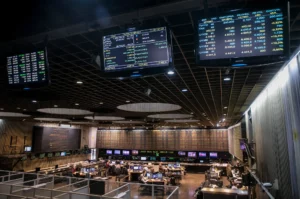
The BCRA extended its buying streak to 35 consecutive sessions, purchasing USD 48M on Tuesday from a total market volume of USD 422M. In 2026 the central bank has accumulated USD 2,555M, already surpassing 25% of its annual reserve target. Gross reserves have climbed to approximately USD 46,261M, a record since August 2021, bolstered by export liquidation, corporate bond issuance (over USD 20B in 2025 alone), and private-sector dollar inflows.
January inflation came in at 2.9% monthly and 32.4% annually, with food and beverages (+4.7%) driving the acceleration. The government has adopted a contractionary monetary stance: the base money supply contracted by nearly ARS 800B since year-end through aggressive Treasury sterilization, even as the BCRA injects pesos via dollar purchases. The TAMAR rate sits around 31.7% TNA, well above the 27.5% of December, reflecting tighter liquidity conditions. The carry trade remains attractive: returns in dollar terms have risen 16% since the October midterm elections, according to GMA Capital.
Technical Analysis — S&P Merval Daily
Tuesday’s session printed a modest green candle after Monday’s sharp sell-off: the Merval opened at 2,763,443 (essentially flat with Monday’s close), dipped to 2,763,124 intraday, then rallied to close at 2,812,414 near the session high of 2,815,457. The tight opening range followed by a steady grind higher suggests cautious dip-buying rather than conviction-driven accumulation.
RSI stands at 41.49 / 41.14, firmly in the lower-neutral zone and approaching oversold territory. This is a dramatic reversal from the overbought readings above 80 seen during the post-election euphoria in November. The MACD picture is bearish: the MACD line at −24,012 and signal at −43,604 are both negative, with the histogram at −67,616 showing deep red bars. The trend has been clearly to the downside since the January–February correction began.
Price is trading below the Ichimoku cloud, which has turned from support to resistance in the 2,862,000–2,890,000 zone. The 200-day SMA at 2,437,048 sits 13.3% below the current close, providing deep structural support. The index needs to reclaim the 2,862,000 cloud zone to shift the near-term bias back to neutral; until then, the path of least resistance is sideways to lower.
Key Levels
| Level | Price |
|---|---|
| Resistance 3 (52-Week High) | 3,296,502 |
| Resistance 2 (Nov Peak) | 2,991,101 |
| Resistance 1 (Ichimoku Cloud) | 2,861,906 |
| Current Close | 2,812,414 |
| Support 1 (Feb Low Zone) | 2,674,434 |
| Support 2 (200 SMA) | 2,437,048 |
Global Context & Commodities
Wall Street’s “Turnaround Tuesday” provided the lift: the S&P 500 gained 0.77% to 6,890.07, the Dow added 370 points to 49,174.50, and the Nasdaq rose 1.04%. AMD surged 8.8% on Meta’s multibillion-dollar GPU infrastructure deal, and software stocks rallied as Anthropic’s enterprise event eased AI-disruption fears. Argentine ADRs in New York had suffered heavy losses Monday, with Mercado Libre down 6.8%, making Tuesday’s partial recovery in Buenos Aires a natural catch-up.
Oil prices remained elevated with Brent near $70.89 and WTI at $66.01, a positive for YPF and Vaca Muerta producers ahead of US-Iran nuclear talks in Geneva on Thursday. Gold fell roughly 2% to $5,130/oz on profit-taking, while the DXY firmed 0.15% to 97.79. Trump’s State of the Union on Tuesday night defended tariffs and claimed they could replace income taxes, but offered no new escalation specifics on the Section 122 regime.
For Argentina specifically, the F2 consultancy noted that the SCOTUS tariff ruling and AI fears “dragged Brazil and the Merval in dollars suffered a 3.9% hit.” Emerging-market debt, however, continues to attract flows, and the carry trade into Argentina remains active. Sovereign bond curves trade at 7% for short maturities and 9–9.5% for medium and long terms, above comparable credits, suggesting further spread compression is possible if the BCRA maintains its reserve accumulation pace.
Looking Ahead
Nvidia’s Q4 FY2026 earnings on Wednesday after the close will set the global risk tone, with consensus at $65.7B revenue and $1.53 EPS. For the Merval, which has been heavily influenced by Wall Street tech sentiment, a Nvidia beat could reignite the recovery toward the 2,862,000 Ichimoku resistance; a miss would pressure an already weak technical setup.
The domestic catalysts are dense. YPF reports Q4 earnings on Friday with Brent above $70 supporting the narrative. The government’s new dollar bond auction (Oct 2027 maturity, 6% annual coupon) is being closely watched as a template for future issuance. On the legislative front, the Labor Reform passed the lower house and moves to the Senate, while the Glaciers Law modification is critical for mining investment in lithium and copper provinces. The BCRA’s quarterly inflation report on Thursday will signal whether policymakers see the path to sub-2% monthly inflation as credible after January’s 2.9% reading.
Verdict
Argentina is a tale of two markets. The peso is strong (down 5.1% against the dollar in 2026), reserves are at four-year highs (USD 46.3B), and the BCRA is buying dollars at a record pace (35 straight days, USD 2.6B year-to-date). Sovereign bonds, while weaker on Tuesday, still trade at levels consistent with sub-500 country risk. Yet the Merval in dollar terms has lagged, falling roughly 5% this year while Latin American peers rallied.
The disconnect creates opportunity — IEB and Baires Asset Management estimate Argentine equities trade at 40–60% discounts to regional comparables. But the technical picture remains bearish: RSI at 41 is near oversold, MACD is deeply negative, and the Merval is trading below its Ichimoku cloud for the first time since the pre-election period. The 2,862,000 level (cloud base) is the line in the sand for bulls; reclaiming it would signal the correction is over.
Structurally, the setup favors eventual re-rating: carry remains attractive (16% returns in USD since October), reserve accumulation is strong, and corporate earnings season could provide the catalyst that the BCRA’s dollar purchases alone haven’t delivered. Watch Nvidia tonight for the global impulse, YPF Friday for the local trigger, and country risk for confirmation — a sustained break below 500 would unlock the next leg higher for both bonds and equities.