Hyundai Commits $20 Billion to U.S. as Trump’s Tariffs Reshape Auto Industry
Hyundai, the South Korean automaker, prepares to unveil a massive $20 billion investment in the United States, spotlighting a $5 billion steel plant in Louisiana.
This move, announced on March 24, 2025, aims to employ 1,500 workers and produce advanced steel for Hyundai’s two U.S. auto plants crafting electric vehicles (EVs).
The decision aligns with President Donald Trump’s aggressive tariff strategy, which seeks to bolster American manufacturing by imposing steep import taxes. Since Trump’s return to office on January 20, 2025, his administration has reinstated 25% tariffs on steel and aluminum imports.
Broader levies are also set to hit foreign goods by April 2, 2025. This policy shift drives Hyundai’s pivot to localize production and dodge trade barriers, a trend echoing across the auto industry.
The Louisiana steel plant, an electric arc furnace, will supply Hyundai’s EV factories in Alabama and Georgia, which together churn out models like the Ioniq 5 and Ioniq 9.
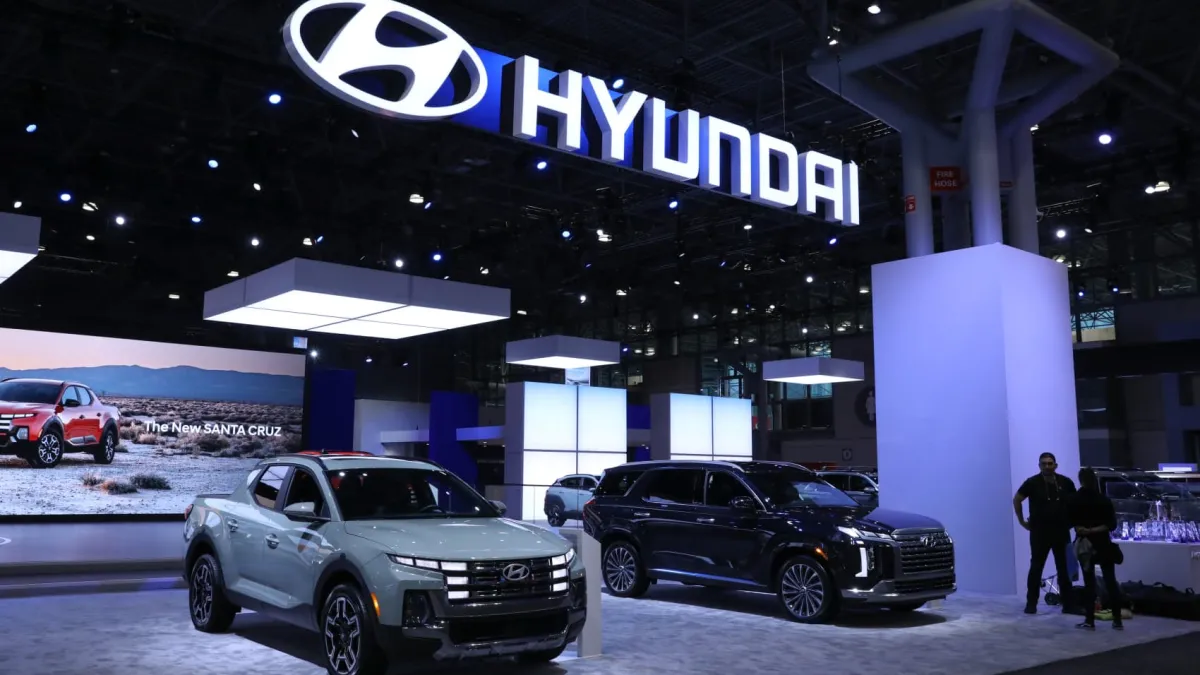
This follows Hyundai’s earlier $12.6 billion investment in its Georgia Metaplant, launched in October 2024, boosting U.S. capacity to over 1.1 million vehicles annually.
Korean sources reveal Hyundai initially eyed Southeast Asia or Mexico for steel expansion, but Trump’s tariffs tipped the scales toward the U.S. Japanese reports suggest this shift could save Hyundai billions in import costs, given steel’s critical role in EV production.
Meanwhile, Hyundai Steel, a subsidiary, remains tight-lipped, though earlier statements hinted at tariff concerns denting Korea’s steel sector. Trump’s return has sparked a wave of U.S. investment announcements.
U.S. Tariffs Drive Global Shifts in Manufacturing Investment
Toyota pledged $10 billion over five years to expand U.S. plants, while General Motors committed $1 billion to retool factories, both citing tariff pressures. Ford scrapped a $1.6 billion Mexico plant in favor of U.S. upgrades, a move analysts peg as a direct response to Trump’s threats.
Since January 2025, over $35 billion in auto-related investments have poured into the U.S., with at least $15 billion—Ford’s and parts of Hyundai’s—likely rerouted from Mexico due to tariff risks.
Beyond autos, Samsung and LG are mulling $8 billion in U.S. appliance production shifts from Mexico, pushing total investments past $50 billion. This surge reflects Trump’s leverage over global firms.
Korean analysts note Hyundai’s U.S. steel plant secures supply chains and jobs, while Japanese experts warn tariffs may strain Mexico’s auto exports, valued at $100 billion annually.
The narrative reveals a calculated U.S. gamble: protectionism reshaping trade, with real economic stakes for businesses and workers alike.
This article was produced by The Rio Times’ automated newsroom system. How we use AI · Report an error · Editorial responsibility: Matthias Camenzind, Editor-in-Chief