

Key Points
- Trump’s new U.S. stockpile plan signaled $10 billion in EXIM-backed financing, plus $2 billion private money.
- Investors immediately bid up rare-earth miners tied to Brazil, with one jumping about 12% in a day.
- Behind the rally sits a bigger contest: supply security versus sovereignty, speed versus safeguards.
A single announcement in Washington rippled straight into mining projects thousands of kilometers away.
After President Donald Trump unveiled “Project Vault,” a plan to build a strategic U.S. reserve of critical minerals, shares of companies with rare-earth projects in Brazil surged.
The logic was blunt: if the U.S. is preparing to buy and finance supplies outside China, the projects most likely to deliver could become strategically valuable overnight.
Project Vault, as described, would be financed with $10 billion through the U.S. Export-Import Bank, with another $2 billion expected from private investors.
That is not a purchase order. But it looks like a bridge between politics and capital, and markets trade the bridge. The biggest move cited in Brazilian reporting was Aclara Resources, up about 12%.
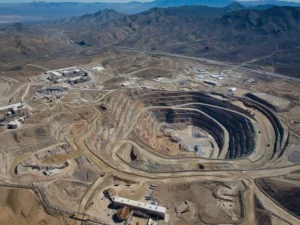
Aclara’s Brazilian bet is Project Carina in Nova Roma, Goiás, paired with a heavy rare-earth pilot plant opened in Aparecida de Goiânia in April 2025.
Brazil Rare Earths Attract Strategic Capital
The project is based on ionic adsorption clays, a deposit type prized because the metals are held in clay rather than hard rock, which can mean simpler processing and lower costs.
Aclara has also pointed to cooperation with a U.S. Department of Energy national-lab system on using artificial intelligence to improve separation, and to U.S. development-finance support for strategic overseas investments.
Viridis Mining and Minerals climbed about 6.6% as attention returned to its Colossus project in southern Minas Gerais, targeting magnets-grade elements such as neodymium and praseodymium, as well as terbium and dysprosium.
The company has described financing interest from France and Canada, secured a key environmental step in 2025, and is planning a Poços de Caldas research and processing center marketed as free of Chinese technology, including a 100-kilo-per-hour demonstration unit.
St George Mining rose about 5.4% on renewed focus on Araxá, next to CBMM’s niobium complex. The company has discussed a large resource, a 2027 timeline, a planned pilot plant, and talks in the U.S. over potential supply arrangements.
Meteoric Resources gained about 4.9% as investors revisited Caldeira, a major ionic-clay project in Minas Gerais, which has attracted a non-binding EXIM letter of interest of up to $250 million.
The right-leaning narrative calls this industrial realism: diversify supply chains, reduce dependence on China, and anchor high-tech manufacturing.
The left-leaning narrative warns of a familiar pattern: foreign strategic priorities pressuring Brazil to move faster than its environmental and social safeguards allow.
Either way, what matters abroad is that rare earths are not just “minerals.” They are leverage. And in this moment, Brazil’s geology is being priced as geopolitics.