From Wind to Wallets: How Brazil’s Northeast Became the Country’s New Growth Engine
For years, Brazil’s Northeast was seen as a place of promise that never quite arrived. Now it’s arriving—fast. In 2025 the region reclaimed its spot as the country’s second-largest consumer market, with 18.6% of national spending after a 14.8% jump in outlays.
Salvador alone is estimated to move R$101.41 billion ($19.1 billion) a year—and the surge isn’t just in big capitals. Inland, 194 of the Northeast’s 1,793 municipalities now each spend more than R$1 billion ($189 million) annually, showing a broader base of demand.
What changed is who has money and work. Formal jobs grew 4.37% in the year to July, adding 341,000 posts, and per-capita household income rose 20.2% between 2022 and 2024.
About 6.5 million people left poverty. That new middle-class paycheck is driving shops, services, and small industry. The deeper story is an advantage you can’t ship elsewhere: energy and geography.
In 2024, 90.1% of Brazil’s wind power came from the Northeast, and 53% of its solar generation. Cheap, steady electricity plus access to ports like Suape (Pernambuco) and Pecém (Ceará) is pulling factories, logistics hubs, and—across the Matopiba belt—bigger harvests of soy and corn.
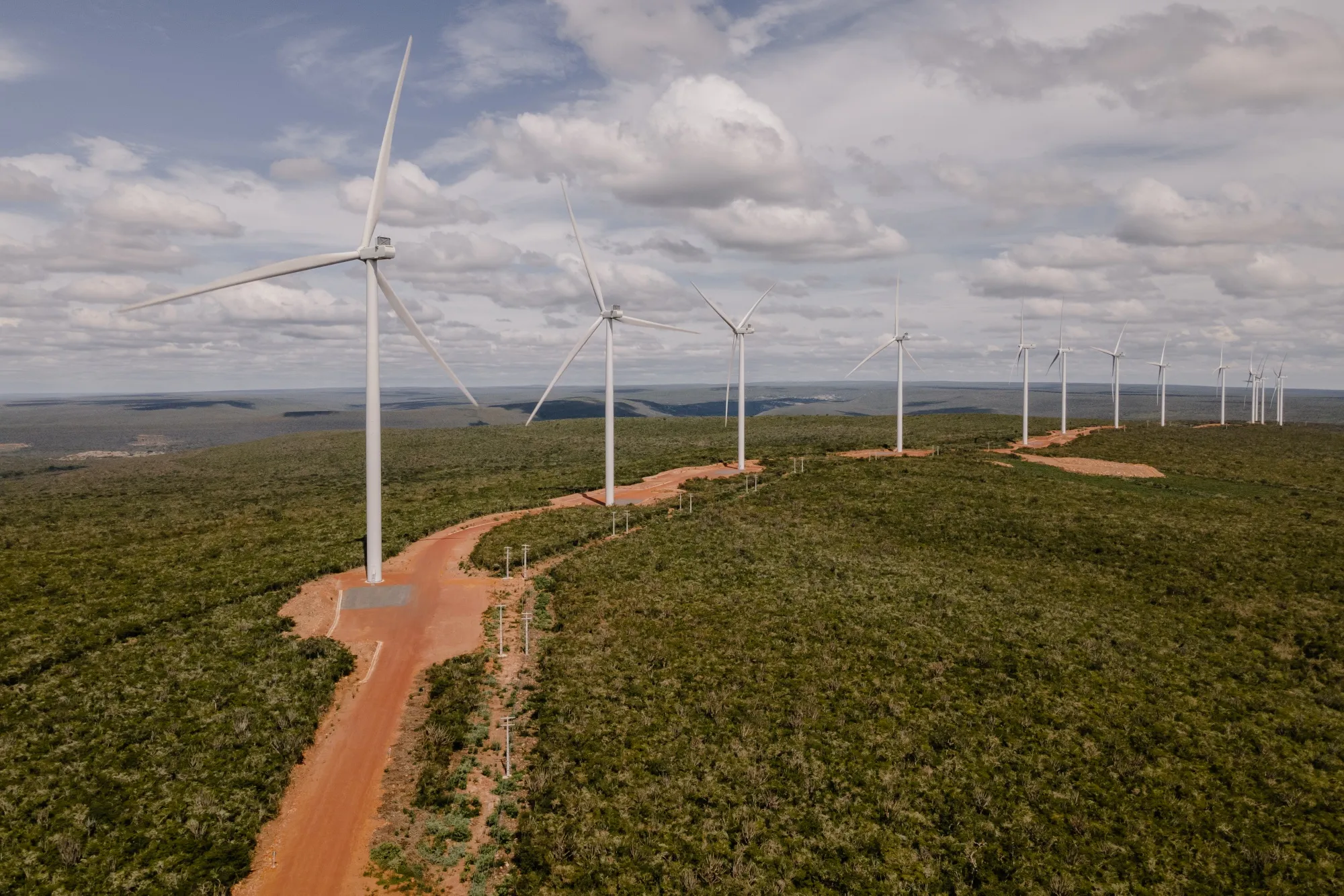
Public works are part of the picture too. The federal investment program earmarks R$604.5 billion ($114.1 billion) for the region through 2026, including the Transnordestina and FIOL railways, while a reindustrialization push channels finance into energy-transition projects.
Brazil’s Northeast Emerges as Engine of Future Growth
Credit is expanding faster than the national average. Total investment is projected to rise from R$300.9 billion ($56.8 billion) in 2025 to R$388.8 billion ($73.3 billion) by 2029.
Looking ahead, analysts expect the Northeast to grow around 3.2% a year from 2027 to 2034, versus 2.3% nationally. But momentum has enemies. Recent U.S. tariff hikes hit export-reliant states like Ceará and Alagoas.
Interest rates remain high. Pernambuco and Bahia still show pockets of joblessness, and informality tops 50% in parts of the region, limiting productivity and tax revenue.
The bottom line for readers outside Brazil: a large, young market with cheap clean power is finally gaining scale. If the Northeast can turn today’s wind, sun, ports, and rails into durable industry and formal jobs, it won’t just catch up—it could set the pace for Brazil’s next decade.
More: Brazil news in English, every day from The Rio Times.
This article was drafted with automated assistance and reviewed before publication. How we use AI · Report an error
Read More from The Rio Times