

Peru’s Air Force (FAP) confirmed plans to acquire 24 fighter jets in two phases, allocating $2 billion for 12 units in 2025 and $1.5 billion for the remainder in 2026.
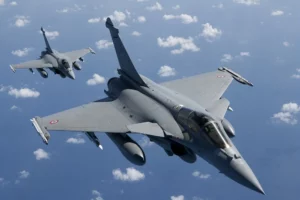
General Carlos Chávez Cateriano emphasized the need for a single supplier to avoid redundant logistics costs, narrowing options to France’s Rafale, the U.S. F-16 Block 70, and Sweden’s Gripen E.
The FAP excludes South Korea’s KF-21 Boramae, still in development, prioritizing combat-tested systems. The decision to split the purchase eases fiscal pressure, funded through internal borrowing from Peru’s Banco de la Nación.
Payments will span 18–25 years, shielding public budgets from immediate strain. Sweden’s recent parliamentary request to authorize Gripen sales reflects procedural steps, not a finalized Peruvian choice.
Technical evaluations, ongoing since 2012, await approvals from Peru’s defense, finance, and presidential offices. Peru’s existing fleet—1980s-era Mirage 2000s and inactive MiG-29s—demands urgent replacement.
Peru’s Defense Overhaul
The new jets will address regional security shifts, as Colombia and Brazil modernize with Gripen models. Concurrently, Peru seeks two Boeing 737NG transport aircraft via a $45 million government-to-government deal, ensuring transparency after a Canadian intermediary withdrew.
A proposed $263 million spaceport in Talara or Chiclayo, developed with U.S. Southern Command, aims to support satellite launches. Defense spending, now 3.5% of Peru’s national budget, includes anti-terrorism and disaster response allocations.
The Comptroller General monitors all acquisitions to prevent corruption, a legacy issue from past deals involving Mirage and MiG jets. Suppliers like Saab and Lockheed Martin leverage offset agreements to sweeten bids, while Korea Aerospace Industries pushes for future partnerships.
The FAP mandates delivery of two jets by July 2026 for display, underscoring operational readiness goals. This phased approach balances fiscal responsibility with defense modernization, positioning Peru to counter regional threats without destabilizing its economy.