Eid Mubarak: A Global Celebration Rooted in Faith and Unity
Muslims worldwide exchange “Eid Mubarak” greetings to celebrate Eid al-Fitr and Eid al-Adha, as reported by community leaders today.
These festivals, marking the end of Ramadan and the Hajj pilgrimage, unite over 1.8 billion people in faith, charity, and tradition. They showcase Islam’s values, drawing attention from businesses tracking massive economic and social impacts.
Eid al-Fitr follows Ramadan, a month when Muslims fast daily from dawn to dusk, testing discipline and devotion. Celebrated around March 30-31 in 2025, it began in 624 CE when Prophet Muhammad established it in Medina.
Families now gather after dawn prayers, sharing meals like biryani and exchanging gifts, driving sales in food and clothing sectors. Meanwhile, Eid al-Adha, expected around June 6-10 in 2025, honors Prophet Ibrahim’s willingness to sacrifice his son for God.
Muslims perform Qurbani, sacrificing animals and distributing meat to family, friends, and the poor. This practice, tied to the Hajj, moves millions of dollars globally, with organizations aiding the needy.
Here, 193 million people travel for “mudik” during Eid al-Fitr, boosting transport and retail industries. Markets also surge as families buy new clothes and prepare feasts, from sheer khurma in South Asia to baklava in Turkey.
Charity remains central, with Zakat al-Fitr donations—roughly $5-10 per person—raising $200-300 million annually for the poor. Eid al-Adha’s meat sharing feeds tens of millions, reflecting Islam’s focus on equity.
Businesses note these patterns, as festive spending and giving reshape local economies each year. Eid al-Adha ranks higher among Muslim festivals due to its Hajj connection, lasting three to four days with sacrifices.
Eid al-Fitr, shorter at one to three days, celebrates Ramadan’s end with equal enthusiasm. Both outshine other Islamic events like Mawlid al-Nabi in scale and participation.
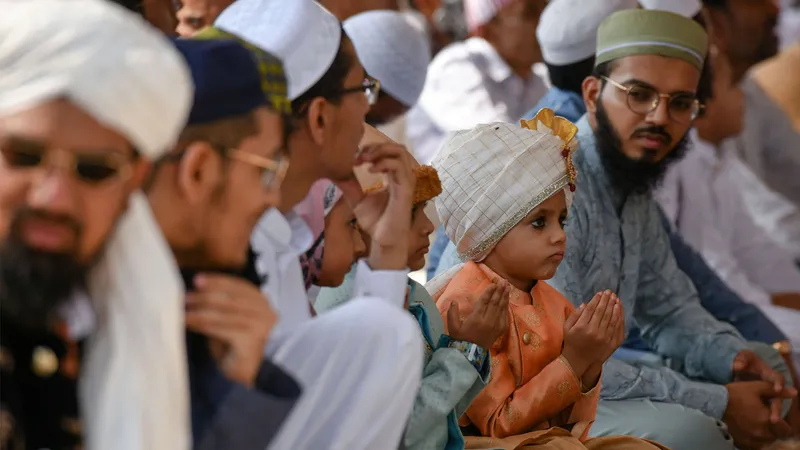
Communities prepare meticulously, starting each Eid with Salat al-Eid prayers at mosques or open fields. Families then visit relatives, reconcile disputes, and give children “Eidi” cash, fostering social bonds.
In the U.S., with 3.5 million Muslims, mosques host multicultural events, drawing diverse crowds. The lunar calendar shifts Eid dates 10-11 days earlier annually, affecting planning for businesses and governments.
Companies adapt to these cycles, eyeing opportunities in travel, food, and charity markets. For Muslims, the Eids reinforce faith and unity across cultures. Observers see these festivals as more than religious rites—they signal resilience and community strength.
With millions traveling, spending, and giving, Eid Mubarak reveals a global network of tradition and commerce. It’s a story of devotion meeting practicality, watched closely by industries worldwide.
This article was produced by The Rio Times’ automated newsroom system. How we use AI · Report an error · Editorial responsibility: Matthias Camenzind, Editor-in-Chief
Read More from The Rio Times