

Key Points
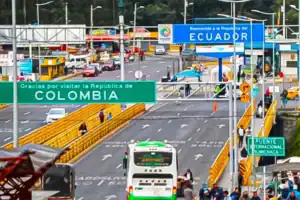
At the Rumichaca International Bridge, the main crossing between Ecuador and Colombia, traffic has gone unusually quiet. What started as a tariff threat in January has escalated into one of the worst diplomatic ruptures between the two Andean neighbors in nearly two decades — and it just got worse.
This is part of The Rio Times’ daily coverage of Colombia news and Latin American financial news.
The Escalation
Ecuador’s Ministry of Production and Foreign Trade announced Thursday that tariffs on Colombian imports will rise from 30% to 50% on March 1. The government said the increase responds to Bogotá’s failure to implement “concrete and effective” measures against narcotrafficking and illegal mining along their 600-kilometer shared border.
President Daniel Noboa first announced the 30% “security tariff” in January from Davos, framing it as a national security measure rather than a trade policy. Colombia responded with matching 30% tariffs on twenty Ecuadorian products, suspended electricity exports to Ecuador, and filed complaints before the Andean Community’s courts.
Ecuador hit back by raising pipeline transit fees for Colombian crude oil by 900%. Foreign ministers and security officials met in Quito in early February but failed to reach any agreement.
What Each Side Demands
Ecuador wants Colombia to eradicate coca crops and illegal mining operations near the border and to restore electricity sales. Colombia wants Ecuador to drop the tariffs entirely. Neither has budged. The Ecuadorian Federation of Exporters has warned that nearly $273 million in annual exports are at risk and that 580 Ecuadorian companies depend on the Colombian market — meaning Noboa’s tariffs hurt his own economy too.
Colombia remains the world’s largest cocaine producer. A 2024 United Nations report showed ten consecutive years of rising production, with nearly 253,000 hectares dedicated to coca cultivation. Along the border, Colombian guerrilla factions and criminal networks from both countries control drug trafficking, arms smuggling, and illegal mining corridors.
Politics on Both Sides
Noboa, a right-wing president who has closely aligned with the Trump administration, is using the dispute to project strength on security — the issue that defined his presidency since he declared an internal armed conflict in 2024. Analysts at the International Crisis Group have noted that the tariffs help Noboa shift blame for Ecuador’s violence onto Colombia rather than confront limited results from his own militarized approach.
Colombian President Gustavo Petro, a left-wing leader facing his final year in office, has emphasized social programs and negotiation over forced eradication — an approach that critics argue has empowered armed groups in border zones. His “Total Peace” initiative, once the centerpiece of his presidency, is under heavy domestic fire ahead of this year’s elections.
The irony, as regional analysts have pointed out, is that as formal trade collapses and bilateral intelligence sharing stalls, the primary beneficiaries are the transnational criminal organizations both presidents claim to be fighting. At the Rumichaca Bridge, legal commerce may have gone quiet. The other kind has not.
For more context, read Brazil’s Morning Call and the Ibovespa market report.