Democrats Fight to Regain Ground as Republicans Reshape the Political Map in the U.S.
The Democratic Party in the United States is struggling to recover after one of its worst political periods in decades. Recent national polls show their public support has dropped to between 24% and 33%, the lowest levels seen in more than 30 years.
Negative perceptions now reach well over half of all voters. Even many Democrats have lost confidence in their own party leaders. This collapse follows the 2024 elections, when Democrats lost the presidency, as well as ground in Congress.
A major new challenge has emerged in Texas, where Republican leaders—backed by President Donald Trump—are pushing through new electoral maps. These maps could transfer up to five seats in the U.S. House of Representatives from Democrats to Republicans.
That shift would more than double the number of seats Democrats need to retake the House in 2026. The change is set to create a much harder environment for Democratic candidates.
Texas Democrats tried to block the plan by leaving the state and preventing a legislative vote, but this delay tactic is unlikely to stop the new maps.
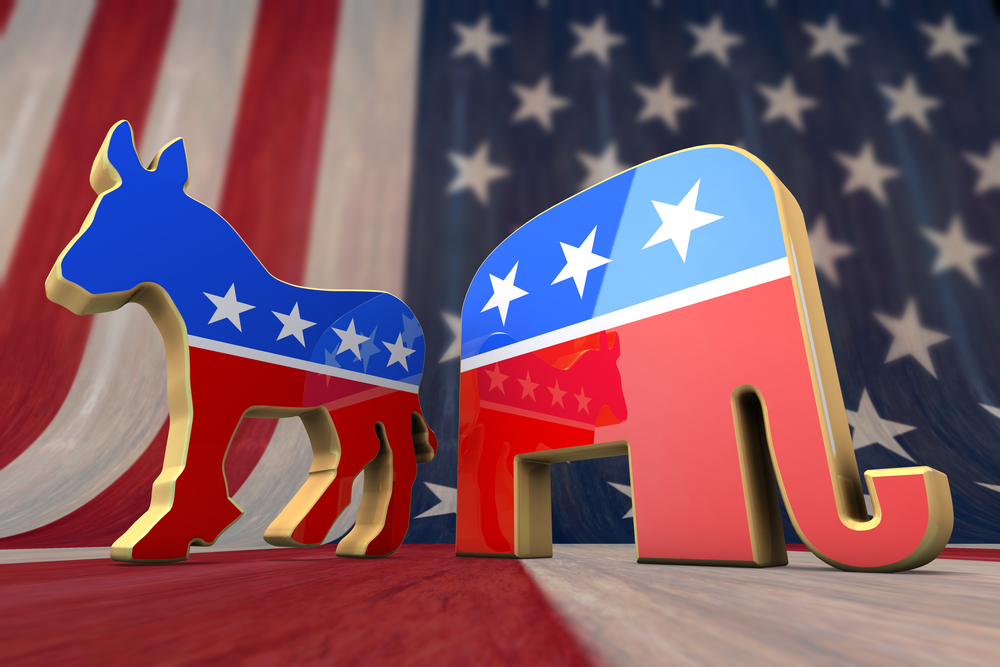
Political analysts warn that if the Texas approach succeeds, other Republican-controlled states could adopt similar methods, making it even harder for Democrats to compete in national elections.
The fight over district boundaries—known as gerrymandering—goes to the heart of how political power is distributed in the U.S., and its effects can last for years.
Beyond these structural issues, the Democrats face deep image problems. Many voters see them as “weak” or “out of touch” with everyday concerns such as the cost of living, taxes, and job opportunities.
Donors have cut funding, and potential candidates are harder to recruit. The party is also losing support among younger voters, Hispanic men, and working-class communities—groups it once relied upon heavily.
Despite internal disputes over strategy, there is still voter energy on the left. Surveys indicate that more than 70% of Democrats are motivated to vote in the 2026 midterms, driven partly by opposition to Republican policies.
However, experts say that without a clearer economic message, fresher leadership, and a way to counter new voting maps, that enthusiasm may not be enough to reverse their decline.
For observers outside the United States, this is more than a partisan story. The outcome will affect American domestic policy, trade positions, and how the U.S. engages with the world.
The Texas redistricting battle shows how control over political rules can reshape democracy itself—and determine which policies will guide the country in the years ahead.
Sidebar: The Mechanics of Power—Why Map Battles Decide America’s Future
The fight over electoral maps in Texas shows how political rules, not just votes, determine control in the United States. Once every decade, after the federal census, states redraw congressional boundaries to reflect population changes.
While intended as fair adjustment, both parties often use this process—called gerrymandering—to draw safe seats for their own needs.
This year, Texas Republicans moved ahead of schedule, redrawing maps mid-decade to gain up to five more House seats. Their move could double the hurdles facing Democrats at the next election, forcing them to win eight extra seats just to regain a majority in the U.S. House of Representatives.
When a party reconfigures districts, it can shift the national balance of power for years, regardless of public opinion. Even a 2% shift in votes would not let Democrats win back control if new maps take effect, according to official experts.
Beyond Texas, other Republican-led states are watching closely. If this strategy works, they could copy it, making it even harder for Democrats to compete, no matter how their policies or leaders change.
These map battles matter outside America. Who controls Congress sets policy for trade, business regulation, and economic priorities that ripple through global markets.
The Texas case shows that, sometimes, the real contest in U.S. politics is over who gets to count the votes, not just who gets the most votes.
For international readers, understanding these mechanics helps explain why American elections often turn on battles you rarely see—where lines on a map can matter more than lines on a ballot.
This article was produced by The Rio Times’ automated newsroom system. How we use AI · Report an error
Read More from The Rio Times