

Key Points
— The capture of Nicolás Maduro and Trump’s repeated predictions that Cuba’s regime will “fall soon” have energized Miami’s exile community, reigniting decades-old debates over who would lead a post-Castro Cuba
— The Asamblea de la Resistencia Cubana and Rosa María Payá’s Pasos de Cambio coalition signed a Liberation Agreement proposing a 51-member provisional council to govern Cuba for two years, with most members drawn from inside the island
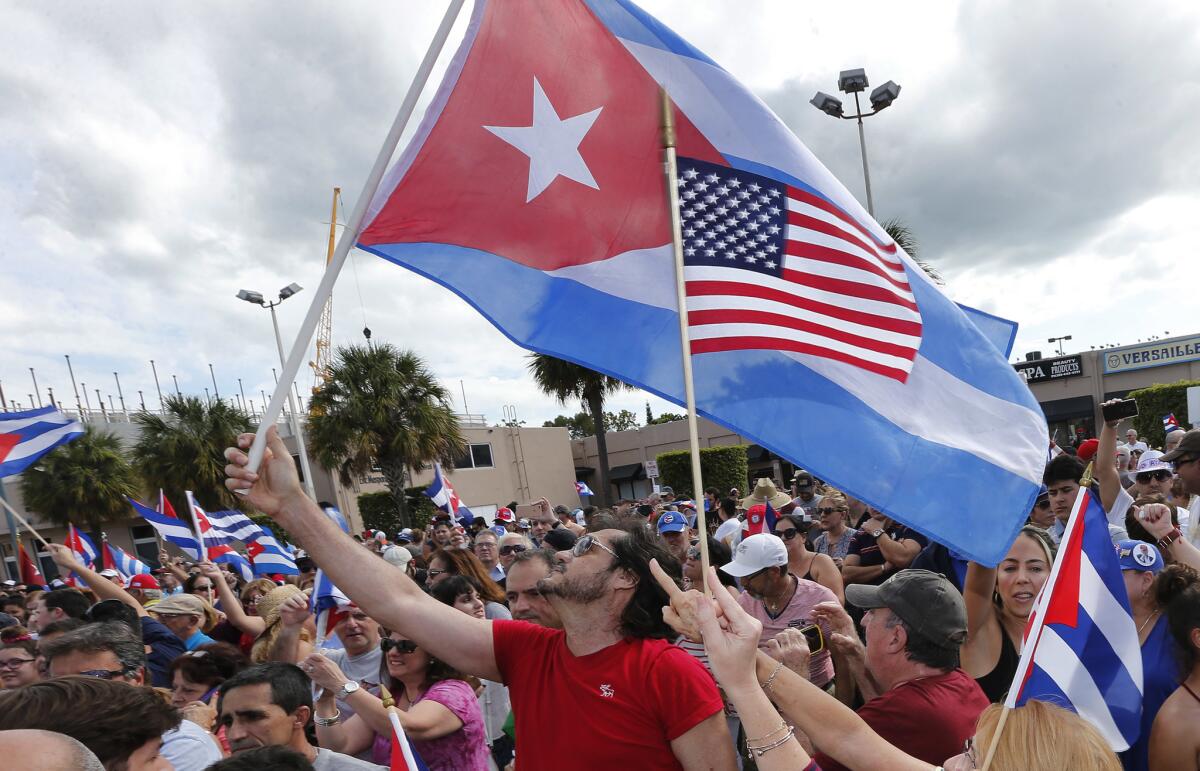
— Meanwhile, Secretary of State Marco Rubio has been negotiating directly with the Castro regime — including names linked to the Castro family — generating sharp pushback from exiles who rejected any dialogue at a rally in Hialeah
An unusual wave of expectation has swept through Miami in recent weeks. With Havana’s principal ally removed from power in Caracas and Donald Trump insisting the Cuban regime’s days are numbered, the exile community is confronting a question that has haunted it for decades: who would lead a free Cuba?
The Cuba exile leadership debate has intensified since the start of the year. Opposition figures, businessmen, and influencers — positioned with varying degrees of explicitness as potential architects of a transition — are being watched closely from both sides of the Florida Strait. Hanging over all of them is the question of how much any future Cuban leadership will depend on Washington, in an island suffering its worst crisis in recent memory and without free elections for 70 years.
A Transition Plan Designed in Exile
Orlando Gutiérrez-Boronat, 61, leads the Asamblea de la Resistencia Cubana — a coalition of more than 50 opposition groups based in Miami that claims contact with the Trump administration. He is convinced Cuba is “close to real change.” Last month, the Asamblea joined forces with Pasos de Cambio, a coalition launched in 2019 by Rosa María Payá — daughter of the late dissident Oswaldo Payá — to sign a Liberation Agreement. The document envisions a 51-member provisional council acting as parliament, plus an executive branch with a president and two vice presidents, governing for two years with no reelection.
Most council members would come from inside Cuba, Gutiérrez-Boronat says — even current participants in the communist government, provided they have no blood on their hands and contributed to liberation. Payá, who was elected to the Inter-American Court of Human Rights last year on a US government nomination, frames the matter in terms of Cuban agency: “The Cuban people are one, and we are acting as such. Those of us living in exile have the opportunity and responsibility to participate in the transition to democracy.”
The Billionaire, the Influencer, and the Washington Factor
The Cuban American National Foundation (CANF), founded in 1981 by the late Jorge Mas Canosa — the most influential exile figure in US politics until his death in 1997 — remains a powerful force. His son, billionaire Jorge Mas Santos, 63, now runs the foundation and recently declared his family’s wealth was “at the service of a free Cuba” after visiting the White House with Inter Miami FC. Trump reportedly told him Cubans could return “very soon.”
Meanwhile, Alexander Otaola, 46, a digital influencer whose show “¡Hola! Ota-Ola!” blends celebrity gossip with regime criticism and draws large audiences in both Florida and Cuba, has emerged as one of the most visible opposition voices. He ran for Miami-Dade mayor in 2023, finishing third, and recently organized the Hialeah rally. Otaola says he does not seek office in a future Cuba but warns of a deeper problem: ordinary Cubans are disconnected from politics entirely. “People have no connection with anyone, inside or outside — only with the dollar and the remittances from relatives abroad,” he says.
At the margins, Trump himself has suggested he would like to “put” Secretary of State Marco Rubio — the Miami-born son of Cuban immigrants — in charge of Cuba. Yet Rubio has been negotiating with the Castro regime, including figures tied to the Castro family such as Raúl Castro’s grandson Guillermo Rodríguez Castro. These contacts have provoked sharp discomfort in the exile community.
The Authority of Sacrifice
Not all opposition figures agree on what confers legitimacy. José Daniel Ferrer, 55, founder of the Unión Patriótica de Cuba (UNPACU), was one of 75 dissidents imprisoned during the 2003 Black Spring. Detained repeatedly and only released last year on condition of exile, Ferrer argues that leadership must be earned through internal resistance — not agreements signed abroad. “The people will remember who struggled for their freedom, from prisons, from the streets, from exile. They will know to ask: where were you when they were beating me, when I went to bed without food?”
Ferrer acknowledges the outcome may ultimately depend on whether Washington forces a regime change, as it did in Venezuela. His former UNPACU colleague Carlos Amel Oliva, 38, who fled Cuba in 2020 after threats against his family, believes the gap between the island and Miami has narrowed thanks to social media. “People no longer get their news from the National News broadcast — they open Facebook and see their cousin who was there yesterday and is here today. That’s why we no longer see Cubans protesting over hunger or electricity. They demand freedom, they demand change.”
The Risk of Selling a Fantasy
Analysts urge caution. Ted Henken, a sociology professor and Cuba expert at the City University of New York, warns that Washington’s aggressive posture and the island’s crisis have produced inflated expectations, feeding what he calls “the industry of being a Cuban exile leader.” The dynamic, he says, resembles a permanent electoral campaign where promises are made without accountability, and any failure is attributed to the existing dictatorship.
Ricardo Herrero of the Cuba Study Group, which advocates for transition through dialogue, puts it bluntly: “If you throw a rock in Miami you’ll find several people who want to be president” of Cuba. He insists the next leaders must come from within the island. “We can plant a ruler, but there will be a massive disconnect with the ordinary Cuban.”
Rubio, Henken adds, appears to be preparing the Cuban American community for disappointment — signaling that any deal reached may not be the one they would have chosen. “It’s possible the Cuban government resists again, or even if change comes, many promises won’t be fulfilled — at least not immediately.” The exile’s aspiration is real and deeply felt. Whether it translates into political power on the island remains the open question of this generation.