Cuba Releases 2,010 Prisoners in Largest Pardon in a Decade as US Negotiations Intensify
Key Facts
— — Cuba pardoned 2,010 prisoners on Thursday — its largest mass release in a decade — calling it a “humanitarian and sovereign gesture” timed to Holy Week. The government did not release a list of names or confirm whether political prisoners were included
— — The pardon comes amid secret US-Cuba negotiations led by Secretary of State Marco Rubio, a crippling oil blockade that has caused months of blackouts, and one week after Washington allowed a Russian tanker carrying 100,000 tonnes of crude to dock at Matanzas
— — Human rights organizations estimate Cuba holds over 1,200 political prisoners, many jailed since the mass 2021 protests. Trump has oscillated between threatening to “take Cuba” and signaling openness to dialogue — while Cuba insists its political system is “not subject to negotiation”
Cuba is making its biggest concession in a decade — but whether it’s enough for Washington, and whether any political prisoners are actually among the freed, remains deliberately unclear.
The Cuba prisoner release announced Thursday is the island’s largest pardon since 2015, when Havana freed 3,522 inmates ahead of Pope Francis’ visit during the historic US-Cuba rapprochement under Barack Obama. The government described the 2,010-person pardon as a “solidarity, humanitarian, and sovereign gesture” linked to Holy Week — the fifth mass indulto since 2011, bringing the total to over 11,000 beneficiaries across that period.
What We Know — and Don’t
The government provided no list of names, no breakdown by offense, and no confirmation that political prisoners are among those freed. It said only that the pardoned include “youth, women, adults over 60, foreigners, and Cuban citizens residing abroad” who had served a significant portion of their sentences and maintained good behavior. Excluded categories include sexual assault, murder, drug trafficking, and repeat offenders.
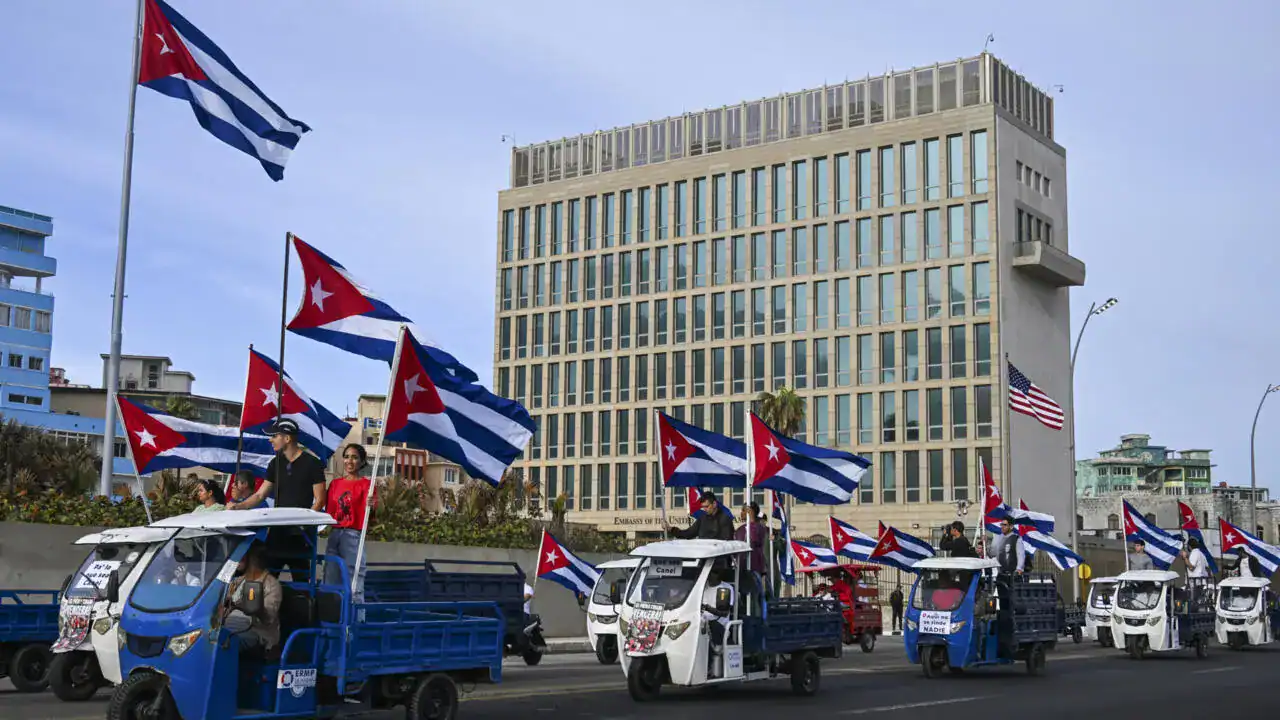
This matters because of who is watching. The NGO Prisoners Defenders estimates Cuba currently holds 1,214 political prisoners. Many were jailed during the brutal repression of the July 11, 2021 mass protests — the largest anti-government demonstrations in decades — with sentences ranging from six to eighteen years for charges including sedition, public disorder, and contempt. The UN has condemned Cuba as the country with “the most convictions for arbitrary detention in the world.” Cuba does not recognize the existence of political prisoners.
The US Pressure Campaign
The pardon is inseparable from the geopolitical pressure Cuba faces. After the US military capture of Nicolás Maduro in January — which removed Cuba‘s principal oil supplier and strategic ally — the Trump administration tightened the energy blockade, cutting Venezuelan petroleum shipments and threatening tariffs on any country supplying crude to Cuba. The result has been months of rolling blackouts, food shortages, hospital disruptions, and an accelerating economic collapse on an island of 9.6 million people.
Last week, Washington offered a partial reprieve: allowing the Russian tanker Anatoly Kolodkin to dock at Matanzas with 100,000 tonnes of crude — the first fuel shipment to reach Cuba in three months. The White House said the exception was made for “humanitarian needs” and did not represent a change in sanctions policy. Russia announced Thursday it is preparing a second tanker.
The Negotiations Nobody Will Describe
Both governments have confirmed that negotiations are underway, but neither has disclosed an agenda, participants, or progress. Secretary of State Rubio — himself the son of Cuban immigrants — has publicly demanded broader reforms and specifically the release of political prisoners. Some US media outlets have reported that Washington is pushing for sweeping economic reform without President Miguel Díaz-Canel at the helm — a claim the White House denied and Havana rejected sharply: “Cuba’s political system is not subject to negotiation, nor is the president or any government position.”
Trump has been characteristically unpredictable. Two weeks ago he said it would be “a great honor” to “take Cuba” and that he could “do whatever he wants with it.” He has also pointed to post-Maduro Venezuela as the model for Cuba. Meanwhile, Cuba’s ambassador to Washington, Lianys Torres Rivera, invited the US to “participate in Cuba’s economic transformation” — the most conciliatory public language from Havana in years.
The Pattern of Pardons
Cuba has a history of using prisoner releases as diplomatic signaling. In January 2025, 553 prisoners were freed following Vatican mediation and a meeting between Díaz-Canel and Pope Francis. In March 2026, 51 more were released in what Havana called a show of “goodwill” toward the Holy See. Earlier mass pardons included 2,604 in 2019 and 787 in 2016. The Catholic Church has been the key mediator for decades — playing a central role in the 2014-2015 normalization of US-Cuba relations under Obama.
Thursday’s release is the largest under the current crisis — and the signal it sends is unmistakable. Havana is offering concessions at a pace it has not matched in a decade. But Rubio has said it is not enough, and the core question remains unanswered: are any of the hundreds of young Cubans jailed for protesting in 2021 walking free? Until the government publishes a list — something it has shown no intention of doing — the pardon remains a gesture whose substance is deliberately unknowable.
This article was produced by The Rio Times’ automated newsroom system. How we use AI · Report an error · Editorial responsibility: Matthias Camenzind, Editor-in-Chief
Cuba and the United States
- What Is Going On Between Cuba and the United States?
- What Is Going On Between Cuba and the United States?
- Can Americans Still Travel to Cuba in 2026?
- Who Runs Cuba in 2026? Raúl Castro and the US Murder Charge
Read More from The Rio Times