

Eight days before Chile’s far-right president-elect takes power, the handover process that had proceeded with rare civility between political polar opposites collapsed on Tuesday. José Antonio Kast walked out of La Moneda palace, canceled all remaining ministerial transition meetings, and accused outgoing leftist President Gabriel Boric of hiding critical information. Not even Chile’s transition from dictatorship to democracy in 1990 saw such a rupture.
The Cable at the Center
The dispute revolves around the Chile-China Express, a proposed 19,873-kilometer fiber-optic submarine cable from Concón, near Valparaíso, to Hong Kong. Built by state-owned China Mobile International, the project would carry up to 144 terabits per second under a 30-year concession. On January 27, Transport Minister Juan Carlos Muñoz signed the concession decree, but it was revoked two days later before reaching the comptroller’s office, for reasons that remain disputed.
The project alarmed Washington. On February 20, Secretary of State Marco Rubio imposed visa restrictions on Muñoz and two senior aides, accusing them of compromising critical infrastructure and undermining hemispheric security. Chile’s Foreign Ministry called the accusation “absolutely false” and summoned U.S. Ambassador Brandon Judd. But the damage was done — the cable had become the most sensitive diplomatic issue Kast would inherit.
Who Told Whom, and When
The factual dispute that broke the transition is narrow but politically explosive. Boric told a television interviewer he had informed Kast about the cable situation “weeks before” the U.S. sanctions became public. Kast arrived at Tuesday’s meeting demanding a retraction. Boric refused. The meeting lasted 22 minutes.
Both sides acknowledge a 16-minute phone call on February 18, two days before the sanctions. Boric says he raised the cable and proposed coordination between the two governments. Kast says the topic was merely “mentioned” alongside three other items — childhood policy, immigration, and consultations in the Araucanía region — with no substantive detail. Interior Minister Álvaro Elizalde backed Boric’s account. Kast’s designated interior minister, Claudio Alvarado, flatly denied any meaningful disclosure occurred.
What Kast Did Next
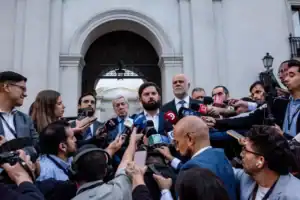
After leaving the palace, Kast announced a task force led by Alvarado to audit all government information independently through the comptroller and transparency council — not just on the cable, but on public finances and staffing decisions he alleges the outgoing government is locking in. He framed it as a necessary response to what he called a pattern of withholding information.
Boric appeared before reporters immediately after, insisting the rupture was Kast’s choice. He later called for both sides to move past what he termed an “unfortunate episode” and pledged full cooperation through March 11. Political analyst Ernesto Ottone, an adviser to former President Ricardo Lagos, warned the crisis risked producing either “a harsh government driven by paranoid fears” or “an intransigent, fanatical opposition” — but expressed hope that cooler heads would prevail as the inauguration approaches.