

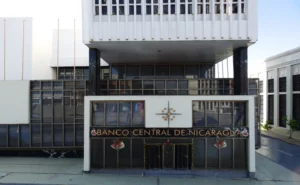
The Central Bank of Nicaragua (BCN) revised its 2025 GDP growth projection to 3.0–4.0%, down from January’s 3.5–4.5% estimate, citing global tariff policy uncertainties.
This marks the first downward adjustment this year, reflecting caution over escalating U.S.-China trade disputes and their ripple effects on Central America.
Despite the trimmed forecast, Nicaragua’s economy remains on an expansionary path, with unemployment stable at 3.0–3.5% and inflation projected between 2.0–4.0%, aligning with regional peers like Guatemala and Honduras.
Robust remittance inflows, primarily from the U.S., continue to anchor private consumption, which accounts for 70% of GDP. Remittances grew 6% year-on-year in early 2025, though this pace lags behind the 13% surge seen in 2023.
The construction and services sectors—particularly hotels, restaurants, and financial intermediation—expanded by 4.5% in Q1 2025, outpacing agriculture and manufacturing.
A current account surplus of 3.0–4.0% of GDP is expected, bolstered by $2.8 billion in annual exports, led by textiles, coffee, and gold. Fiscal discipline remains a hallmark, with the government projecting a 4.7 billion córdoba ($128 million) surplus for 2025.
Public debt has fallen to 45% of GDP, aided by restrained spending and a 15.5% benchmark interest rate that curbed credit growth to 8% annually. Foreign reserves now cover seven months of imports, a buffer against external shocks.
However, reliance on the U.S. market poses risks—52% of exports and 90% of remittances hinge on U.S. demand. Political shifts, including potential Trump-era tariff reinstatements, could disrupt this fragile equilibrium.
Structural weaknesses persist beneath the macro stability. Informal employment affects 65% of workers, suppressing wage growth and productivity. Emigration, fueled by limited formal jobs, has drained the labor force, complicating long-term growth prospects.
Nicaragua’s Economic Outlook
The IMF warns that without reforms to boost investment and diversify exports, medium-term growth could stagnate near 3.5%. Proximity to U.S. markets offers both opportunity and vulnerability.
While CAFTA-DR trade agreements attract textile manufacturers, U.S. sanctions on Nicaraguan gold and sugar exports since 2022 have redirected 18% of trade flows to China and Russia.
Foreign direct investment, though rising to $2.5 billion in 2024, remains concentrated in mining and infrastructure, sectors exposed to commodity cycles.
The BCN’s monetary policy committee left rates unchanged in April, signaling confidence in price stability despite food and fuel cost pressures.
Agriculture, which employs 30% of Nicaraguans, faces climate risks as La Niña patterns fade. A neutral weather outlook for mid-2025 offers temporary relief, but drought remains a perennial threat to the $1.2 billion coffee sector.
For international businesses, Nicaragua presents a mixed landscape. Low labor costs and fiscal prudence attract manufacturing, yet political uncertainty and sanctions deter large-scale commitments.
The IMF’s February 2025 assessment notes “resilient growth” but urges reforms to address informality and pension system deficits. As global trade winds shift, Nicaragua’s economic trajectory hinges on balancing external pressures with internal reforms—a challenge familiar to emerging markets worldwide.