Brazil’s Ambitious 2025 Budget: $2.4 Billion Surplus and Record Social Investments
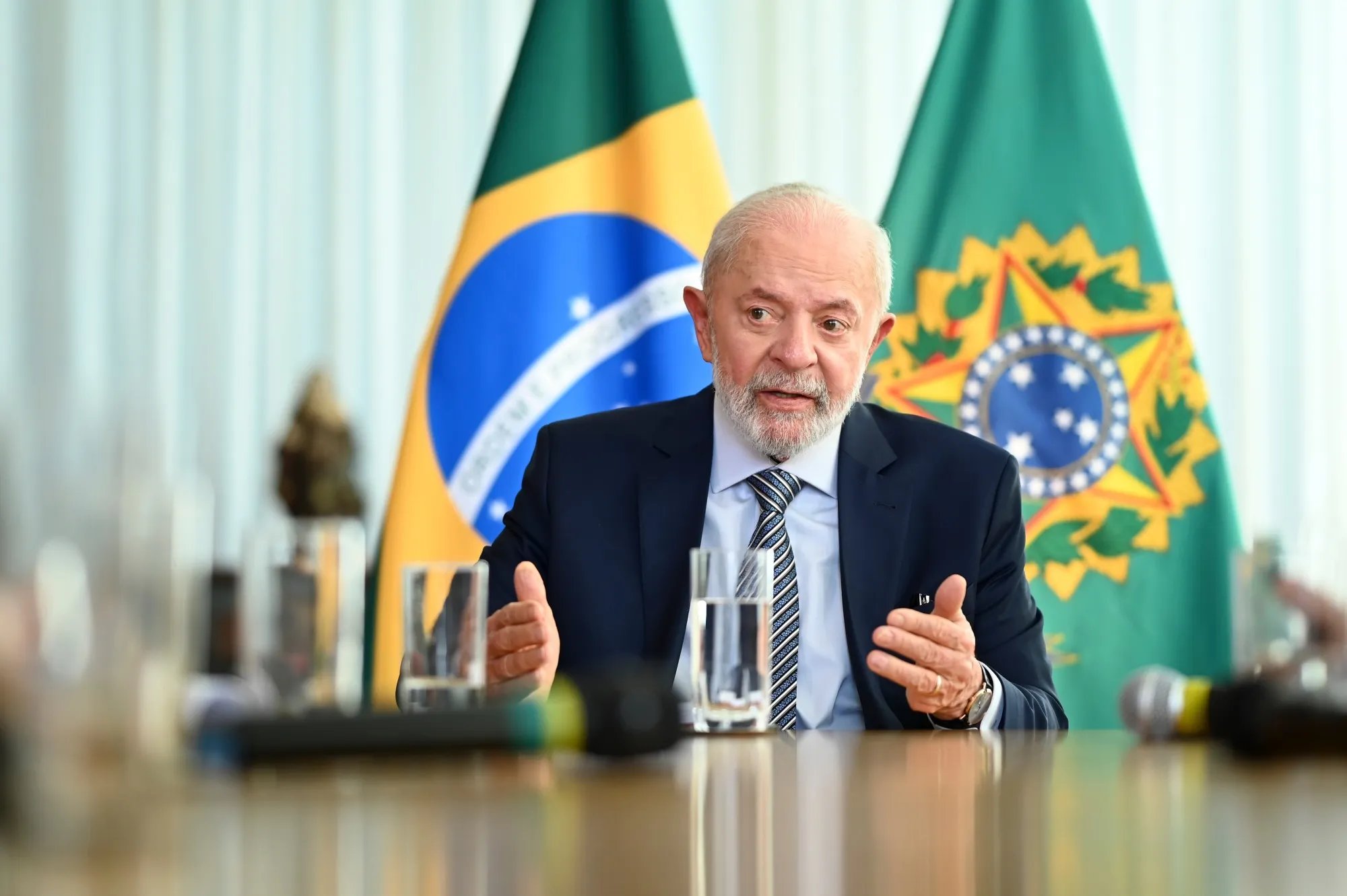
Brazilian President Luiz Inácio Lula da Silva sanctioned the 2025 Annual Budget Law (LOA) on April 10, marking a critical step in the nation’s fiscal planning.
The budget, published in an extra edition of the Official Gazette, projects a primary surplus of R$ 14.5 billion ($2.4 billion) while navigating political disputes, judicial interventions, and economic constraints.
The budget approval included two significant presidential vetoes. Lula removed R$ 40.2 million allocated to the Ministry of Transport for specific local projects, citing concerns over public interest and discretionary spending rules.
Another veto targeted R$ 2.97 billion ($495 million) in financial expenses from the National Fund for Scientific and Technological Development (FNDCT), which exceeded legal limits for reimbursable loans.
These adjustments reflect the government’s effort to align spending with fiscal regulations while maintaining strategic priorities. The negotiation process faced delays and challenges.
Congress approved the budget three months late, influenced by measures to curb spending passed in late 2024 and a temporary suspension of parliamentary amendments by Brazil’s Supreme Court.
These amendments, reinstated later, reached a record R$ 50.4 billion ($8.4 billion), highlighting their political significance. Despite fiscal constraints, the budget prioritizes social programs and public services.
Brazil’s Fiscal Strategy Balances Social Investment
Bolsa Família received R$ 158.6 billion ($26.43 billion), while health services were allocated R$ 245.1 billion ($40.85 billion) and education R$ 226.4 billion ($37.73 billion).
Social security benefits under the General Social Security System (RGPS) accounted for R$ 972.4 billion ($162.07 billion), underscoring their central role in government spending.
Infrastructure investments also feature prominently, with R$ 57.6 billion ($9.6 billion) earmarked for the Program for Accelerating Growth (Novo PAC).
The administration increased the minimum wage to R$ 1,518 ($253), reflecting real growth of 2.5% above inflation. The budget adheres to Brazil’s Sustainable Fiscal Regime, introduced in 2023, which imposes strict spending caps to ensure fiscal discipline.
However, discretionary spending cuts totaling R$ 7.8 billion ($1.3 billion) affected ministry budgets and infrastructure programs. This fiscal plan highlights Lula’s balancing act between economic discipline and social investment amid political complexities.
While the projected surplus signals improved fiscal management, experts question whether optimistic figures can withstand economic pressures and political dynamics shaping Brazil’s financial future.
More: Brazil news in English, every day from The Rio Times.
Live Market IntelligenceBrazil — Live Market Board
Rio Times · Live Market Intelligence
Brazil — Live Market Board
+1.37%
186,340.46
+1.37%
64,951.10
-0.24%
10,969.49
-0.78%
2,819,323
+1.32%
2,549.16
-0.38%
60,410.88
-0.96%
| Instrument | Last | Change | YoY | Prev. | High | Low | Volume |
|---|---|---|---|---|---|---|---|
| IBOV | 186,340.46 | +1.37% | +21.85% | 183,827.59 | 168,310 | 167,142 | — |
| USD/BRL | 5.16 | +0.01% | -5.13% | 5.16 | 5.18 | 5.14 | — |
| SELIC | 14.00% | — | — | — | — | — | |
| PETR4 | 41.64 | -0.05% | +35.19% | 41.66 | 41.97 | 41.15 | 41,499,400 |
| VALE3 | 72.97 | +0.83% | +30.75% | 72.37 | 73.54 | 72.66 | 17,658,000 |
| ITUB4 | 38.60 | -1.03% | +4.57% | 39.00 | 39.34 | 38.39 | 29,487,800 |
| BBDC4 | 16.85 | +0.36% | +3.50% | 16.79 | 16.90 | 16.67 | 19,416,900 |
| BBAS3 | 19.37 | +0.47% | +0.73% | 19.28 | 19.44 | 19.16 | 11,069,200 |
| B3SA3 | 14.26 | -0.21% | +12.73% | 14.29 | 14.47 | 14.11 | 33,037,800 |
| ABEV3 | 14.89 | -0.80% | +21.91% | 15.01 | 15.07 | 14.81 | 16,453,100 |
| WEGE3 | 47.59 | +0.49% | +29.99% | 47.36 | 48.08 | 47.36 | 3,364,600 |
| PRIO3 | 59.14 | -0.19% | +50.67% | 59.25 | 59.81 | 58.74 | 3,325,600 |
| SUZB3 | 41.33 | +2.35% | -23.55% | 40.38 | 41.48 | 40.35 | 3,914,900 |
| RENT3 | 34.68 | -0.09% | +0.84% | 34.71 | 34.96 | 34.35 | 7,979,100 |
| AZZA3 | 15.89 | -2.63% | -53.76% | 16.32 | 16.42 | 15.82 | 1,330,300 |
| CSNA3 | 4.30 | +0.47% | -42.65% | 4.28 | 4.41 | 4.26 | 10,076,100 |
| GGBR4 | 24.69 | +2.19% | +51.38% | 24.16 | 24.85 | 24.18 | 7,047,600 |
| ENEV3 | 24.21 | -1.38% | +70.49% | 24.55 | 24.64 | 23.99 | 9,297,000 |
This article was produced by The Rio Times’ automated newsroom system. How we use AI · Report an error
Read More from The Rio Times