Brazil Spends R$330M to Shield Cooking Gas From War
Key Facts
— —President Lula signed a medida provisória opening R$330 million in extraordinary credit to subsidize imported cooking gas (GLP), matching imported LPG prices to domestic levels.
— —The subsidy covers R$850 per tonne of imported LPG and runs from April 1 through May 31, with a possible two-month extension depending on global prices.
— —Brazil imports approximately 20% of its cooking gas, making the product highly sensitive to the oil price surge driven by the Hormuz war.
The Brazil gas subsidy is the most direct evidence yet that the Hormuz war is forcing Latin America’s largest economy to spend public money to shield its poorest citizens from a conflict thousands of kilometers away.
The Brazilian government published a medida provisória on Tuesday opening R$330 million in extraordinary credit to subsidize imported cooking gas as the Brazil gas subsidy program expands in response to the Iran-Hormuz energy shock. The Rio Times, the Latin American financial news outlet, reports that the measure is part of a broader package announced in early April to contain the pass-through of war-driven oil prices into basic household costs.
The subsidy works by covering the price differential between imported and domestically produced LPG. At R$850 per tonne, the government absorbs the cost premium so distributors do not pass the full increase to consumers. The measure runs from April 1 through May 31, with the possibility of a two-month extension.
Why the Brazil Gas Subsidy Was Necessary
Brazil imports approximately 20% of the cooking gas consumed nationally, making the product directly exposed to international petroleum prices. The Strait of Hormuz blockade has kept Brent crude above 100 dollars per barrel since February, raising the cost of LPG imports significantly.
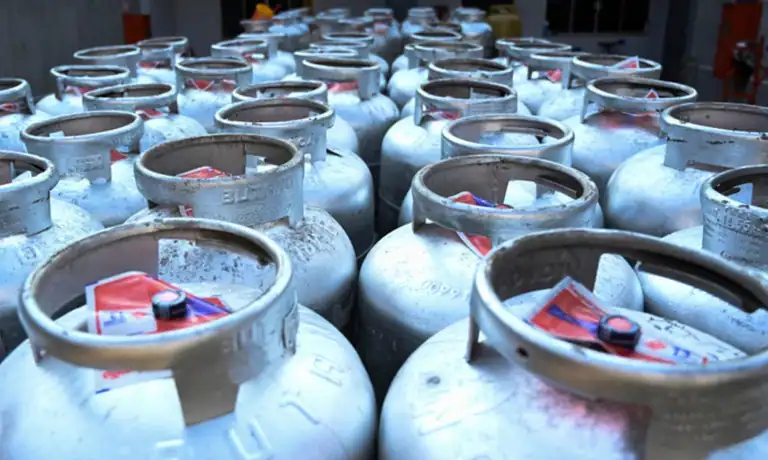
Cooking gas is one of the most politically sensitive prices in Brazil. The 13-kilogram botijão is a basic household necessity for more than 60 million families, and price increases hit low-income households disproportionately. During the 2021-2022 energy crisis, cooking gas prices became a central political issue that contributed to public discontent with the Bolsonaro government.
The government also cited increased freight costs and the general rise in international gas prices as factors beyond the war itself. The subsidy does not guarantee a price reduction at the retail level — that depends on individual distributors and resellers — but it aims to prevent an abrupt increase in the coming months.
Fiscal Implications
The R$330 million is classified as extraordinary credit, which places it outside the spending ceiling of the arcabouço fiscal framework. However, it counts against the government’s primary surplus target. The 2026 budget law targets a primary surplus of R$34.3 billion, or 0.25% of GDP.
If the subsidy is extended through July as permitted, the total cost could exceed R$600 million. That amount is manageable relative to the overall fiscal framework, but it establishes a precedent for war-related spending that could expand if the Hormuz crisis intensifies. The fiscal deficit already stands at approximately 8.5% of GDP, and every new extraordinary expenditure draws scrutiny from market participants monitoring the government’s consolidation path.
Live Market IntelligenceBrazil — Live Market Board
Rio Times · Live Market Intelligence
Brazil — Live Market Board
-0.56%
187,206.89
-0.56%
63,924.77
-0.28%
11,220.60
-0.16%
3,098,898
-1.87%
2,589.69
-1.41%
59,373.28
-0.32%
| Instrument | Last | Change | YoY | Prev. | High | Low | Volume |
|---|---|---|---|---|---|---|---|
| IBOV | 187,206.89 | -0.56% | +21.85% | 188,268.59 | 168,310 | 167,142 | — |
| USD/BRL | 5.16 | +0.01% | -5.13% | 5.16 | 5.18 | 5.14 | — |
| SELIC | 14.00% | — | — | — | — | — | |
| PETR4 | 41.64 | -0.05% | +35.19% | 41.66 | 41.97 | 41.15 | 41,499,400 |
| VALE3 | 72.97 | +0.83% | +30.75% | 72.37 | 73.54 | 72.66 | 17,658,000 |
| ITUB4 | 38.60 | -1.03% | +4.57% | 39.00 | 39.34 | 38.39 | 29,487,800 |
| BBDC4 | 16.85 | +0.36% | +3.50% | 16.79 | 16.90 | 16.67 | 19,416,900 |
| BBAS3 | 19.37 | +0.47% | +0.73% | 19.28 | 19.44 | 19.16 | 11,069,200 |
| B3SA3 | 14.26 | -0.21% | +12.73% | 14.29 | 14.47 | 14.11 | 33,037,800 |
| ABEV3 | 14.89 | -0.80% | +21.91% | 15.01 | 15.07 | 14.81 | 16,453,100 |
| WEGE3 | 47.59 | +0.49% | +29.99% | 47.36 | 48.08 | 47.36 | 3,364,600 |
| PRIO3 | 59.14 | -0.19% | +50.67% | 59.25 | 59.81 | 58.74 | 3,325,600 |
| SUZB3 | 41.33 | +2.35% | -23.55% | 40.38 | 41.48 | 40.35 | 3,914,900 |
| RENT3 | 34.68 | -0.09% | +0.84% | 34.71 | 34.96 | 34.35 | 7,979,100 |
| AZZA3 | 15.89 | -2.63% | -53.76% | 16.32 | 16.42 | 15.82 | 1,330,300 |
| CSNA3 | 4.30 | +0.47% | -42.65% | 4.28 | 4.41 | 4.26 | 10,076,100 |
| GGBR4 | 24.69 | +2.19% | +51.38% | 24.16 | 24.85 | 24.18 | 7,047,600 |
| ENEV3 | 24.21 | -1.38% | +70.49% | 24.55 | 24.64 | 23.99 | 9,297,000 |
Part of a Larger Pattern
The gas subsidy is not an isolated measure. It sits alongside the government’s Desenrola 2 debt-renegotiation program for 70 million indebted Brazilians, the R$100 billion consumer debt restructuring announced this week, and the broader social spending platform that defines Lula’s third term. The pattern is clear: the government is choosing to absorb war costs through public spending rather than allow them to pass through to consumers in an election year.
For international observers, the measure illustrates how a war in the Persian Gulf translates into fiscal policy in Brasília within weeks. The Hormuz closure raised oil prices, which raised imported LPG costs, which threatened cooking gas prices for 60 million families, which forced a R$330 million intervention. The chain from geopolitical shock to household budget to government spending has rarely been this direct or this fast.
Related Coverage
Oil and Energy in Latin America 2026 • Iran War and Hormuz Crisis Guide • Desenrola 2 Consumer Debt Program
More: Brazil news in English, every day from The Rio Times.
This article was produced by The Rio Times’ automated newsroom system. How we use AI · Report an error
Read More from The Rio Times