Brazil Mining Lobby Pushes to Strip Veto Power From Minerals Council
The Brazil critical minerals bill arrived at the Chamber of Deputies on Tuesday, May 5, 2026, with the country’s mining industry lobbying to strip the new Critical and Strategic Minerals Committee of veto power over corporate transactions.
Rapporteur Arnaldo Jardim of Cidadania-SP delivered his opinion late on Monday, May 4, aiming for a plenary vote by Wednesday, May 6, ahead of President Luiz Inácio Lula da Silva’s trip to Washington for a Thursday meeting with Donald Trump.
The text consolidates 14 attached proposals, creates the Política Nacional de Minerais Críticos e Estratégicos, and offers tax credits of up to 20 percent on processing investments, plus a 0.3 percent six-year levy on research projects.
Key Points
Key Facts
— The Critical and Strategic Minerals Committee, called CMCE, would gain prior approval rights over takeovers of mineral-rights holders.
— The Critical Minerals Association, AMC, led by Marisa Cesar, wants veto power replaced with prior notification only.
— Rapporteur Arnaldo Jardim, of Cidadania-SP, targeted a plenary vote by Wednesday, May 6, before the Lula-Trump meeting on May 7.
— The bill offers a 20 percent tax credit on processing investments and a 0.3 percent six-year levy on research projects.
— Brazil mining royalties to the federal Union currently total 3.5 percent of net revenue after deductions.
What the Bill Proposes
The Rio Times, the Latin American financial news outlet, reports that Jardim’s opinion makes prior approval by the federal executive a condition for direct or indirect changes of control in companies holding mineral rights over critical and strategic resources. The CMCE, attached to the National Mineral Policy Council, would also assess transactions involving access to geological information of strategic interest, relevant participation, or significant influence by foreign legal persons. Finally, the committee would oversee the alienation, assignment or encumbrance of critical mineral assets owned, directly or indirectly, by the Union.
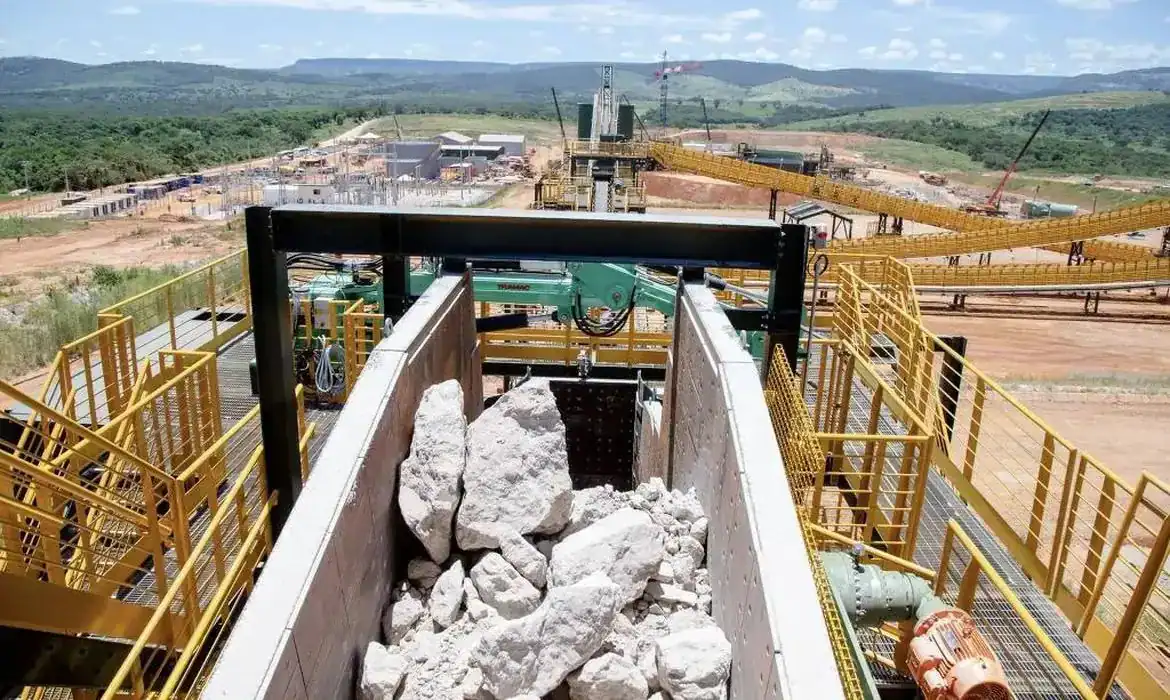
The bill also creates a guarantor fund for the mineral authority, administered by an official financial institution, plus tax credit mechanisms for processing and beneficiation. The text introduces a 0.3 percent levy over six years on prospecting projects and authorises an export tax to discourage shipments of unprocessed minerals. Author Zé Silva of União-MG framed the package as a balance between sovereignty and investor comfort.
The AMC Amendment
Marisa Cesar, who chairs the Critical Minerals Association board, told Broadcast that the council should be informed of corporate transactions in advance but should not exercise approval rights that would interfere with business dynamics. Her proposed amendment would convert the CMCE’s veto into a notification regime, while a second AMC change targets the council’s composition. Industry voices argue the current text adds legal uncertainty for foreign investors at the precise moment Brazil is trying to attract capital into the rare earths and lithium chains.
Why It Matters Before the Lula-Trump Meeting
Jardim has said publicly that he wants the bill approved before Lula travels to Washington on May 6. Critical minerals, including rare earths, lithium and niobium, are expected to be one of the top items when Lula meets Trump on May 7, alongside tariffs, the Iran war, and the potential US designation of Brazilian criminal factions as terrorists. Mining municipalities association Amig Brasil criticised the parecer as too weak on industrialisation.
For foreign investors, the regulatory architecture matters as much as the headline incentives. Mining royalties paid to the Union sit at 3.5 percent of net revenue, well below the levels in Chile or Australia, but legal uncertainty has weighed on capital allocation. The bill aims to fix that, even as the AMC argues the veto provision goes too far.
| Provision | Detail |
|---|---|
| CMCE created under | National Mineral Policy Council |
| Tax credit for processing | Up to 20% |
| Levy on prospecting projects | 0.3% over six years |
| Federal mining royalty rate | 3.5% of net revenue |
| Bill author / rapporteur | Zé Silva (União-MG) / Arnaldo Jardim (Cidadania-SP) |
| Target plenary vote | By May 6, 2026 |
| Attached proposals | 14 |
How the Bill Reframes the Mining Compact
The current concession framework, dating to 1967, lets foreign investors take majority stakes in Brazilian mineral-rights holders without specific federal approval. The CMCE provision would change that for any deal touching critical and strategic minerals, a list to be defined by resolution. Pedro Lucas, União Brasil leader in the Chamber, called the bill an opportunity to move past the cheap raw-materials supplier role.
A delaying agreement late on Tuesday could push the vote to later in the week, with industry asking more time to read the parecer. Lula’s negotiating team views the framework as a card for Washington, particularly in rare earths and lithium where US strategic interest in Brazilian supply has grown.
Connected Coverage
For broader context, see our coverage of Peru’s mining concession revocability debate in Congress and our analysis of Brazil’s oil royalties trial that could reshape state finances.
What Happens Next
- By May 6, 2026: Jardim aims to clear the bill in the Chamber plenary before Lula’s flight to Washington.
- May 7, 2026: Lula meets Trump at the White House, with critical minerals on the agenda.
- Senate review: If passed, the bill moves to the Senate; the AMC amendment fight may resume there.
More: Brazil news in English, every day from The Rio Times.
Frequently Asked Questions
What is the Brazil critical minerals bill?
The Brazil critical minerals bill, authored by Zé Silva of União-MG and reported by Arnaldo Jardim of Cidadania-SP, creates the Política Nacional de Minerais Críticos e Estratégicos and a new oversight committee, the CMCE. The text consolidates 14 attached proposals, offers a 20 percent tax credit on processing investments, and applies a 0.3 percent levy over six years on prospecting projects. Rapporteur Jardim aims for a Chamber vote by May 6, 2026.
Why does the AMC oppose the veto power?
The Critical Minerals Association, AMC, opposes the veto power because it fears legal uncertainty would deter the foreign capital Brazil needs to develop rare-earths and lithium chains. AMC president Marisa Cesar told Broadcast on May 5, 2026 that the council should be informed in advance of corporate transactions but should not exercise approval rights interfering with business dynamics. The AMC amendment converts the CMCE veto into a prior-notification regime and revisits the 5-seat council’s composition.
How does the bill connect to the Lula-Trump meeting?
Critical minerals will be one of the top items on the agenda when Lula meets Trump at the White House on Thursday, May 7, 2026, alongside tariffs, the Iran war and Brazilian organised-crime designations. Jardim has said publicly that he wants the bill approved by May 6, ahead of Lula’s flight to Washington on May 6. The legal framework gives Brazil a stronger position in the rare earths and lithium chains.
What incentives does the bill offer to mining investors?
The bill offers a tax credit of up to 20 percent on investments in processing and beneficiation of critical and strategic minerals. It also imposes a 0.3 percent levy over six years on prospecting projects and authorises an export tax to discourage shipments of unprocessed ore. Brazil’s federal mining royalty currently stands at 3.5 percent of revenue net of deductions, below the levels in peers such as Chile and Australia.
Updated: 2026-05-06T08:50:00Z by Rio Times Editorial Desk
This article was produced by The Rio Times’ automated newsroom system. How we use AI · Report an error · Editorial responsibility: Matthias Camenzind, Editor-in-Chief