Bolsonaro Says He’s “Not Out” of Brazil’s 2026 Elections
Former Brazilian president Jair Bolsonaro declared he is “not out” of the 2026 presidential race, days after a dramatic escalation in trade tension between Brazil and the United States.
\n
\nOn July 14, 2025, Bolsonaro made a public statement rejecting reports of his political exit and insisting he still influences the country’s right-wing movement. His comments come just after the U.S. imposed sweeping 50% tariffs on all Brazilian products.
\n
\nU.S. officials, led by Donald Trump, pointed to the judicial “witch hunt” against Bolsonaro as a key reason for the steep trade penalties.
\n
\nBrazil’s Superior Electoral Court sidelined Bolsonaro from public office until 2030 following a 2023 ruling on abuse of power and attacks on Brazil’s voting system.
\n
\nDespite his legal ineligibility, Bolsonaro remains deeply influential, rallying a significant conservative base and shaping the political conversation.
\n
\n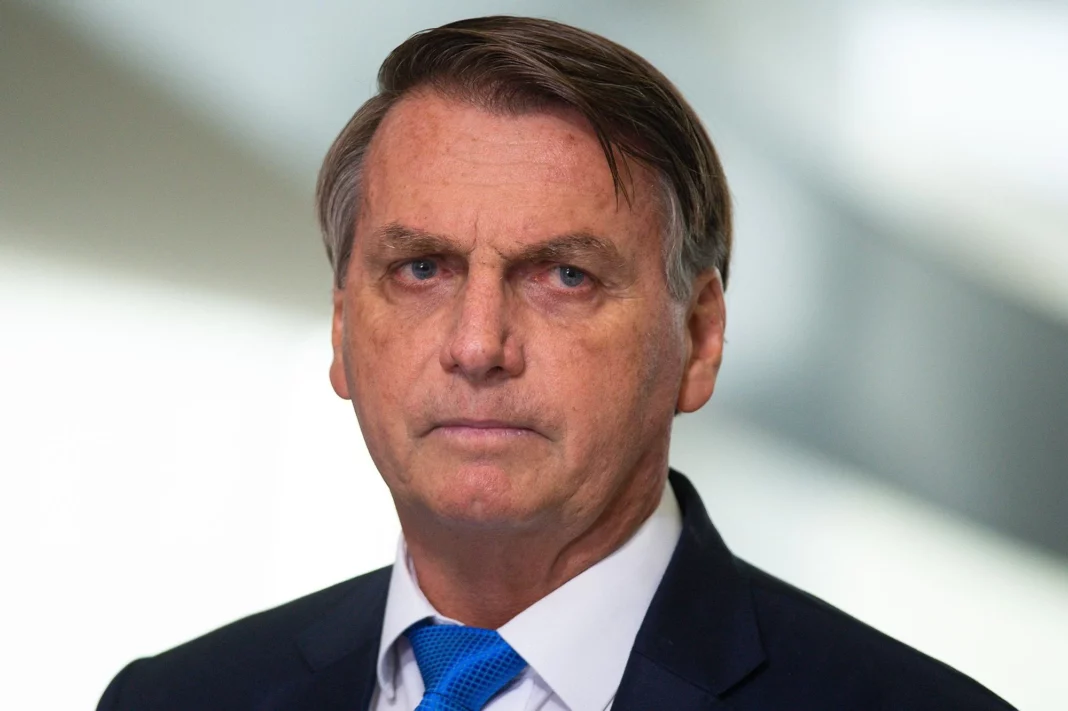
We had trouble reaching the archive. Open the full Ask Rio Times page →
';} } async function runStream(q,av,statusEl,bodyEl,scrollEl){ beacon(av,'ask'); var acc='',live=false; function finish(){statusEl.textContent='';if(acc&&acc.trim())bodyEl.innerHTML=fmt(acc);} try{ var resp=await fetch('/wp-json/rtv6/v1/ask-stream?q='+encodeURIComponent(q)+'&av='+encodeURIComponent(av),{credentials:'same-origin',headers:{'Accept':'text/event-stream','X-WP-Nonce':(window.RT_ASK_NONCE||'')}}); if(!resp.ok||!resp.body)return postFallback(q,av,statusEl,bodyEl); var reader=resp.body.getReader(),dec=new TextDecoder(),buf=''; while(true){var r=await reader.read();if(r.done)break;buf+=dec.decode(r.value,{stream:true});var idx; while((idx=buf.indexOf('\n\n'))>=0){var raw=buf.slice(0,idx);buf=buf.slice(idx+2);var ev='message',ds=''; raw.split('\n').forEach(function(l){if(l.indexOf('event:')===0)ev=l.slice(6).trim();else if(l.indexOf('data:')===0)ds+=l.slice(5).trim();}); if(!ds)continue;var d;try{d=JSON.parse(ds);}catch(e){continue;} if(ev==='status'){if(!live)statusEl.textContent=d.t||'';} else if(ev==='delta'){if(!live){live=true;statusEl.textContent='';}acc+=(d.t||'');bodyEl.textContent=acc;if(scrollEl)scrollEl.scrollTop=scrollEl.scrollHeight;} else if(ev==='error'){if(!acc){statusEl.textContent='';bodyEl.innerHTML=''+esc(d.message||'Ask Rio Times is busy right now. Please try again shortly.')+'
';}finish();return;} else if(ev==='done'){finish();return;} } } finish(); }catch(e){if(acc&&acc.trim())finish();else postFallback(q,av,statusEl,bodyEl);} } function wireBox(root,av){ var card=root.querySelector('.rtb-card');if(!card)return; var pills=card.querySelectorAll('.rtb-pill'),form=card.querySelector('.rtb-form'),input=card.querySelector('.rtb-input'), panel=card.querySelector('.rtb-panel'),statusEl=card.querySelector('.rtb-status'),body=card.querySelector('.rtb-body'), again=card.querySelector('.rtb-again'),pillsWrap=card.querySelector('.rtb-pills'); function ask(q){q=(q||'').trim();if(q.length<3){input.focus();return;}if(pillsWrap)pillsWrap.style.display='none';form.style.display='none';panel.hidden=false;body.textContent='';body.innerHTML='';statusEl.textContent='Searching the Rio Times archive…';runStream(q,av,statusEl,body,null);} function reset(){panel.hidden=true;body.textContent='';body.innerHTML='';statusEl.textContent='';if(pillsWrap)pillsWrap.style.display='';form.style.display='';input.value='';input.focus();} [].forEach.call(pills,function(c){c.addEventListener('click',function(){input.value=(c.getAttribute('data-q')||c.textContent).trim();ask(input.value);});}); form.addEventListener('submit',function(e){e.preventDefault();ask(input.value);}); if(again)again.addEventListener('click',reset); } function wireSheet(root,av){ var wrap=root.querySelector('.rts-wrap');if(!wrap)return; var trig=wrap.querySelector('.rts-trigger'),ov=wrap.querySelector('.rts-overlay'),sheet=wrap.querySelector('.rts-sheet'), back=wrap.querySelector('.rts-backdrop'),x=wrap.querySelector('.rts-x'),pills=wrap.querySelectorAll('.rts-pill'), form=wrap.querySelector('.rts-form'),input=wrap.querySelector('.rts-input'),hint=wrap.querySelector('.rts-hint'), scroll=wrap.querySelector('.rts-scroll'),statusEl=wrap.querySelector('.rts-status'),body=wrap.querySelector('.rts-body'); function open(){ov.hidden=false;ov.style.display='flex';document.body.style.overflow='hidden';void ov.offsetWidth;ov.classList.add('open');setTimeout(function(){try{input.focus();}catch(e){}},150);} function close(){ov.classList.remove('open');document.body.style.overflow='';setTimeout(function(){ov.style.display='none';ov.hidden=true;},300);} trig.addEventListener('click',open);x.addEventListener('click',close);back.addEventListener('click',close); document.addEventListener('keydown',function(e){if(e.key==='Escape'&&ov.style.display==='flex')close();}); function ask(q){q=(q||'').trim();if(q.length<3){input.focus();return;}if(hint)hint.style.display='none';body.textContent='';body.innerHTML='';statusEl.textContent='Searching the Rio Times archive…';runStream(q,av,statusEl,body,scroll);} [].forEach.call(pills,function(c){c.addEventListener('click',function(){input.value=(c.getAttribute('data-q')||c.textContent).trim();ask(input.value);});}); form.addEventListener('submit',function(e){e.preventDefault();ask(input.value);}); } function init(){ [].forEach.call(document.querySelectorAll('.rtart-root'),function(root){ if(root.getAttribute('data-wired'))return;root.setAttribute('data-wired','1'); var v=pickVariant(),box=root.querySelector('.rtb-card'),sheet=root.querySelector('.rts-wrap'); if(v==='sheet'){if(box)box.style.display='none';if(sheet)sheet.style.display='block';wireSheet(root,'sheet');} else{if(sheet)sheet.style.display='none';if(box)box.style.display='';wireBox(root,'box');} beacon(v,'imp'); }); } if(document.readyState==='loading')document.addEventListener('DOMContentLoaded',init);else init(); })();\n
\nHe leads his party and remains a force among business and investor groups, which appreciated his market-friendly approach during his presidency.
\n
\nTrump’s decision to enact tariffs and openly link them to Brazil’s judicial actions against Bolsonaro created a new source of diplomatic pressure on President Luiz Inácio Lula da Silva’s administration.
\n
\nThis move introduced an international dimension to Brazil’s legal and political battles. Trump publicly criticized Brazil’s judiciary for targeting Bolsonaro, arguing the court’s approach hurts democracy and risks U.S.-Brazil economic ties.
\n
Bolsonaro’s Return to the Spotlight Amid Tariff Fallout
\nBolsonaro’s latest clarification that he is “not out” of the race—the first since his ban—may be calculated to harness this international spotlight. For months, Bolsonaro has avoided direct challenges to the court’s decision.
\n
\nNow, with the U.S. government escalating the dispute and focusing world attention on the case, the timing of his assertive statement suggests he anticipates further external pressure on Lula’s government.
\n
\nWashington’s tariffs hit Brazil’s major exports, rattling businesses and stoking economic uncertainty. Business groups warn that if the right-wing remains divided or further destabilized, foreign investment could flee, while Brazil’s trade surpluses shrink.
\n
\nPolitical observers note Bolsonaro’s renewed activism signals to U.S. and Brazilian conservatives alike that he sees an opportunity to leverage this external support—even as he cannot legally stand for office.
\n
\nPotential conservative successors, like Michelle Bolsonaro and São Paulo governor Tarcísio de Freitas, now face even greater pressure to unify their base amid the unpredictable crossfire of judicial, electoral, and economic crises.
\n
\n
\n
\n
For the full picture, see our Brazil Elections 2026: Complete Guide.
More: Brazil news in English, every day from The Rio Times.
This article was drafted with automated assistance and reviewed before publication. How we use AI · Report an error · Editorial responsibility: Matthias Camenzind, Editor-in-Chief