

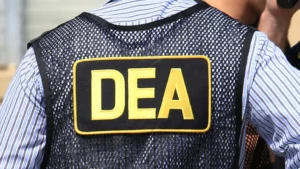
Seventeen years after Bolivia threw out the DEA in one of Latin America’s most dramatic anti-Washington gestures, the agency is tiptoeing back in — but La Paz is drawing a very specific line in the sand.
Vice Minister of Controlled Substances Ernesto Justiniano told Bolivian radio on Monday that cooperation with the U.S. drug agency would involve equipment, technical support, shared intelligence, and money. It would not, he stressed, involve American boots on Bolivian ground.
“People fear the Americans are going to be in the territory — that is not going to happen,” Justiniano said on Erbol‘s morning broadcast. “This is about logistics cooperation.”
The deal may also include reliability screenings for personnel in the FELCN, Bolivia’s specialized anti-narcotics police, a step aimed at rooting out the kind of corruption that has seen three former top drug enforcement commanders jailed for trafficking ties in recent years.
The careful calibration is no accident. When Evo Morales expelled the DEA in November 2008, accusing its agents of political espionage and backing separatist opposition movements, it triggered a full diplomatic meltdown.
Washington and La Paz expelled each other’s ambassadors, and the U.S. stripped Bolivia of trade preferences under the ATPDEA — a blow that hit the country’s textile sector hardest. Relations have remained at the level of chargés d’affaires ever since, though President Rodrigo Paz Pereira has signaled his intention to restore full ambassadorial ties.
The new president, a center-right Christian Democrat who took office in November 2025 after two decades of leftist MAS governments, has reoriented Bolivia’s foreign policy at breakneck speed.
He visited Washington before his inauguration, secured a $3.1 billion CAF credit line, and invited the DEA back — a move that provoked immediate backlash in the Chapare, the tropical coca-growing heartland where Morales built his political base.
Coca growers’ unions have rejected any foreign agency presence, invoking a constitutional ban on foreign military installations, and expanded their grassroots security patrols from 2,000 to roughly 7,000 members.
The government, meanwhile, is pointing to numbers that underscore both the urgency and its early momentum. Justiniano reported that in Paz’s first 90 days, authorities seized 5.3 tons of controlled substances, arrested 609 suspects, confiscated 203 vehicles, and seized 96 properties linked to drug operations.
Just days ago, the FELCN destroyed two cocaine crystallization labs and nine mobile paste-processing plants in Villa Tunari — the heart of Morales’s territory.
The scale of the challenge explains why Paz is willing to absorb the political cost. UN data released in December showed Bolivia‘s coca cultivation reached 34,000 hectares in 2024, a 10 percent jump from the previous year and 12,000 hectares above the legal threshold.
The Chapare region alone saw an 18 percent surge. Global cocaine production hit a record 3,708 tons in 2023, and Bolivia, the world’s third-largest producer behind Colombia and Peru, has become a transit hub for Brazilian, Mexican, and Colombian trafficking networks operating with increasing sophistication inside its borders.
Justiniano himself is no newcomer to the drug war — he held the same portfolio under President Gonzalo Sánchez de Lozada in the early 2000s, when the DEA still operated freely across the country. His reappointment signals continuity with pre-Morales anti-drug strategy, though the government has been careful to frame the relationship differently.
“Cooperation yes, but not dependence — with sovereignty over the country’s affairs,” Justiniano said in November, a formula designed to preempt the left’s accusations of U.S. subordination.
Whether that formula holds depends largely on what happens next in the Chapare. Morales, who faces an arrest warrant on trafficking-unrelated charges he calls politically motivated, has not appeared publicly since early January — a disappearance that has fueled wild speculation about whether he has fled the country.
His supporters fear the DEA’s return is really about capturing their leader. The government insists it is about dismantling drug networks, not political opponents.
Bolivia is attempting something that no Latin American country has quite managed: inviting U.S. drug enforcement cooperation while keeping the agency at arm’s length, in a nation where the coca leaf is both the raw material of a $3-billion-plus global cocaine trade and a sacred cultural symbol woven into daily life.
The first test of whether logistics cooperation can stay limited to logistics may come not in a lab raid or a courtroom, but in the next confrontation between state forces and the thousands of coca growers who view the DEA’s return as a direct threat to their livelihoods and their leader.