BlackRock’s Fink Bets $68 Trillion Infrastructure Boom Will Reshape Global Investing
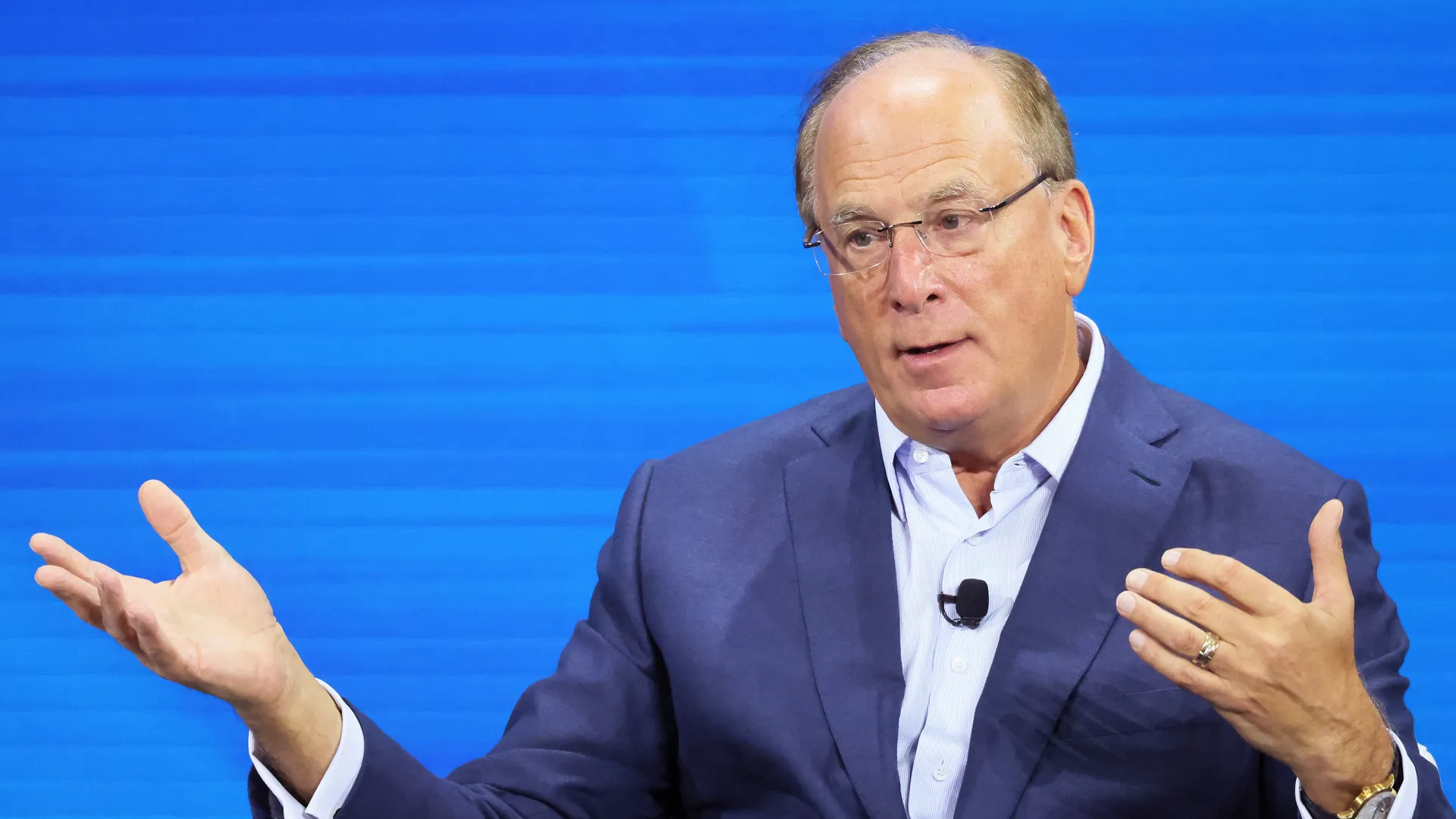
Larry Fink’s annual letter to shareholders positions BlackRock’s $11.6 trillion empire at the center of a seismic financial shift, driven by a projected $68 trillion global infrastructure demand by 2040.
The BlackRock CEO argues this capital gap—equivalent to rebuilding America’s transcontinental railroad and interstate highway system every six weeks for 15 years—requires dismantling barriers to private markets while redefining retirement investing.
Fink warns that critical assets like data centers, ports, and energy grids remain locked behind “high walls” accessible only to institutional investors or the ultra-wealthy. His solution hinges on democratizing access through tokenization, fractional ownership, and regulatory reform.
BlackRock has already committed $30 billion to private market acquisitions in 2024–2025, including infrastructure giant Global Infrastructure Partners and data provider Preqin, signaling a strategic pivot from its ETF-dominated past.
Historical parallels underscore the urgency. Railroads boosted U.S. GDP by 25% from 1860–1890, while interstate highways drove postwar productivity.
Today’s challenge dwarfs these achievements: California’s stalled 500-mile bullet train contrasts with China’s 23,000-mile high-speed rail network. Fink links this stagnation to restrictive permitting processes, noting it often takes longer to approve projects than build them.
BlackRock’s Private Market Pivot
BlackRock aims to channel retirement savings into private assets. It claims that a 0.5% annual return boost from alternatives like infrastructure could deliver 14.5% more savings over 40 years.
The firm advocates replacing the traditional 60/40 stock-bond split with a 50/30/20 model—20% allocated to private markets. Tokenization emerges as a linchpin, enabling micro-investments in assets previously requiring six-figure minimums while streamlining shareholder voting and liquidity.
Fink’s vision faces skepticism. Private markets’ opacity and illiquidity pose risks for retail investors, while political headwinds challenge infrastructure deregulation.
Yet partnerships with NVIDIA and Mediterranean Shipping Company—managing 1-in-20 global shipping containers—show BlackRock’s playbook: leverage scale to bridge tech demands with institutional capital.
The letter conspicuously avoids climate pledges that drew conservative backlash in 2020s, focusing instead on economic inclusion. “Capitalism worked—for too few people,” Fink writes, framing market expansion as an antidote to resurgent protectionism.
With $25 trillion sitting idle in U.S. bank accounts and money markets, BlackRock bets its private-market pivot can redirect these funds while addressing retirement crises and infrastructure gaps simultaneously.
Success hinges on convincing regulators and investors that 2025 marks not just a corporate reinvention, but a reimagining of who profits from global growth. As Fink notes: “Democratizing finance began 400 years ago. We intend to finish the job.”
This article was produced by The Rio Times’ automated newsroom system. How we use AI · Report an error
LatAm Markets: Live Signals → — real-time movers, turnover leaders and FX across Latin America.
Read More from The Rio Times