

Key Points
- Trump says any country trading with Iran will face a 25% tariff on all business with the U.S.
- The threat is broad, but key legal details are still missing, leaving markets to guess enforcement.
- Brazil’s Iran trade is modest, yet U.S. exposure is far larger, raising pressure on exporters and banks.
Donald Trump has opened a new front in Washington’s Iran pressure campaign: third countries.
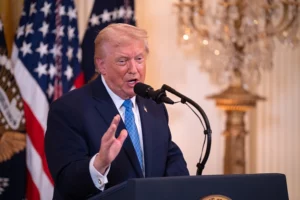
In a Truth Social post on Monday, he said any country that “does business” with Iran will pay a 25% tariff on “any and all business” it conducts with the United States, “effective immediately,” and called the order “final and conclusive.”
The political timing is not subtle. The warning comes as Iran faces its most acute domestic unrest in years, after protests that began in late December spread nationwide.
Reports of mass arrests, hundreds of deaths, and heavy communications restrictions have fueled international scrutiny. Trump has publicly floated talks with Iranian officials while also threatening military action if the crackdown continues.
The tariff threat adds a second lever: isolate Tehran economically by forcing partners to calculate the U.S. cost of staying engaged.
Who could be hit hardest depends on how Washington defines “doing business.” Iran’s trade web runs through major buyers and hubs, including China and India, and key regional conduits such as Turkey, the UAE, and Iraq.
Sanctions threat reshapes Brazil’s trade calculus
Beijing has already criticized the idea and signaled it will defend its interests, setting up a test of whether the tariff becomes policy or stays a warning shot.
For Brazil, the exposure is real but uneven. In 2025, Brazil imported about $84.5 million from Iran, with urea, pistachios, and raisins highlighted. Brazilian exports to Iran were far larger, around $2.9 billion, concentrated in corn, soy, and sugar.
Yet Brazil’s trade with the United States dwarfs that: through October 2025, U.S. exports to Brazil totaled about $45.3 billion, while U.S. imports from Brazil were about $34.7 billion.
That gap explains why the threat matters. Even before any formal rule appears, banks, insurers, and shippers may tighten compliance, raising friction for commodity flows.
If Washington moves from rhetoric to enforcement, Brazilian firms could face a blunt choice: keep Iranian sales, or protect access to the U.S. market.