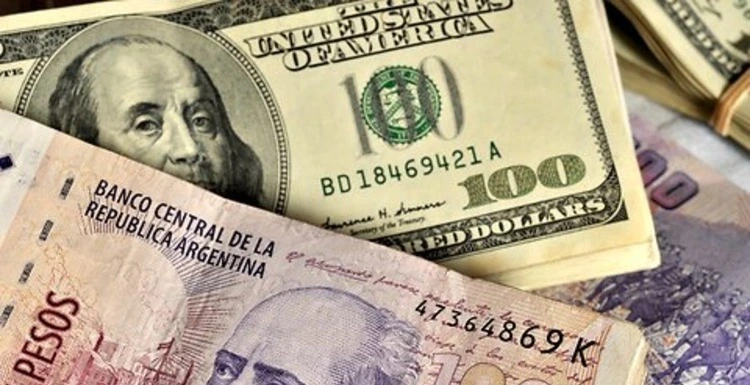
In Argentina, the “Blue Dollar,” an unofficial exchange rate for the U.S. dollar, is anticipated to reach new heights under Javier Milei’s leadership this Monday.
Local sources report a trading rate of 1,310 pesos for buying and 1,330 pesos for selling in underground markets known as “Cuevas.”
This figure surpasses the recent peak of 1,305 pesos and starkly contrasts with the official rates of 887 pesos for buying and 927 for selling set by the Central Bank of Argentina.
Despite these increases occurring alongside legislative advancements and a slowdown in inflation, they point to deeper economic troubles.
Last week had limited trading days due to national holidays, including Emancipation Day on June 19. This led to restricted transactions and heightened demand in the informal market.
Seasonal economic behaviors, such as companies disbursing mid-year bonuses, have fueled the demand for U.S. dollars.
Simultaneously, individuals planning for winter vacations have also contributed to this demand.
The anticipation of a peso surplus often drives these transactions, causing more pesos to chase fewer dollars and thereby driving prices higher.
Moreover, Argentina faces the ongoing challenge of negative real interest rates.
Inflation Surge and Currency Dynamics
This situation is exacerbated by an inflation rate that has surged to 71.2% since January, while the “Blue Dollar” has appreciated by approximately 30%.
The International Monetary Fund (IMF) has expressed concerns over these rates. These rates devalue peso savings and prompt citizens to view the U.S. dollar as a more stable asset.
This trend reflects a significant lack of confidence in the official economy and the local currency. It also highlights the broader implications for Argentina’s economic stability.
The persistent rise in the “Blue Dollar” serves as a barometer for economic health, indicating potential financial crises if unaddressed.
For Argentinians, this situation shapes daily financial choices, amidst recurring inflation and currency devaluation cycles. This cycle significantly impacts purchasing power and savings.
Understanding these dynamics is essential for predicting economic trends and shaping effective financial and policy responses.
More: Argentina news in English, every day from The Rio Times.
This article was produced by The Rio Times’ automated newsroom system. How we use AI · Report an error
In depth
Read More from The Rio Times