

For decades, the equation was simple: if you wanted Brazil’s most expensive rent, you moved to Rio de Janeiro’s beachfront south zone. That arithmetic no longer holds. A new ranking from property platform QuintoAndar shows that two São Paulo neighbourhoods — Brooklin and Vila Olímpia — now command rental prices above R$100 per square metre (~$17), leapfrogging Ipanema, the address that once defined Brazilian real-estate aspiration.
Vila Olímpia leads at R$112.9/m², with Brooklin at R$104.6/m². Ipanema registered R$102.6/m² in the same January 2026 index. Both paulista districts posted double-digit annual gains — 12% and 10% respectively — even as the Selic rate sits at 15%, its highest since 2006.
Jardim América’s Extraordinary Leap
The real shock sits at the top of the table. Jardim América, a leafy pocket near the Ibirapuera park, surged from 13th to first place nationally after rental prices jumped 77% in twelve months, reaching R$139.1/m². That eclipses even the Leblon, Rio’s traditional crown jewel, at R$117.2/m².
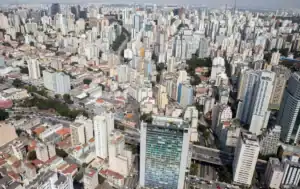
QuintoAndar attributed the spike to a wave of large, luxury-grade units entering the rental market near Avenida Paulista and the Jardins commercial corridor, pulling up average prices per square metre.
What’s Driving the South Zone Boom
Brooklin is mixed-use — tree-lined residential streets on one side, high-rise towers near the Berrini corporate corridor on the other. That combination attracts families upgrading to newer buildings and professionals who want to walk or cycle to work. Sale prices average R$14,649/m² (~$2,500).
Vila Olímpia skews younger and more compact. Flanked by Avenida Faria Lima and Avenida Juscelino Kubitschek, the neighbourhood has become São Paulo’s laboratory for micro-apartments: studios with shared laundries, coworking spaces, gyms, and concierge services. Sale prices reach R$17,373/m² (~$3,000), the premium reflecting the density of new launches.
The Broader Rental Picture
São Paulo has not posted a monthly decline in average rents since mid-2021 — more than four consecutive years of increases. High borrowing costs have insulated the rental market by pricing out prospective buyers, funnelling demand into leasing instead. Rents are rising at roughly 9% annually, nearly double the pace of sale prices.
The dynamic has tilted Brazil’s luxury housing map decisively. Of the ten most expensive rental neighbourhoods nationwide, seven are now in São Paulo. Only the Leblon, Ipanema, and Brasília’s Setor de Clubes Esportivos break the paulista dominance.
What It Means for Investors
For international property watchers, the numbers carry a caveat. São Paulo’s rental yields — around 6.3% gross — remain attractive by global standards, but the weak real means those returns convert modestly into hard-currency terms. The bet is essentially that when the Selic eventually falls — most analysts expect easing to begin late 2026 or 2027 — pent-up buyer demand will push sale prices upward, rewarding those who entered at today’s rates.
For now, the message is clear: São Paulo has outgrown its reputation as Rio’s less glamorous sibling. When it comes to rent, the business capital is pricing out the beach.