

— Two Russian-linked tankers carrying fuel and crude oil are sailing toward Cuba, testing Washington’s naval blockade in the Caribbean
— Cuba’s national power grid collapsed on Monday, leaving 10 million people in darkness after three months without a major fuel delivery
— The Kremlin declared “unwavering solidarity” with Havana, while Trump mused about “taking Cuba” as the island’s crisis deepens
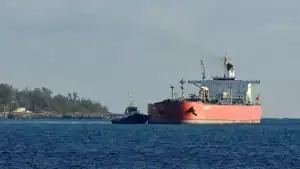
A Russian fuel tanker is sailing toward Cuba despite a sweeping American blockade that has choked the island’s energy supply for three months, setting up a direct confrontation between Moscow and Washington in Caribbean waters. The Rio Times, the Latin American financial news outlet, reports that the Hong Kong-flagged Sea Horse resumed its Atlantic crossing this week carrying an estimated 200,000 barrels of diesel — enough to keep Cuba running for roughly ten days.
A second vessel, the Russian-flagged Anatoly Kolodkin, is also heading for Cuba with approximately 730,000 barrels of Urals crude. Maritime intelligence firm Kpler tracks the sanctioned tanker departing from Primorsk on March 8, bound for the terminal at Matanzas.
Cuba’s Grid Collapses After Fuel Drought
The shipments come at a desperate moment. Cuba’s national power grid suffered a total collapse on Monday, plunging all 10 million residents into darkness for more than 29 hours — the third island-wide blackout in four months.
President Miguel Díaz-Canel said last week that no fuel had been delivered in three months — the longest import drought in at least 12 years, according to Kpler. Satellite imagery shows nighttime light levels have dropped by as much as 50 percent since January.
The crisis accelerated after U.S. forces captured Venezuelan President Nicolás Maduro in January, severing Havana’s primary fuel lifeline. Trump then signed an executive order threatening tariffs on any country that sells oil to Cuba, which prompted Mexico to halt its own shipments.
Russia’s Shadow Fleet Tests the Blockade
The Sea Horse has been navigating erratically since late February. Maritime intelligence firm Windward documented a pattern of deceptive tactics: the tanker loaded cargo through a covert ship-to-ship transfer off Cyprus, then repeatedly changed its declared destination from Havana to “Caribbean Sea” to “Gibraltar for orders.”
The Anatoly Kolodkin, owned by Russian state shipping company Sovcomflot, is under sanctions from the United States, the EU, and the United Kingdom. Its crew is broadcasting “Atlantic for orders” as its destination while heading directly toward Matanzas.
Whether either vessel will dock remains uncertain. At least two U.S. Coast Guard cutters are positioned off Cuba’s northeastern coast, and Washington has already diverted or seized at least nine tankers attempting to deliver fuel since December.
Moscow and Washington Trade Threats Over Cuba
The Kremlin raised the diplomatic temperature on Tuesday, declaring “unwavering solidarity” with Cuba and condemning what it called illegal unilateral restrictions. Spokesman Dmitry Peskov told reporters that Moscow stands ready to provide assistance to its Caribbean ally.
Trump responded from a different angle. Speaking from the Oval Office on Monday as Cuba went dark, the president mused about “taking Cuba” and said he could “do anything I want with it.” His administration is reportedly pressing for Díaz-Canel to leave power.
Cuba needs approximately 100,000 barrels of oil per day to function but produces only about two-fifths of that domestically. Even if the crude arrives, refining it into usable fuel takes 20 to 30 days, according to Jorge Piñón at the University of Texas Energy Institute.
A Cold War Echo in Caribbean Waters
The coming days will reveal whether Cuba’s energy lifeline can survive the gauntlet. If neither vessel reaches port, analysts warn the island could face what Piñón calls its “expiration date” — the point at which reserves hit zero and the grid cannot restart. For 10 million Cubans enduring rolling blackouts and rare street protests, the tankers on the horizon represent a test of how far two great powers will push each other over a darkened island 90 miles from American shores.