

Key Points
- Paraguay’s forestry exports reached a record $101.3 million in 2025, even as total export volume slipped.
- The mix is changing: charcoal is fading, while higher-value industrial goods like plywood and veneers are rising fast.
- Targeted credit lines and plantation-based supply are helping Paraguay climb global value chains, with the next test being scale, traceability, and enforcement.
Paraguay closed 2025 with its strongest forestry export performance on record, logging $101.3 million in overseas sales and underscoring a broader economic pivot: earning more from what it processes, not simply from what it extracts.
The numbers tell a revealing story. Total forest-product exports reached 197,118 tons in 2025. Volume fell about 2% from 2024, yet export value rose roughly 4%—a sign that the country is selling a better basket, not just shipping more weight.
That is the kind of “quality upgrade” policymakers like to promise and rarely deliver. Charcoal remains the heavyweight by volume, but it is no longer the growth engine.
Charcoal and related products dropped 12% in tonnage and 7% in value compared with the previous year. In its place, industrial lines are stepping forward.
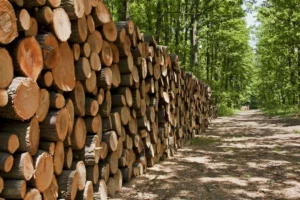
Plywood emerged as a standout: it rose 24% in both volume and value in 2025, and about 95% of the raw material used came from eucalyptus plantations, pointing to a supply base less dependent on native forests.
Paraguay’s forest exports surge globally
Monthly snapshots show how quickly the shift gathered speed. In September 2025 alone, Paraguay exported 20,190 tons worth $9.88 million.
Compared with September 2024, plywood climbed 31% in volume and 35% in value, while sawn wood jumped 50% in volume and 31% in value.
Eucalyptus accounted for roughly 78% of sawn-wood volume that month. Veneers rose about 65%, parquet-related items roughly doubled in value, and smaller industrial products like wooden reels and boxes multiplied their export volume more than 16 times.
Market reach is widening too. Officials describe charcoal reaching more than 20 markets, with key destinations including the United Kingdom, the United States, Brazil, and Germany.
Overall exports were cited as present in more than 30 countries. Plywood, meanwhile, reached about 15 markets, with the U.S., the U.K., and Italy among the main buyers. Finance is reinforcing the trend.
Paraguay’s development bank reported its forest-credit portfolio grew 32% in 2025, with $27 million tied to the sector, while international development documentation points to an $80 million credit-line component supporting certified plantations.
The message is straightforward: Paraguay’s forestry sector is becoming an industrial export platform. The next chapter will be judged by whether investment, certification, and oversight keep pace as volumes rise.