

KULR Technology Group, a company with roots in aerospace and energy management, has announced a major expansion of its Bitcoin mining operations in Paraguay.
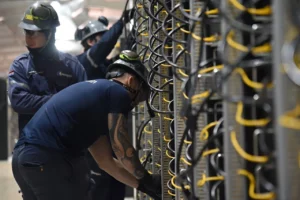
The company recently installed 3,570 Bitmain S19 XP 140T mining machines at its facility in Asunción. This move increases its mining capacity to 750 petahash per second.
KULR aims to reach 1.25 exahash per second by the end of summer, according to official company statements. KULR selected Paraguay for its abundant and low-cost hydroelectric power, primarily sourced from the Itaipú Dam.
The dam ranks among the world’s largest hydroelectric facilities and supplies Paraguay with some of the cheapest electricity globally. This access to affordable, renewable energy allows KULR to lower its operating costs and align with sustainability goals.
The company’s expansion in Paraguay highlights the country’s growing appeal to Bitcoin miners seeking reliable, inexpensive, and clean power. KULR employs a dual strategy to maximize its Bitcoin holdings.
The company mines Bitcoin directly and also purchases it on the open market. This approach, which it calls “Buy or Mine,” enables KULR to respond to fluctuations in mining difficulty and Bitcoin prices.
The company has committed up to 90 percent of its excess cash to acquiring Bitcoin, reinforcing its identity as a “Bitcoin-first” business. Despite its rapid growth, KULR’s mining capacity remains smaller than that of the largest players in the industry.
Companies such as CleanSpark, Marathon Digital Holdings, and Bitfarms operate between 10 and 50 exahash per second. Hive Digital Technologies, which also has operations in Paraguay, maintains approximately 5 exahash per second.
Achieving 1 exahash per second requires thousands of high-performance mining units running simultaneously. Bitcoin mining activity has increased in Latin America, especially in Brazil, Venezuela, Paraguay, and Argentina.
The region’s low-cost, renewable energy and favorable business conditions have attracted more companies to set up mining operations. Bitcoin mining uses powerful computers to process transactions, secure the network, and maintain synchronization across users.
This process functions as a decentralized data center, with miners distributed globally. KULR’s investment in Paraguay demonstrates how access to cheap, renewable energy can influence the geography of Bitcoin mining.
The company’s strategy also reflects a broader trend among businesses to diversify their methods of accumulating digital assets.
As more firms enter the sector, Paraguay’s role as a hub for Bitcoin mining could grow, potentially boosting local economies and shaping the future of digital finance in the region.